





































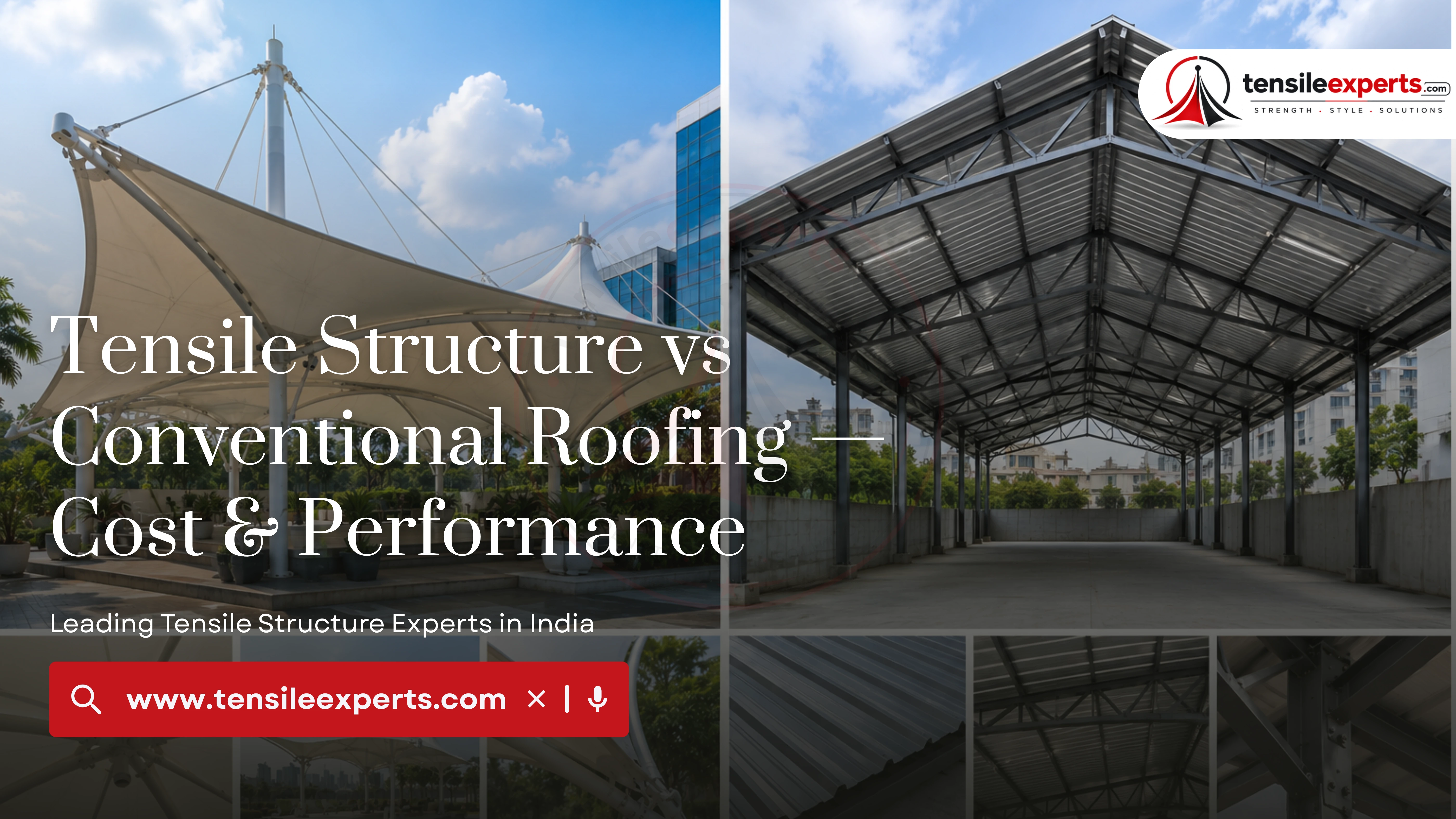
Tensile roofing isn't a replacement for conventional RCC or metal roofing in every case — it's a genuinely different structural approach, with real advantages in some situations and less relevance in others. This guide goes through the actual differences in installation speed, span capability, and where each option makes more sense.
In This Guide
Why Tensile Roofing Installs Faster
Tensile roofing is generally faster to install than a conventional RCC or metal roof of the same span, largely because it involves less on-site concrete curing time and heavy structural steel erection. This matters directly when a project has an operational or production deadline — the time difference compounds at larger spans.
Weather dependency is part of this too — conventional concrete work has real curing-time and weather constraints that can push a timeline out further if monsoon season lands mid-project, while tensile fabrication happens largely off-site and installation itself is comparatively less weather-sensitive once the foundation is ready.

Span Capability and Structural Weight
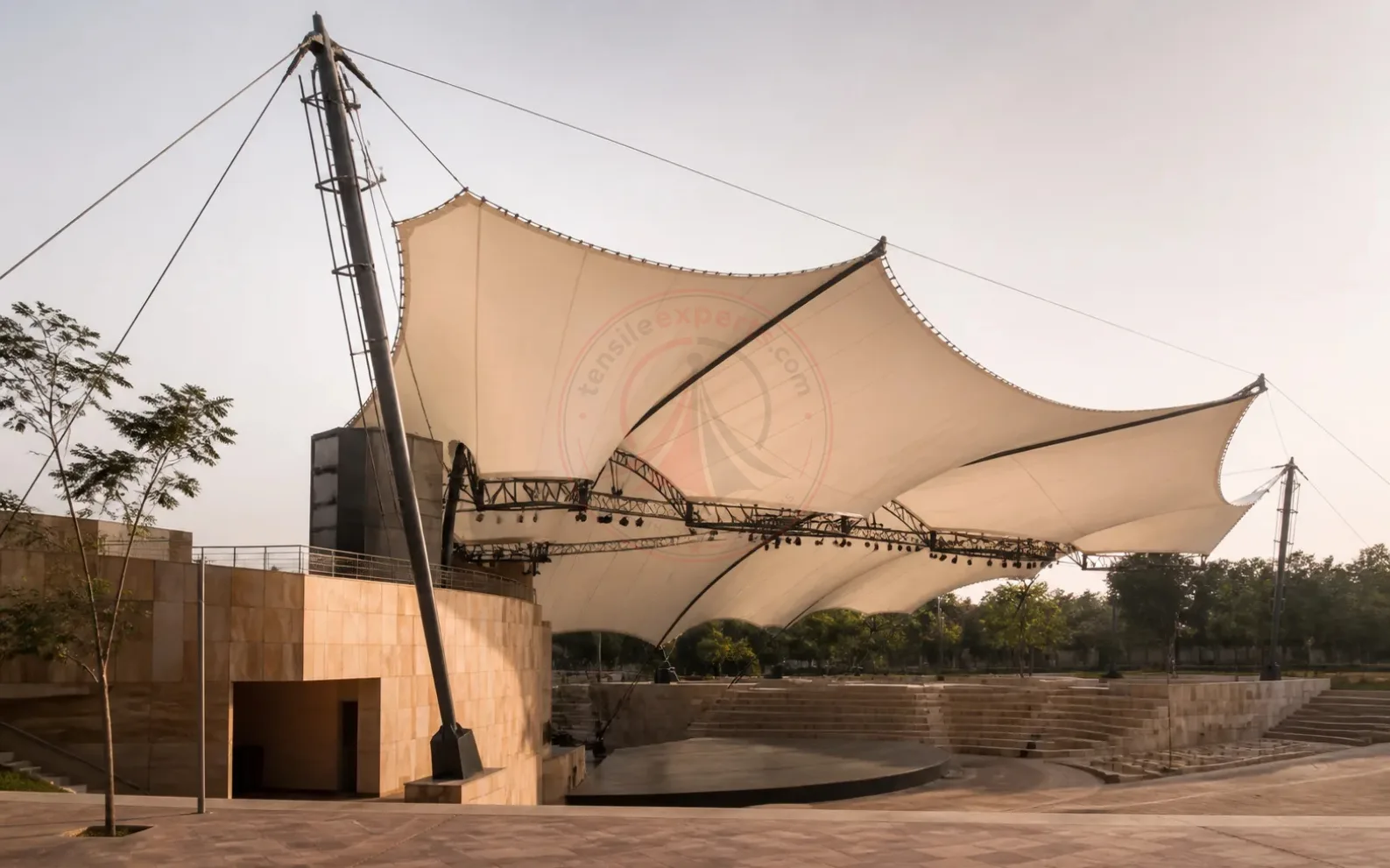
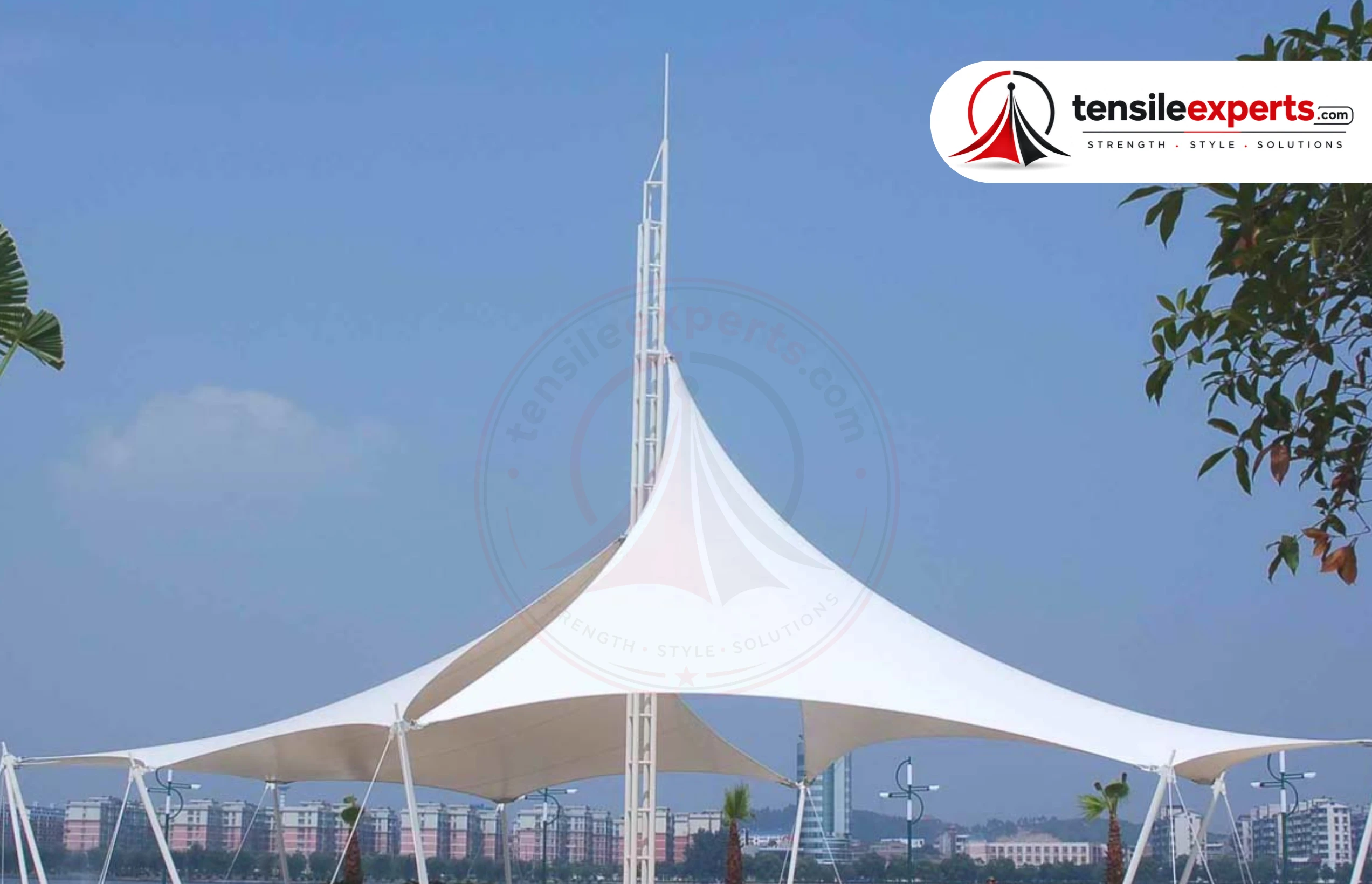
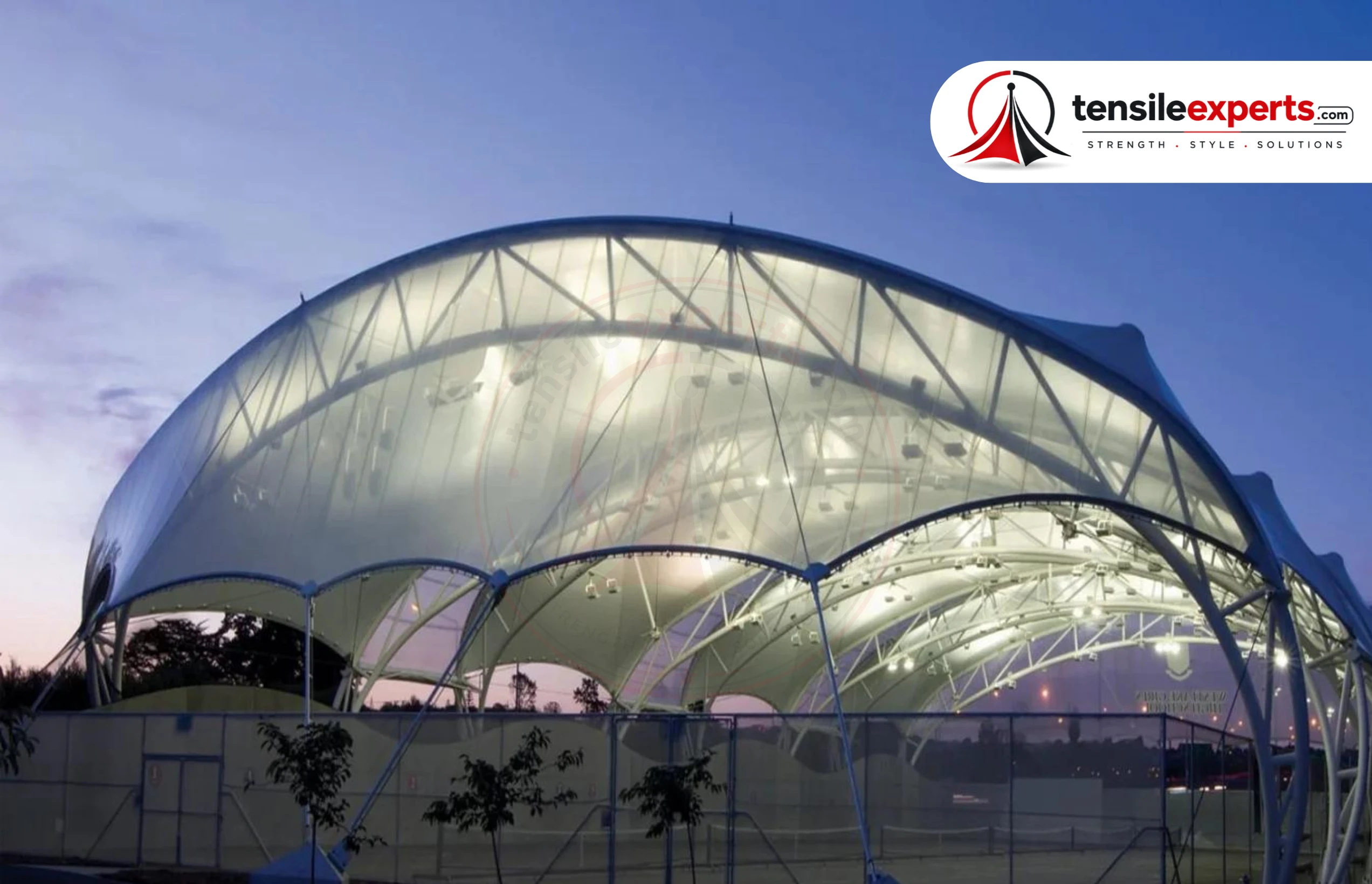
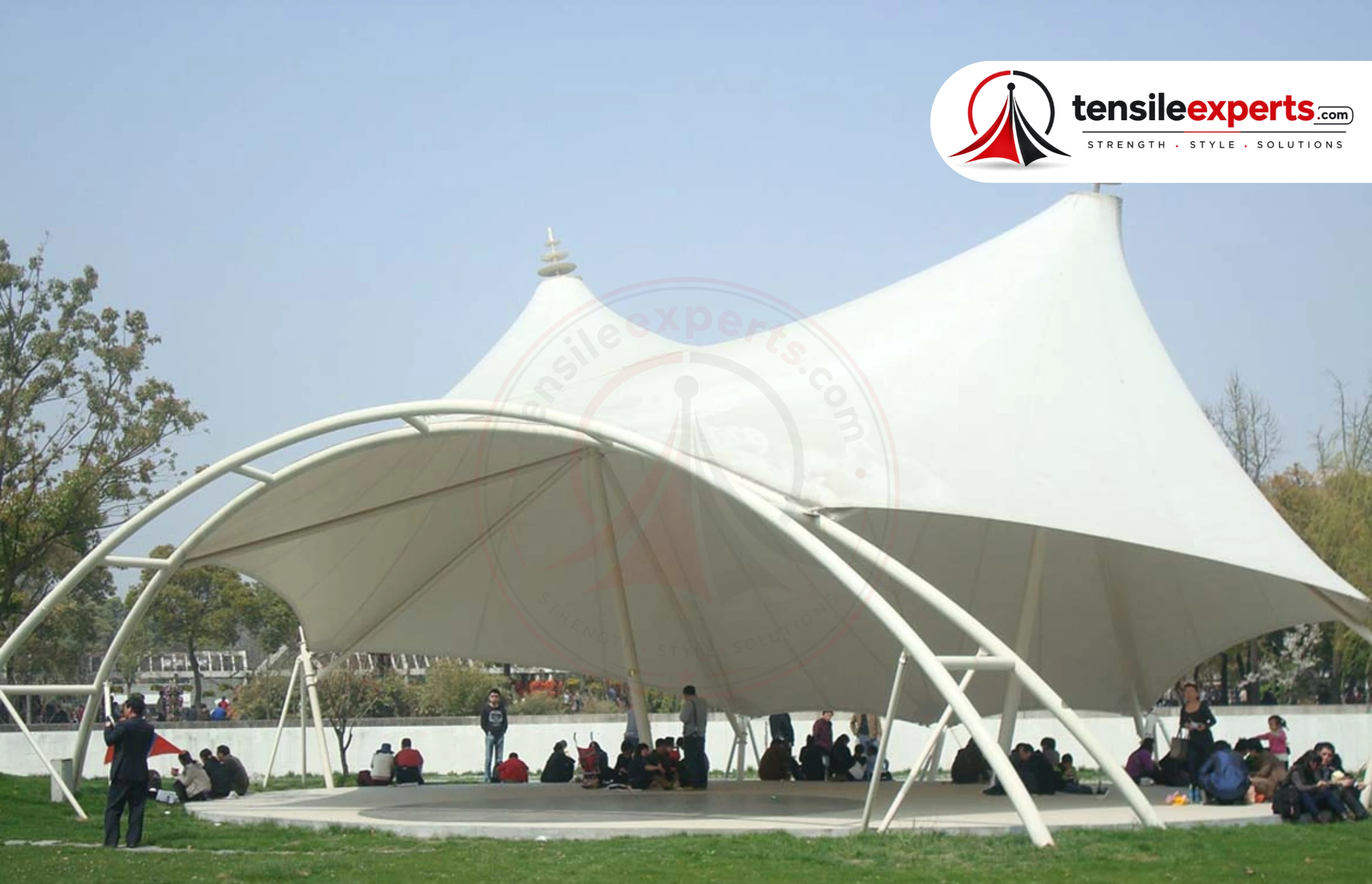
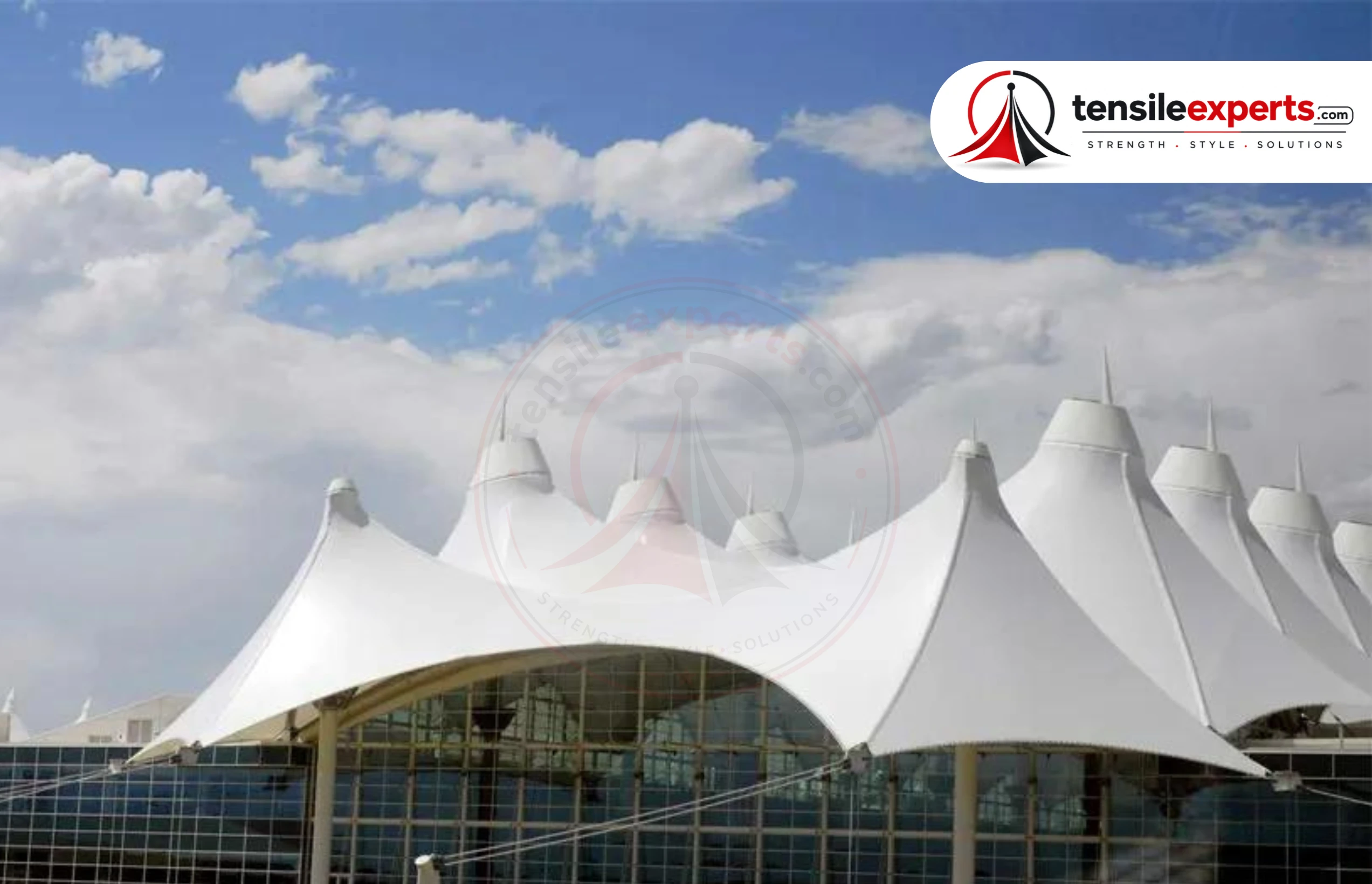
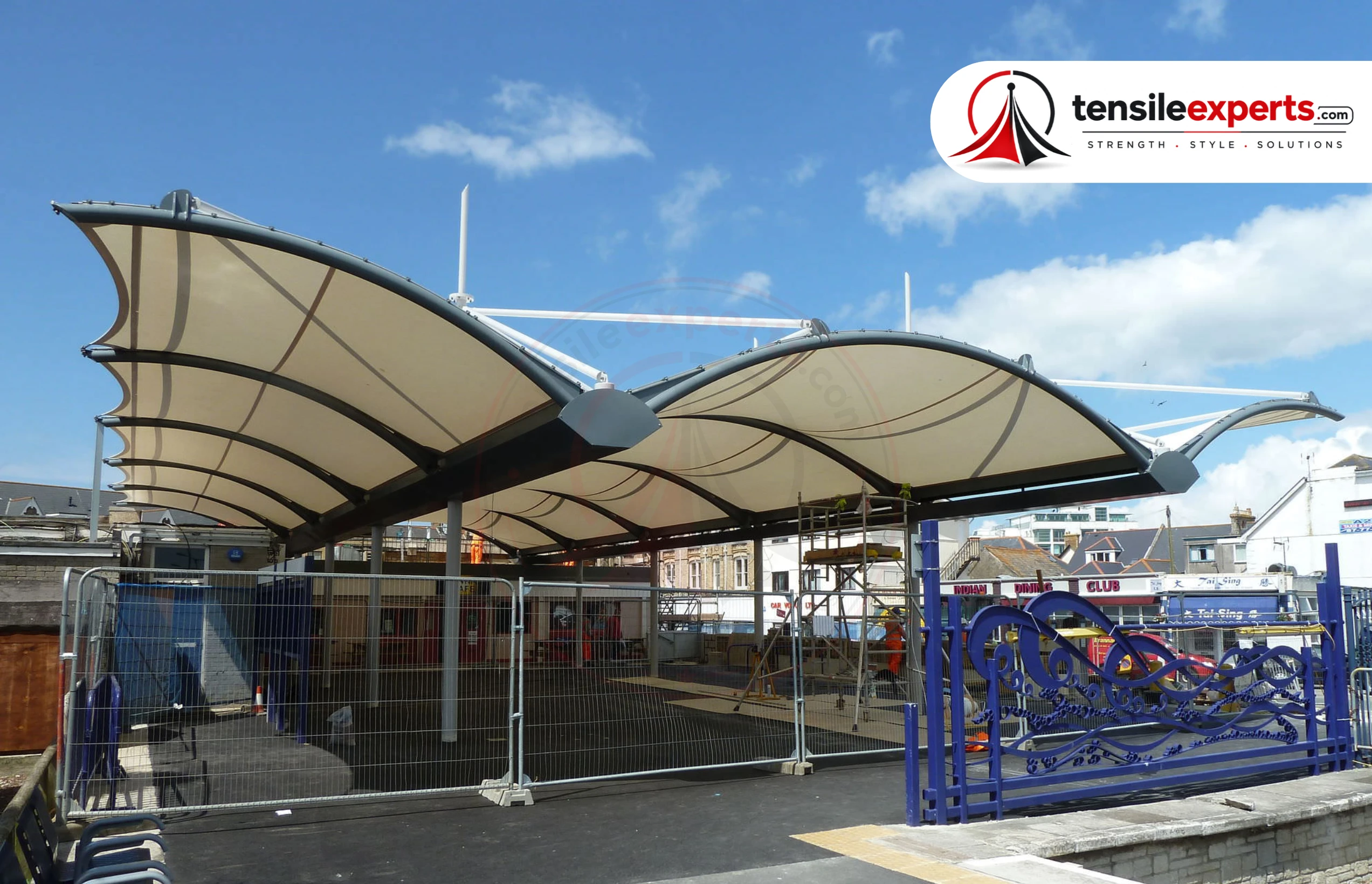
Tensile roofing spans from small residential structures up to 100m+ institutional and industrial coverage, often achieving that span with meaningfully less structural weight than a conventional roof of the same size would need. This isn't purely an aesthetic tradeoff — a lighter structure can mean lighter, less expensive supporting foundations at scale.
The clear-span advantage specifically matters for any use case where interior columns would get in the way — a warehouse floor plan built around forklift and racking access, an auditorium's sightlines, or a stadium stand's unobstructed view all benefit from the same underlying engineering principle: a tensioned membrane can cover a wide area without the intermediate supports a conventional flat roof of the same span would typically need.
Retrofitting an Existing Building
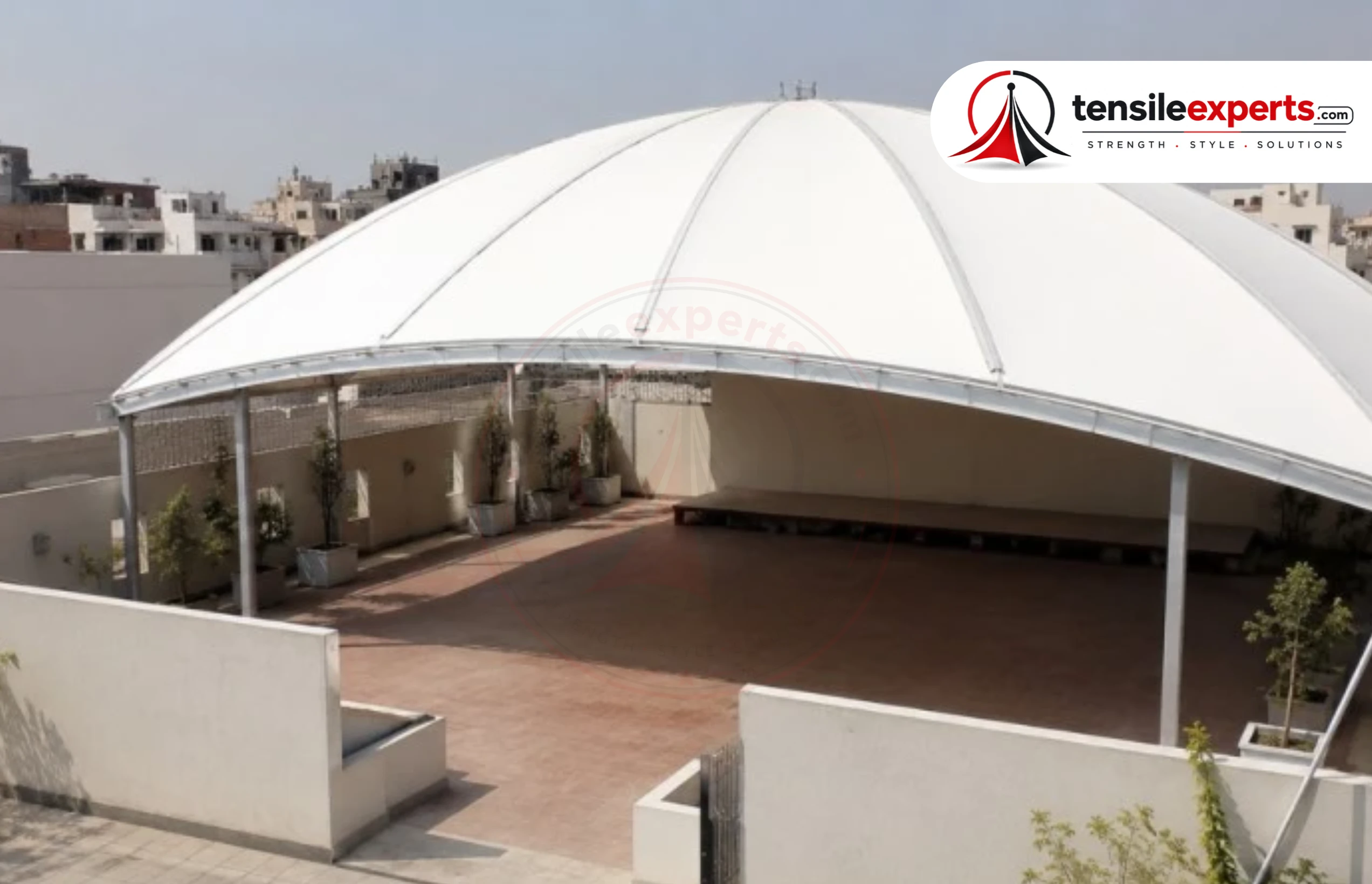
Tensile roofing can integrate with an existing building's structural frame for a retrofit project, or be designed as a fully independent structure — which approach fits depends on the existing building's condition and attachment points, assessed during the site survey. A retrofit specifically needs the existing structure's load-bearing capacity confirmed before design work starts, since the new roof's attachment points have to work with what's already there, not against it.
When Conventional Roofing Still Makes More Sense
For a fully enclosed, insulated interior space with standard architectural requirements and no particular need for large clear spans or distinctive design, conventional roofing is often the simpler, more familiar choice — this comparison isn't a case for tensile roofing being universally better, just genuinely different, with real advantages that matter most for specific project types. If your project needs standard insulation, a flat roof for rooftop equipment, or a conventional interior ceiling finish, those are all easier to achieve with conventional construction than by adapting a tensile design to fit.
Side-by-Side Comparison
With each difference explained above, here's the full picture side by side:
| Aspect | Tensile Roofing | Conventional (RCC/Metal) Roofing |
|---|---|---|
| Installation Speed | Generally faster for the same span | Longer timeline, more on-site construction work |
| Structural Weight | Lighter — less load on supporting structure | Heavier — needs proportionally stronger support |
| Span Capability | Custom, up to 100m+ without heavy steel | Large spans need substantial structural steel |
| Design Flexibility | Curved, distinctive architectural forms possible | Typically flat or simple pitched forms |
| Natural Light | Translucent fabric grades let light through | Requires separate skylights/openings |
| Maintenance Pattern | Periodic cleaning, re-tensioning, hardware checks | Different maintenance profile — waterproofing, structural inspection |
Related Guides


Where This Comparison Comes Up Most
This exact comparison is central to our Industrial & Warehousing guide, where tensile roofing's installation speed and clear-span capability are genuine deciding factors against conventional construction — see it for the full industrial context, alongside our other industry pages.
Cost Comparison Factors
A direct cost comparison depends on span and site conditions — tensile roofing's lighter structural requirement can reduce foundation and support-steel costs at larger spans, while a smaller conventional roof might come out comparable or cheaper.
Tensile Roof Structure — From ₹380/sq.ft.
Explore by Product

See the full product directory for everything we design and fabricate.
Frequently Asked Questions
Weighing tensile against conventional roofing for your project? Get in touch for a free site consultation.