







































Monsoon season is the real stress test for any tensile structure in India — sustained heavy rain over weeks, not just an occasional shower. A structure that's properly engineered handles this without issue, but that doesn't mean no preparation is needed; a real pre-monsoon check catches the small things that make the difference between a structure that sails through the season and one that doesn't.
In This Guide
Checking Drainage Before the Rain Starts
Drainage paths need to be genuinely clear before monsoon arrives, not just visually tidy — leaves, dust, and debris that built up over the dry season can quietly block a valley or gutter that looked fine in a quick glance. This is the single most important pre-monsoon check, since blocked drainage under sustained rain is what actually causes ponding, not the rain itself.
This matters more for structures with a lower-slope roof design, where drainage relies on the fabric's own shape and a few clear channels rather than a steep pitch shedding water quickly on its own.
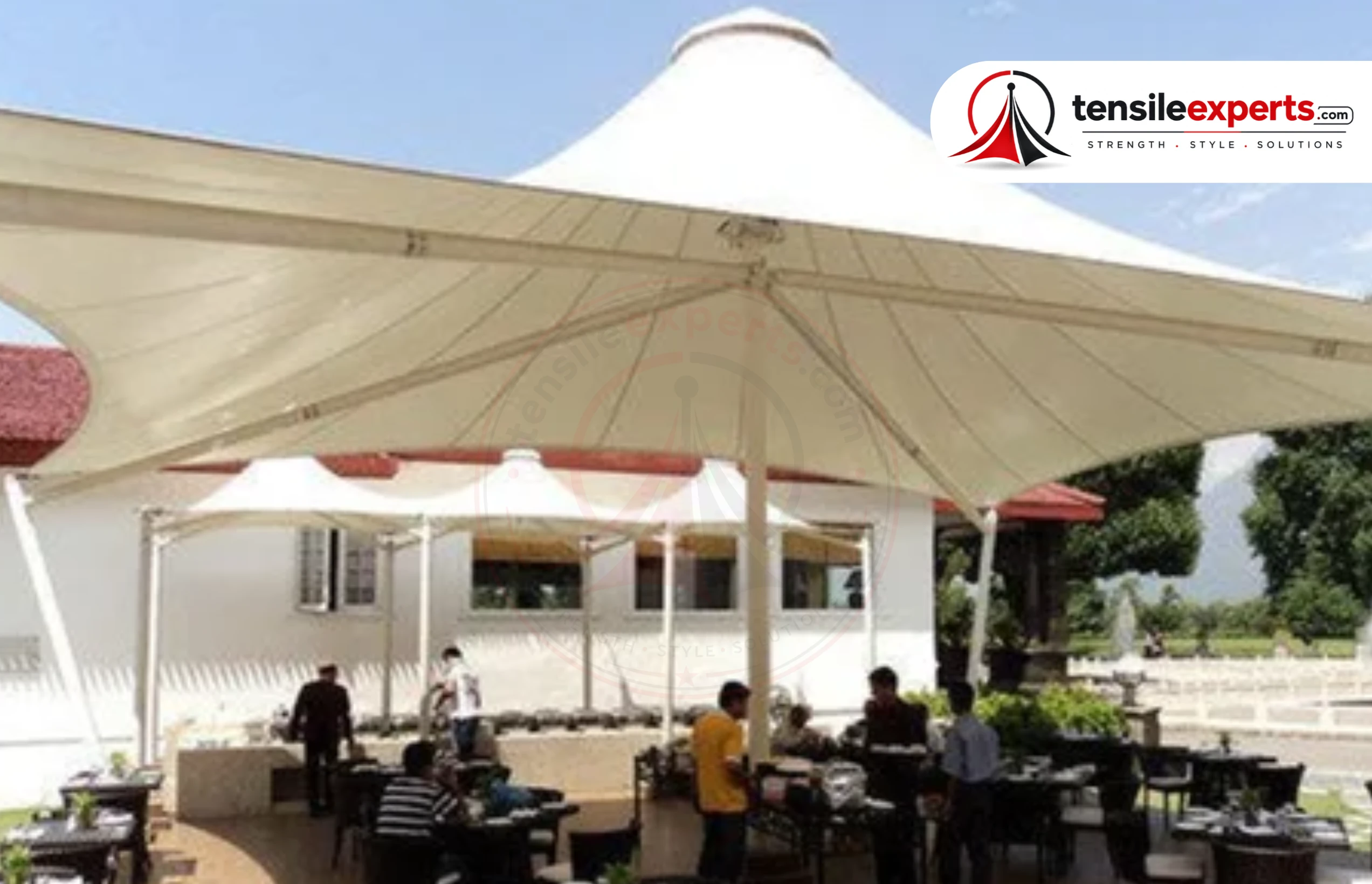
Confirming Fabric Tension
Fabric tension can loosen gradually over time — normal, expected behavior for any tensioned membrane — and a pre-monsoon check confirms it's still within the range the structure was engineered for. Correctly tensioned fabric sheds water actively as part of its curved form; fabric that's lost tension can develop low points where water collects instead of running off.

Hardware and Corrosion Risk
Monsoon humidity accelerates corrosion risk on any exposed hardware, so a pre-season check of cable connections, anchor points, and fittings is worth doing alongside the fabric and drainage checks — catching early-stage corrosion before the season, rather than after months of sustained humidity, is meaningfully easier to address.
What to Watch For During the Season
Even after a good pre-season check, it's worth a quick visual look after any particularly heavy rain event — checking specifically for any new pooling, unusual sagging, or debris that's collected during the storm. This isn't a full inspection, just a quick confirmation that nothing changed during a genuinely heavy downpour.
Related Guides





The Post-Monsoon Check
Once the season ends, a follow-up check confirms the structure came through in good condition and catches anything — loosened hardware, minor fabric wear — before it sits unaddressed until the following year. See our maintenance checklist for the full year-round routine this fits into.
Monsoon Prep Timeline at a Glance
With each stage explained above, here's the seasonal rhythm as a quick reference:
| Timing | What to Check |
|---|---|
| A few weeks before monsoon | Drainage, fabric tension, hardware corrosion |
| After a heavy rain event | Quick visual check for new pooling or sagging |
| After monsoon ends | Full follow-up check for wear or loosened hardware |
If your project is specifically in Delhi, see our Delhi monsoon-ready guide for that region's rainfall pattern specifically.
Explore by Product



See the full product directory for everything we design and fabricate.
Frequently Asked Questions
Want a pre-monsoon check for your structure? Get in touch to schedule one.