
































Every tensile structure quote eventually comes down to one real technical decision: which fabric grade. PVC, PTFE, and PVDF aren't interchangeable options with the same properties at different prices — they're genuinely different materials suited to different spans, exposure levels, and budgets. This guide breaks down what actually separates them, using the same real spec ranges we use to recommend a grade on every project.
In This Guide
Why Fabric Grade Actually Matters
Fabric grade determines how long your structure lasts, how it performs under sun and rain, and — for some projects — whether it meets fire-safety or certification requirements at all. It's not a finishing detail decided at the end; it's one of the first things we factor into a design, alongside span and structural form. Getting it wrong doesn't usually mean the structure fails outright — it means paying for a lower design life or a heavier maintenance schedule than the project actually needed, in either direction.
PVC-Coated Polyester
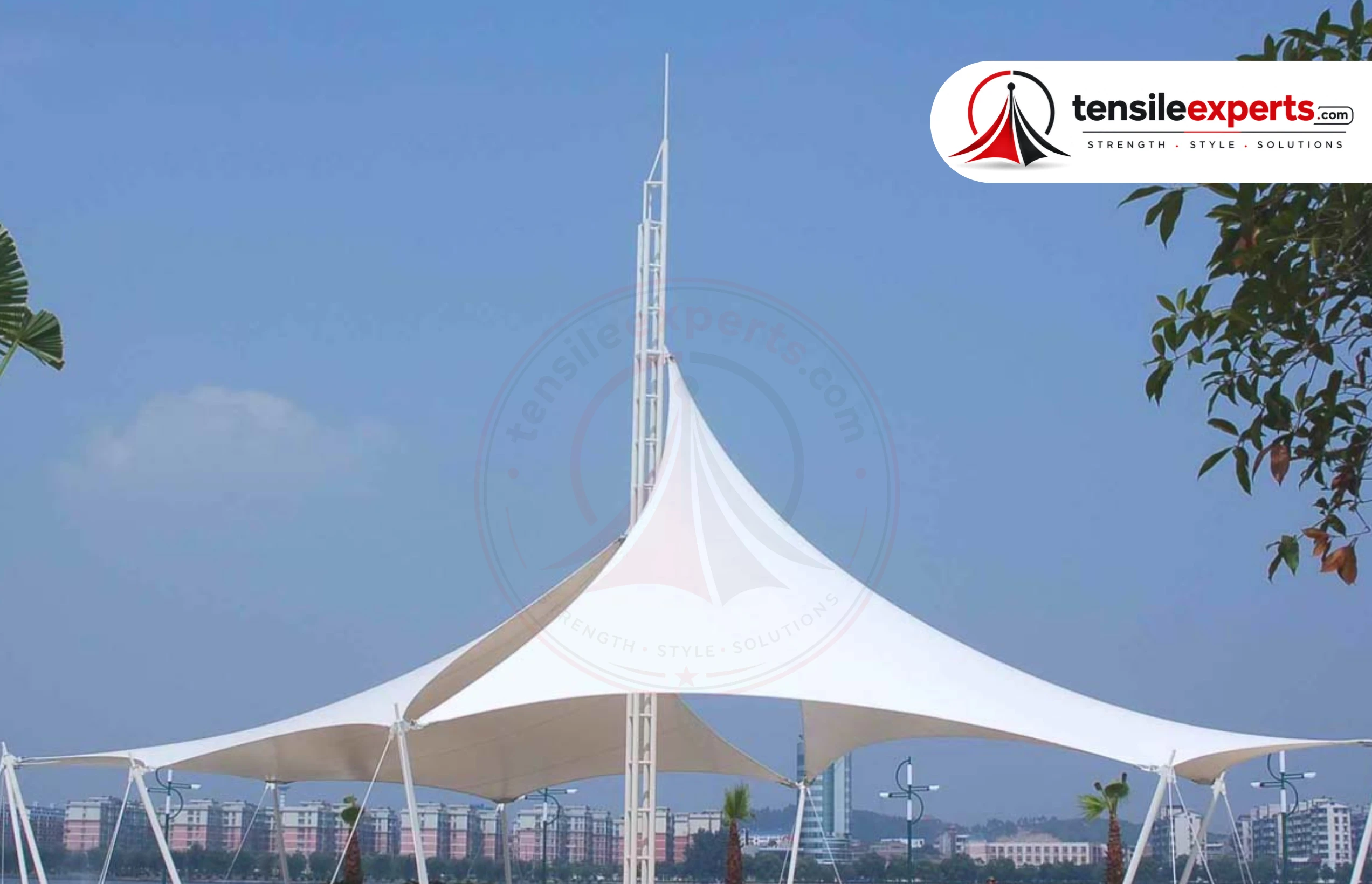
PVC-coated polyester is the standard, cost-effective fabric grade used across most residential, garden, and smaller commercial structures — car parking sheds, gazebos, pergolas, and general canopies most commonly use it. It runs roughly 650-1100 GSM and typically delivers a design life of about 10-15 years under normal conditions. It's not a downgrade for these use cases — it's the right-sized choice when the structure doesn't need PTFE's longer service life or higher continuous-exposure durability.
PTFE-Coated Fiberglass
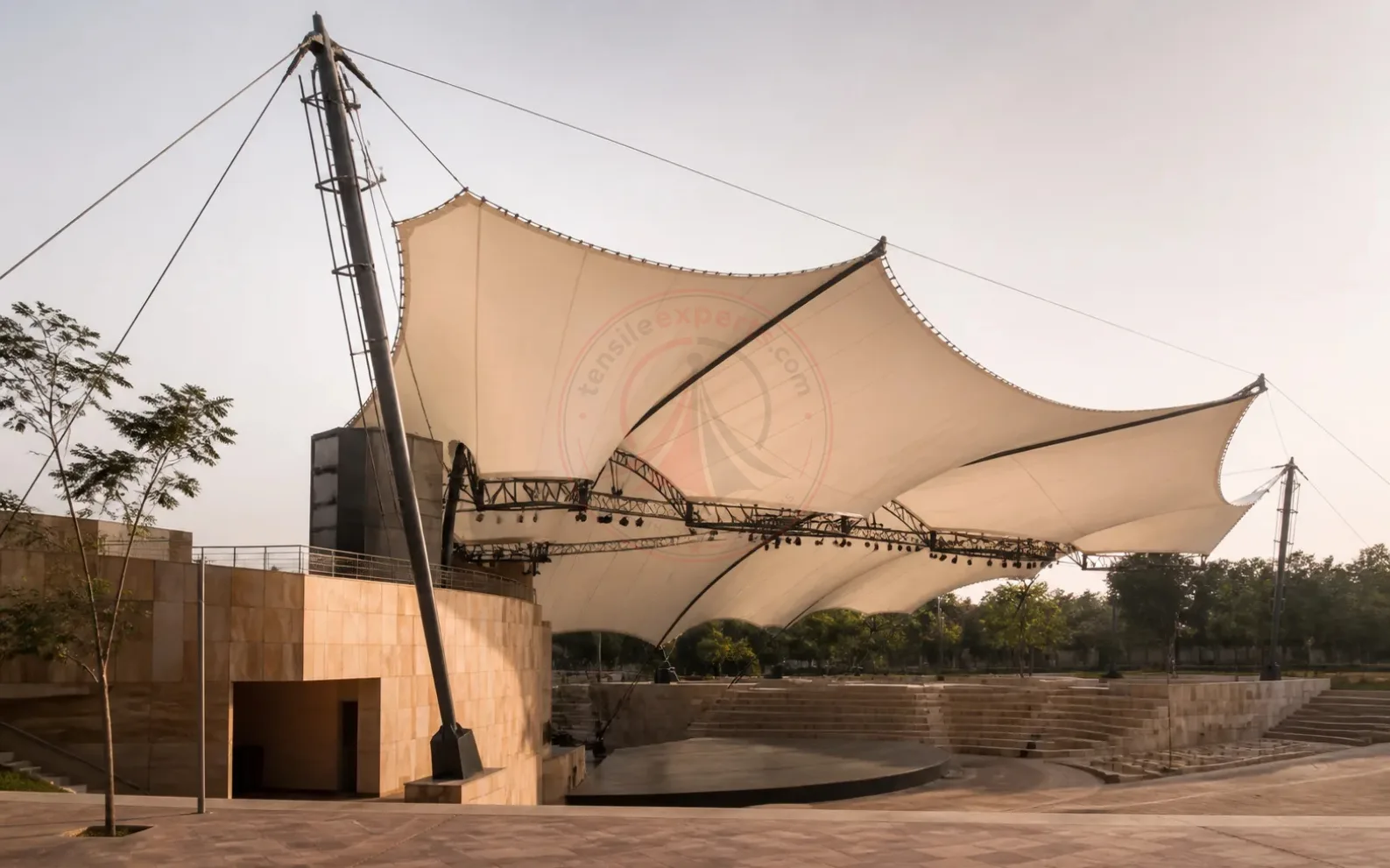
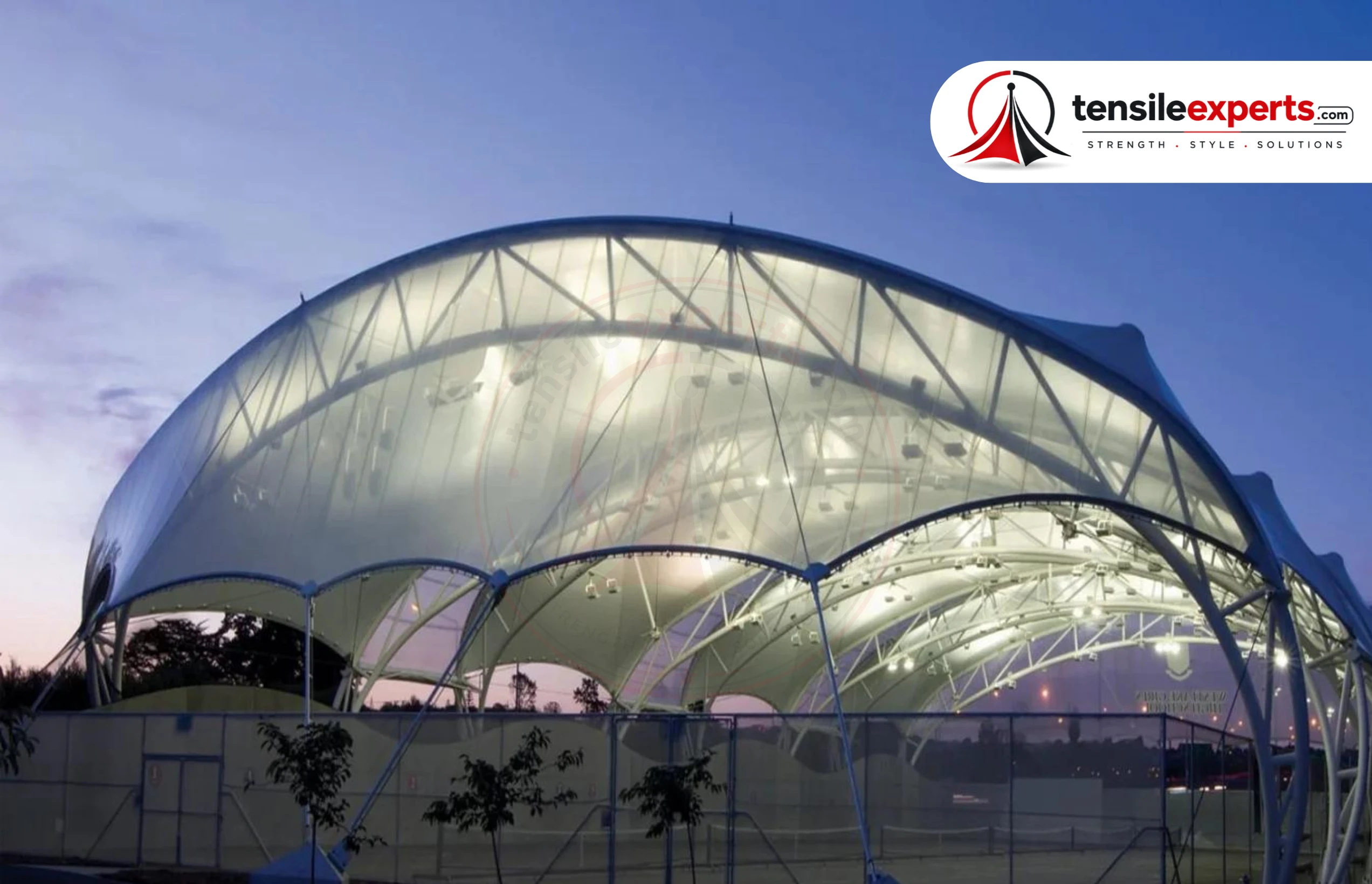
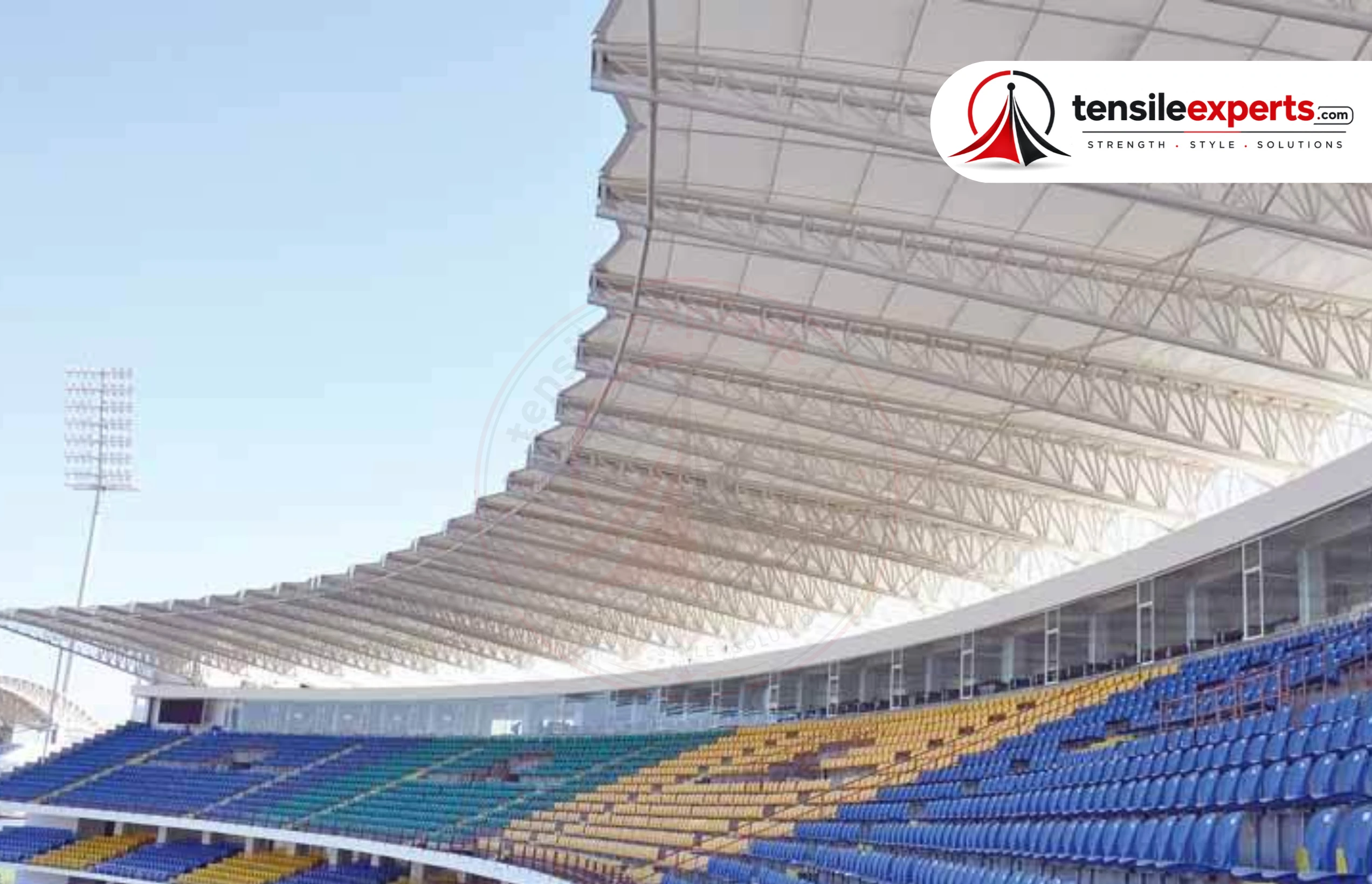
PTFE-coated fiberglass is the recommended grade for larger spans and continuously-used, high-traffic structures — stadiums, auditoriums, airports, toll plazas, and large industrial roofs typically specify it. It runs roughly 800-1200 GSM, with a design life of around 20-25+ years under normal conditions — meaningfully longer than PVC. Fire-retardant-rated PTFE variants are also available, which is why it's the standard recommendation for public-infrastructure projects with certification requirements.
PVDF-Coated Polyester
PVDF adds a self-cleaning top-coat on top of a polyester base — the real advantage is on sites with heavy dust, pollution, or lint exposure (an industrial shed near a busy road, or a textile manufacturing unit, for example), where a self-cleaning surface genuinely reduces how often manual cleaning is needed. It's largely recyclable, same as PTFE-grade fabrics, and is a common choice anywhere the practical maintenance burden of a dusty environment matters as much as the fabric's raw strength.

PVC vs PTFE vs PVDF — Side by Side
All figures below are industry-general ranges, not fixed guarantees — actual performance depends on your site's exposure and the specific supplier's fabric.
| Property | PVC | PTFE | PVDF |
|---|---|---|---|
| Fabric Weight | 650-1100 GSM | 800-1200 GSM | Comparable to PVC base weight |
| Typical Design Life | ~10-15 years | ~20-25+ years | ~10-15 years, longer-lasting surface finish |
| Self-Cleaning Surface | Not standard | Available on select grades | Yes — core feature |
| Fire-Retardant Variants | Available on select grades | Widely available, certified options common | Available on select grades |
| Recyclability | Varies by supplier | Largely recyclable | Largely recyclable |
| Best Suited To | Residential, garden, smaller commercial | Large-span, high-traffic, public infrastructure | Dusty, polluted, or high-lint sites |
| Relative Cost | Most cost-effective | Higher, reflects longer service life | Moderate-to-higher, reflects self-cleaning coat |
How to Choose — By Use Case
- Home driveway, garden gazebo, or pergola: PVC is almost always the right call — cost-effective and well-matched to the smaller span and lower continuous-exposure profile.
- Housing society parking shed or corporate campus walkway: PVC for most layouts; PTFE if the structure sees continuous daily use across a larger multi-bay span.
- Stadium, auditorium, or airport terminal: PTFE, generally with a fire-retardant-rated variant where public-infrastructure certification requirements apply.
- Industrial shed near a dusty or high-pollution site: PVDF, specifically for its self-cleaning top-coat reducing manual cleaning frequency.
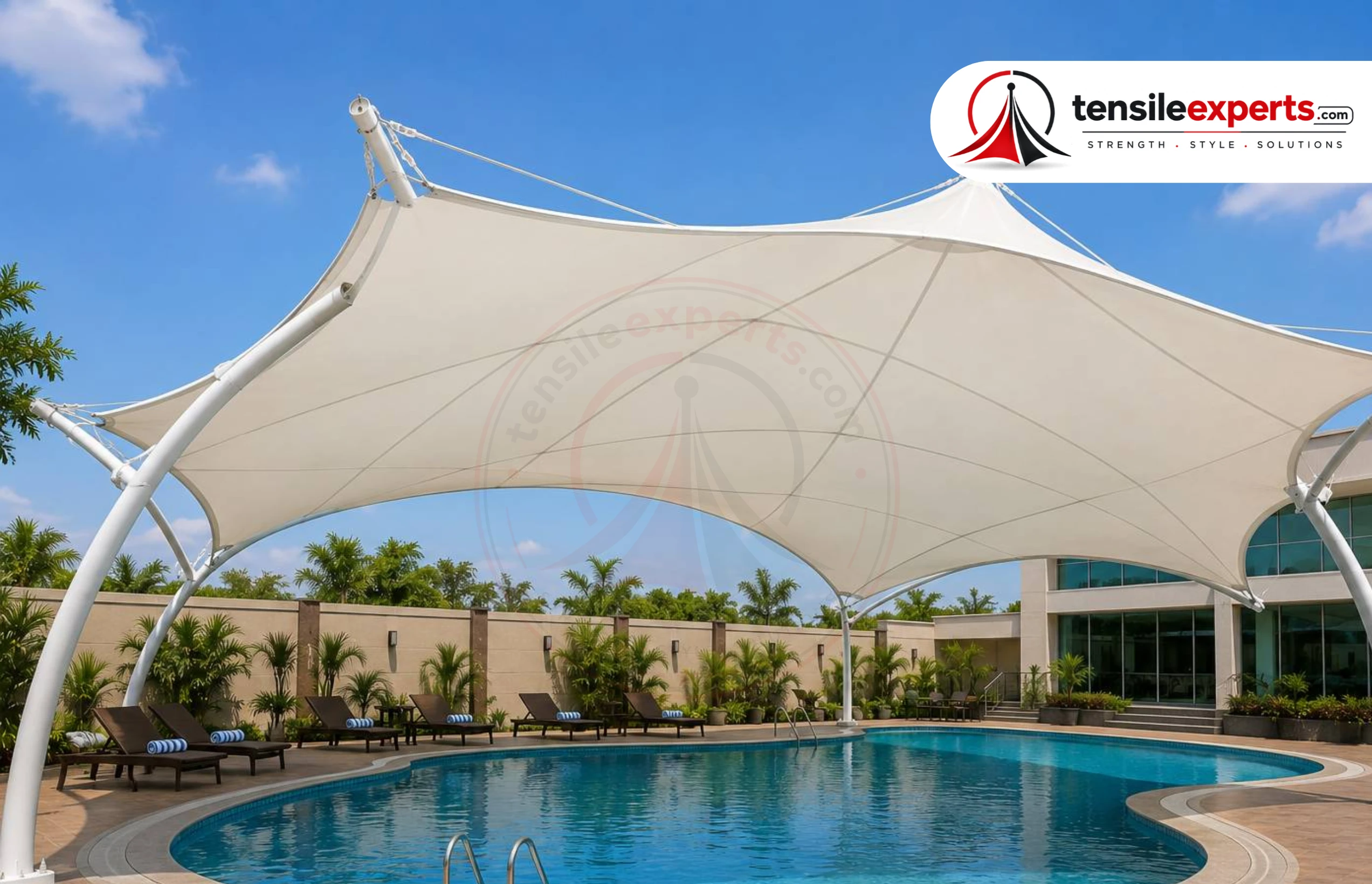
- Hotel or resort pool cover: PVC or PTFE, chosen partly around chlorine/humidity exposure and the transparency level wanted over the water.
What Actually Drives the Cost
Fabric grade is one input into overall project cost, not the only one — span, structural form, and site conditions matter just as much. As a general pattern: PVC costs the least, PTFE costs more but reflects a meaningfully longer design life, and PVDF sits in between, priced for its self-cleaning surface rather than a longer base lifespan.
Tensile Fabric Structure — From ₹360/sq.ft.
Related Guides



Where Fabric Grade Matters Most
Fabric grade isn't an abstract spec sheet decision — it's one of the deciding factors on several of our industry pages, where the site's real exposure profile drives the recommendation. Our Transport & Infrastructure guide leans on PTFE's fire-rated variants for continuous public-footfall sites like airports and toll plazas; our Industrial & Warehousing guide covers PVDF's self-cleaning advantage on dusty or lint-heavy sites; our Hotels & Resorts guide goes into chlorine/humidity-resistant grades for pool structures; and our Sports & Recreation guide explains why PTFE is the standard recommendation at stadium scale.
Explore by Product


See the full product directory for everything we design and fabricate.
Frequently Asked Questions
Not sure which fabric grade fits your project? Get in touch for a free site consultation.