



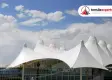
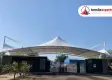
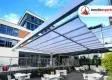
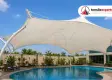
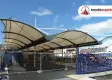
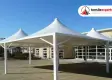





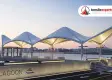











A tensile umbrella structure looks simple — one column, one fabric canopy — but the layout planning behind a multi-unit cafe or poolside project genuinely changes how the space feels to use. This guide goes through single vs. multi-unit layouts, fixed vs. tilting design, real sizing, and how an umbrella structure compares to a gazebo or canopy for open seating spaces.
In This Guide
- What Is a Tensile Umbrella Structure
- Single Unit vs. Multi-Unit Layouts
- Fixed vs. Tilting/Adjustable Design
- Central Column Placement
- Choosing a Fabric Grade
- Technical Specifications
- What Actually Drives the Cost
- Umbrella vs. Gazebo vs. Canopy
- Our Process, Step by Step
- Maintenance
- Related Guides
- Available in Your City
- Explore by Product
- Frequently Asked Questions
What Is a Tensile Umbrella Structure
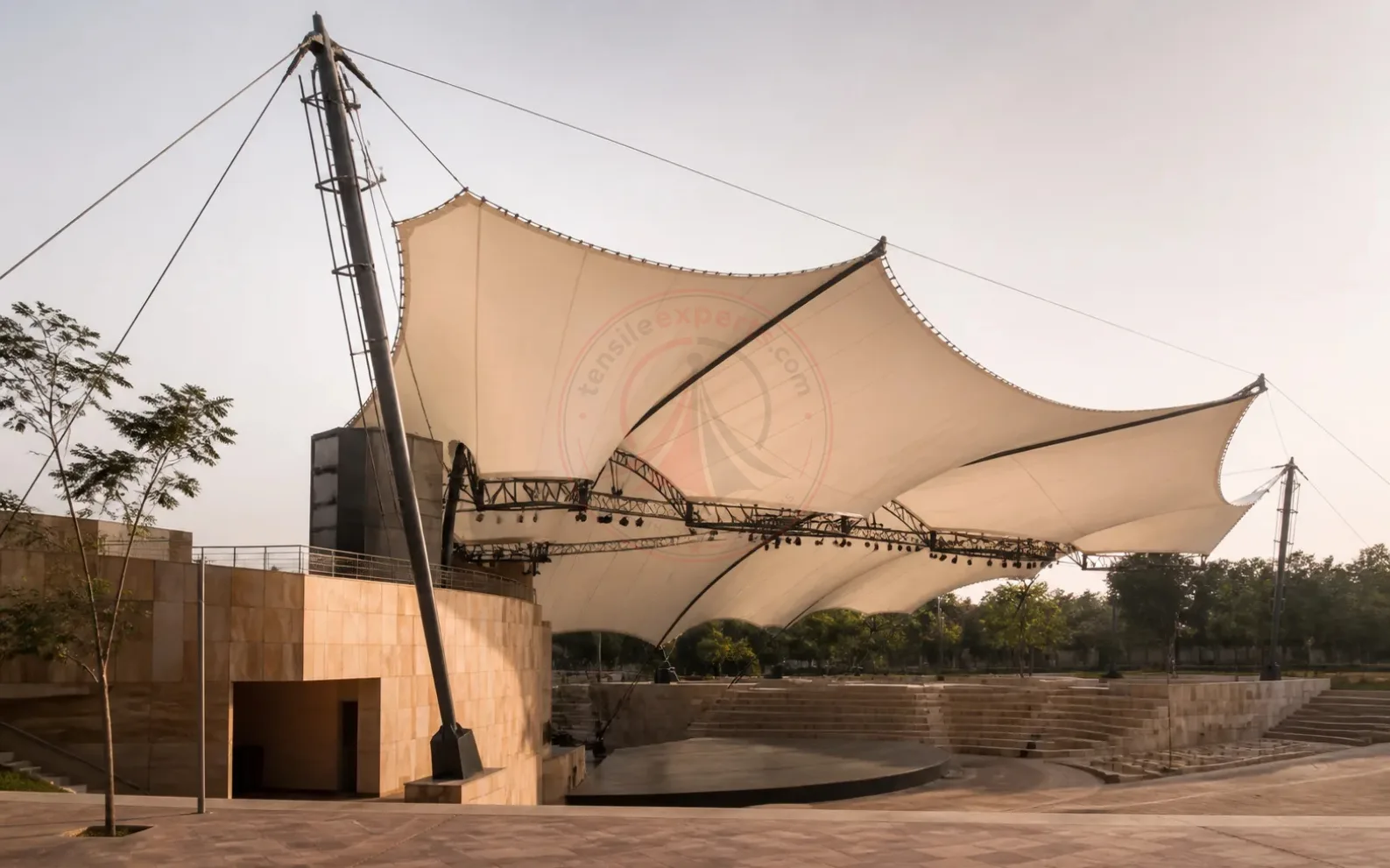
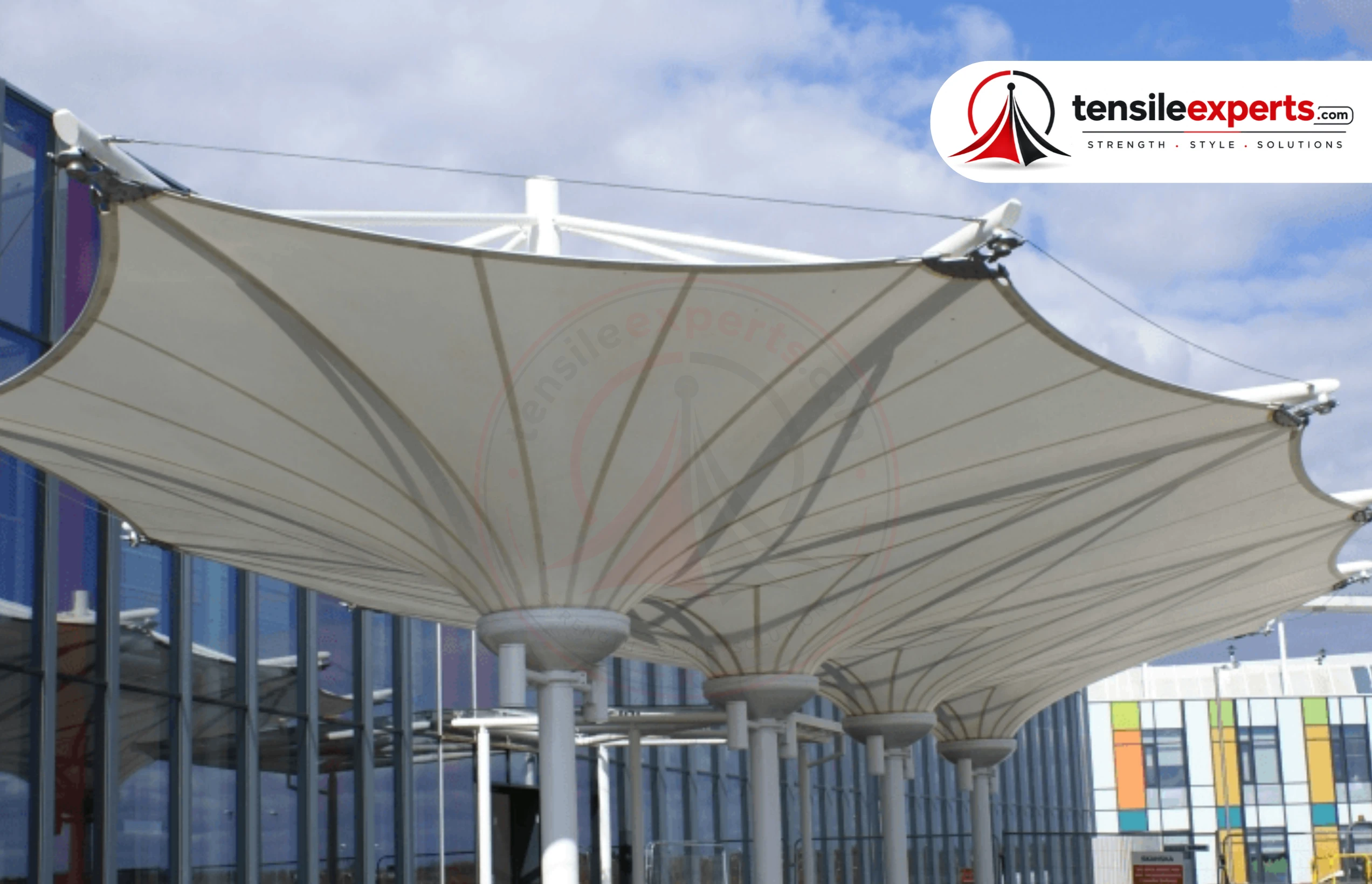
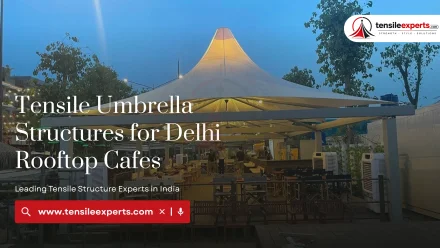
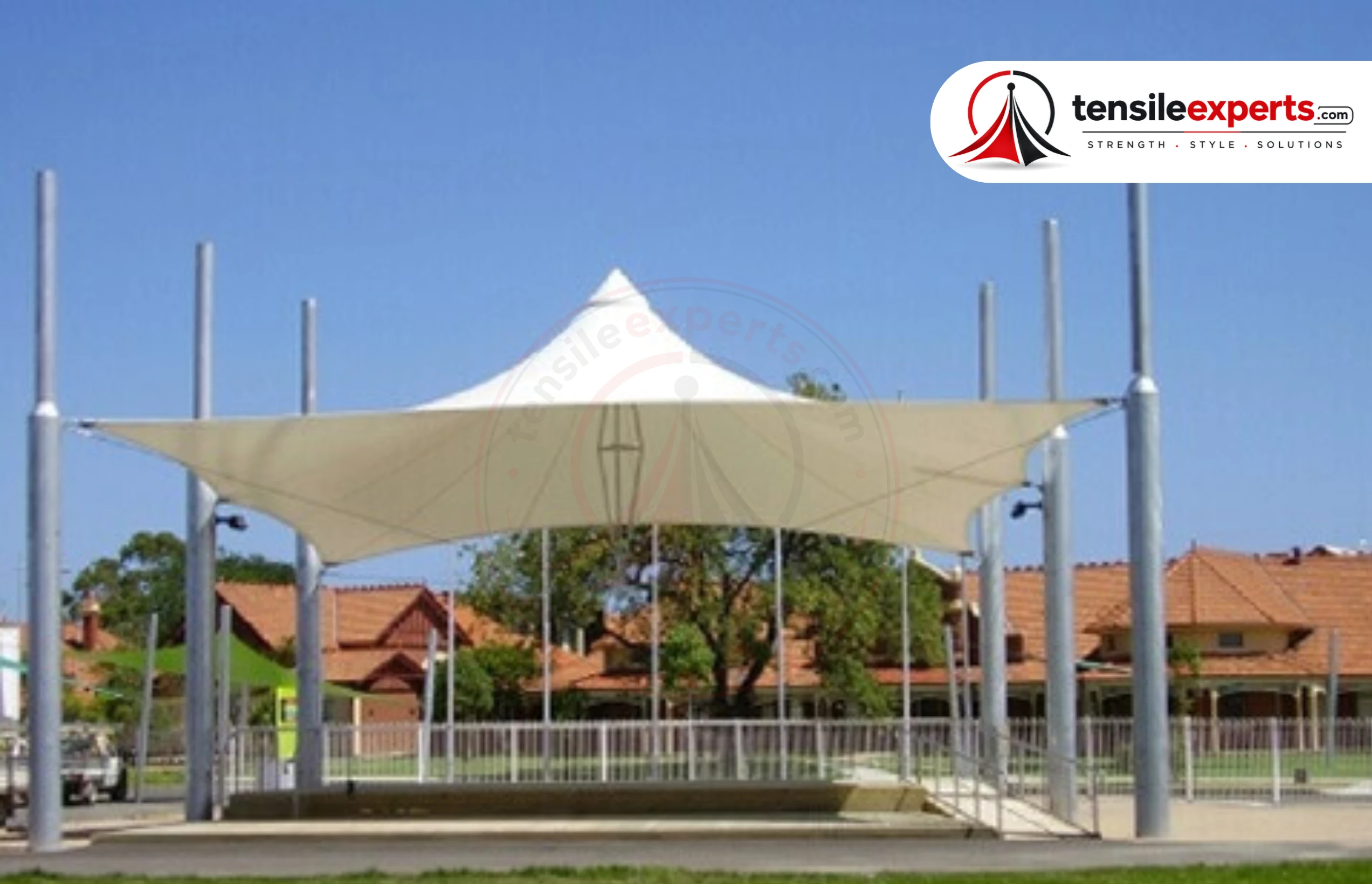
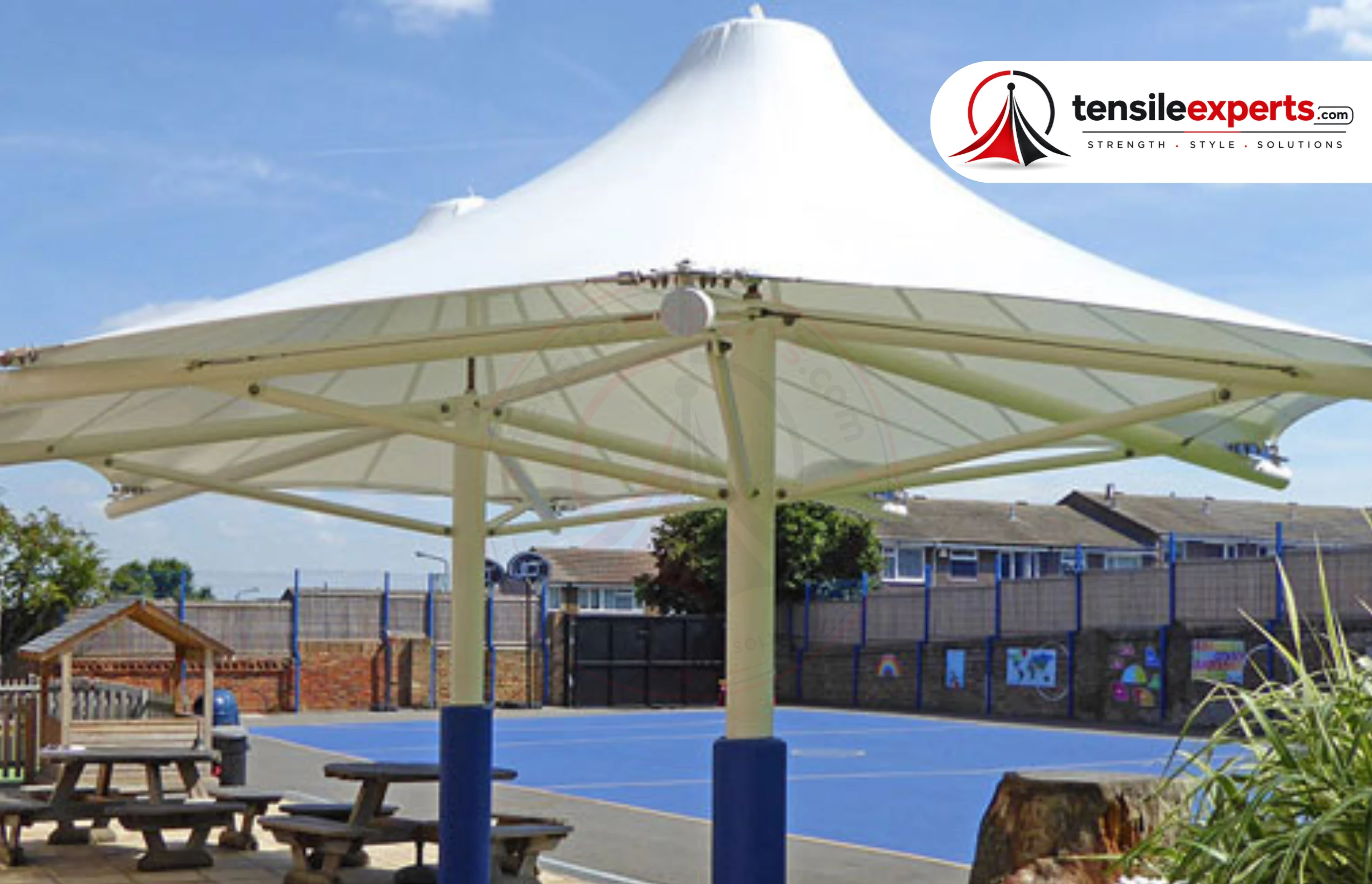
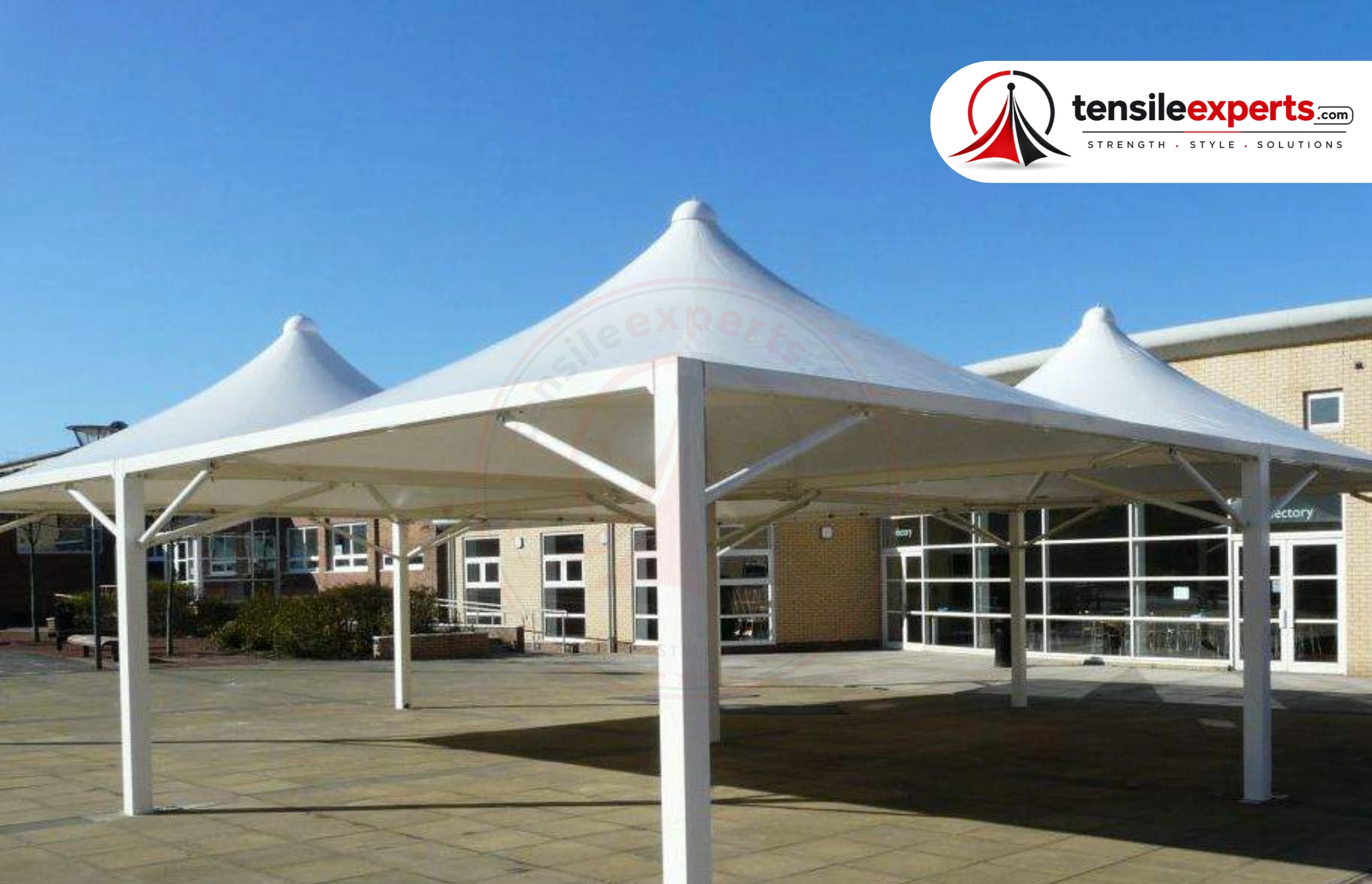
A tensile umbrella structure is a single-column, inverted-cone design — the single central column, rather than corner posts or wall mounting, is what defines this category and keeps the entire area underneath fully open and usable. That single-point footing is also what makes umbrella units flexible to place: one per table, one per lounging spot, spaced however your layout actually needs.
Single Unit vs. Multi-Unit Layouts
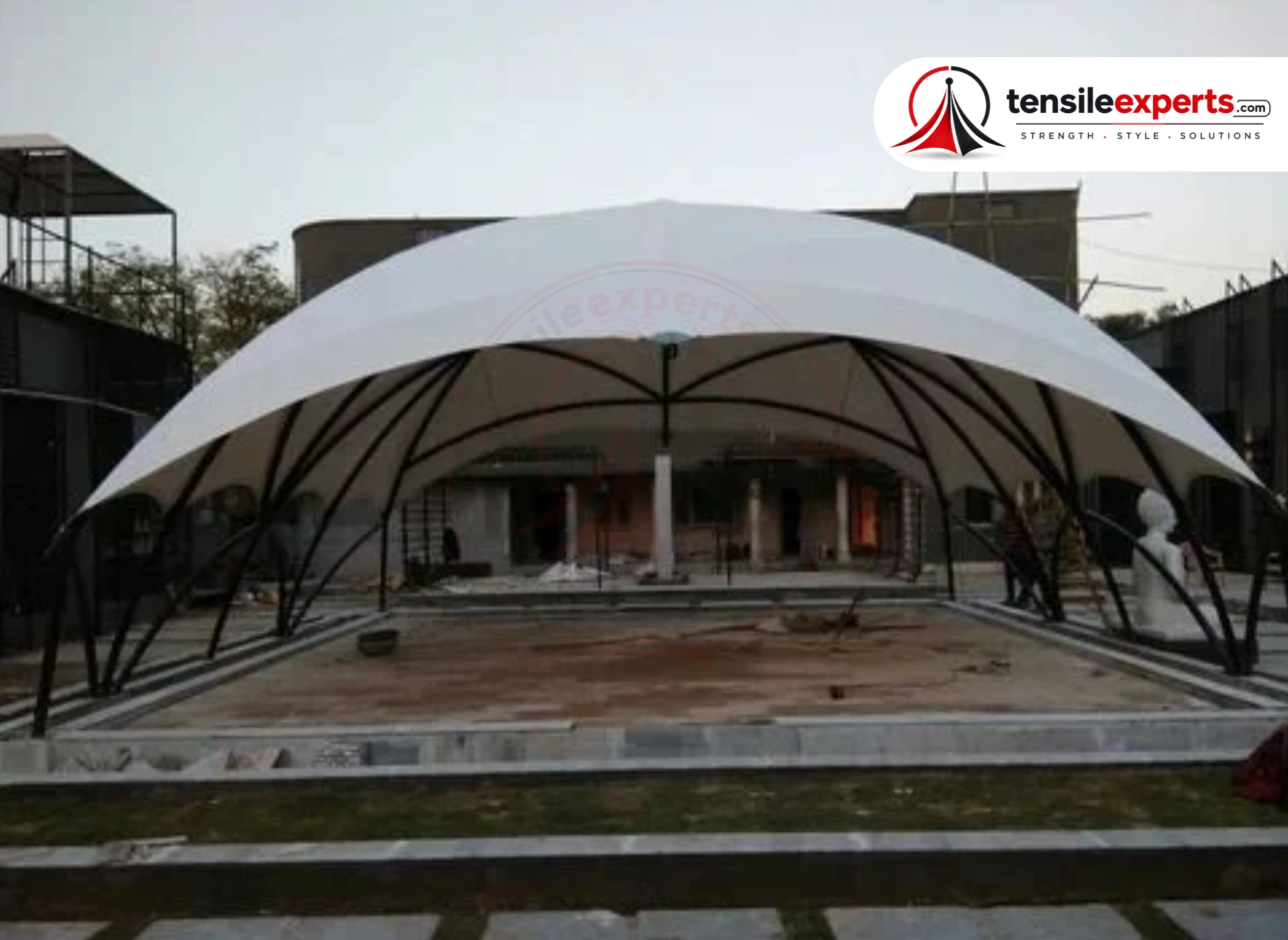
Most cafe and poolside projects use several umbrella units spaced across the seating area rather than one oversized structure — each unit covers a defined spot, which keeps the layout flexible if furniture ever gets rearranged. A single unit works fine for one table or one focal seating spot; multi-unit layouts are where the real planning happens, since unit spacing needs to account for both shade coverage and clear walking paths between units.
Fixed vs. Tilting/Adjustable Design
Fixed umbrella units are simpler and lower-cost, and work well where the sun angle doesn't meaningfully change what needs covering through the day. Tilting or adjustable designs let you shift the coverage angle as the sun moves — worth the extra cost for spaces with strong directional sun exposure at certain times of day, like a west-facing poolside deck in the afternoon.
Central Column Placement
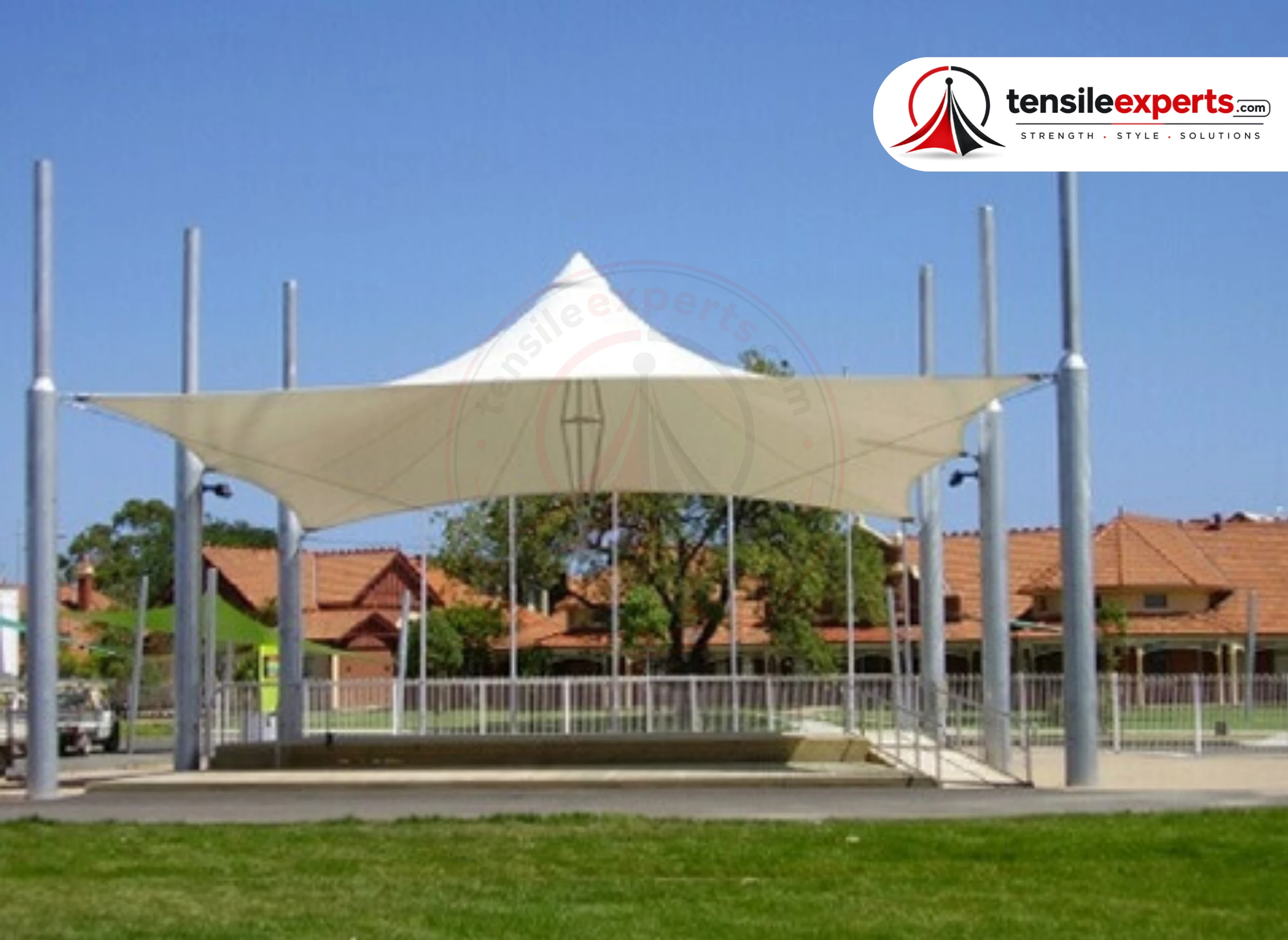
Because each unit stands on a single central column, placement is planned specifically around keeping the area underneath fully usable — the column shouldn't land where it blocks a walking path, a table's natural position, or sightlines across the space. This is a small detail that matters more than it sounds, since it's the one design choice unique to umbrella structures that a canopy or gazebo doesn't have to solve for.
Choosing a Fabric Grade
PVC is the standard fabric grade for most umbrella structures, given their smaller individual scale compared to larger canopy or roof projects. See our tensile structure page for the full fabric-grade breakdown if you're considering PTFE for a longer service life.
Technical Specifications
| Specification | Details |
|---|---|
| Typical Span / Size | 3m–8m diameter |
| Typical Height / Clearance | Mast height 2.5m–4m |
| Structural Form | Inverted umbrella/cone, single-column |
| Recommended Fabric Grade | PVC standard |
| Typical Use Cases | Cafes, poolsides, open seating areas |
| Ideal Site Conditions | Single-point sites wanting open space underneath |
| Foundation / Anchoring | Single central footing per unit |
What Actually Drives the Cost
Unit count is the biggest cost driver for a multi-unit project — a 6-unit poolside layout costs proportionally more than a single cafe-table unit. Size per unit and fixed-vs-tilting design are the next factors.
Tensile Umbrella Structure — From ₹355/sq.ft.
Umbrella vs. Gazebo vs. Canopy
These three all provide outdoor shade but solve different layout problems:
| Aspect | Umbrella | Gazebo | Canopy |
|---|---|---|---|
| Footprint | Single-column, per unit | Freestanding, standalone | Wall-mounted or standalone cantilever |
| Coverage | One spot per unit | Fully covered, walk-in | A defined path or area |
| Best For | Flexible, spot-by-spot shading | A standalone garden/relaxation feature | Entrances, walkways, fixed seating areas |
| Typical Setting | Cafes, poolsides | Gardens, resorts, lawns | Building entrances, walkways |
See our gazebo buying guide if you want one larger walk-in structure instead, or our canopy structure page if you're covering a fixed path or entrance rather than individual seating spots.
Our Process, Step by Step
| Step | What Happens |
|---|---|
| 1. Initial Discussion | A call or site visit to understand your seating layout and unit count. |
| 2. Site Assessment | Column placement planning around walking paths and seating positions. |
| 3. Design & Fabric Recommendation | Fixed or tilting design and fabric grade proposed per unit. |
| 4. Quote & Sign-Off | A site-specific quote confirmed before fabrication begins. |
| 5. In-House Fabrication | Cutting, welding, and frame preparation carried out by our own team. |
| 6. Installation | On-site erection and tensioning for each unit, per the confirmed layout. |
| 7. Handover & After-Sales | Final inspection with you, followed by ongoing maintenance support. |
Maintenance
Periodic cleaning, re-tensioning, and hardware inspection are recommended per unit, same as any tensile fabric structure — a multi-unit layout is worth inspecting on a rotation rather than all at once, especially for a commercial cafe or poolside property in continuous use. See our full maintenance guide for the complete checklist.
Related Guides


Available in Your City
We design, fabricate, and install tensile umbrella structures pan-India. Here's the product page for several major cities to start with:
Not seeing your city? We install pan-India — get in touch to confirm coverage.
Explore by Product
See the full product directory for everything we design and fabricate.
Frequently Asked Questions
Planning tensile umbrella structures for your space? Get in touch for a free site consultation.