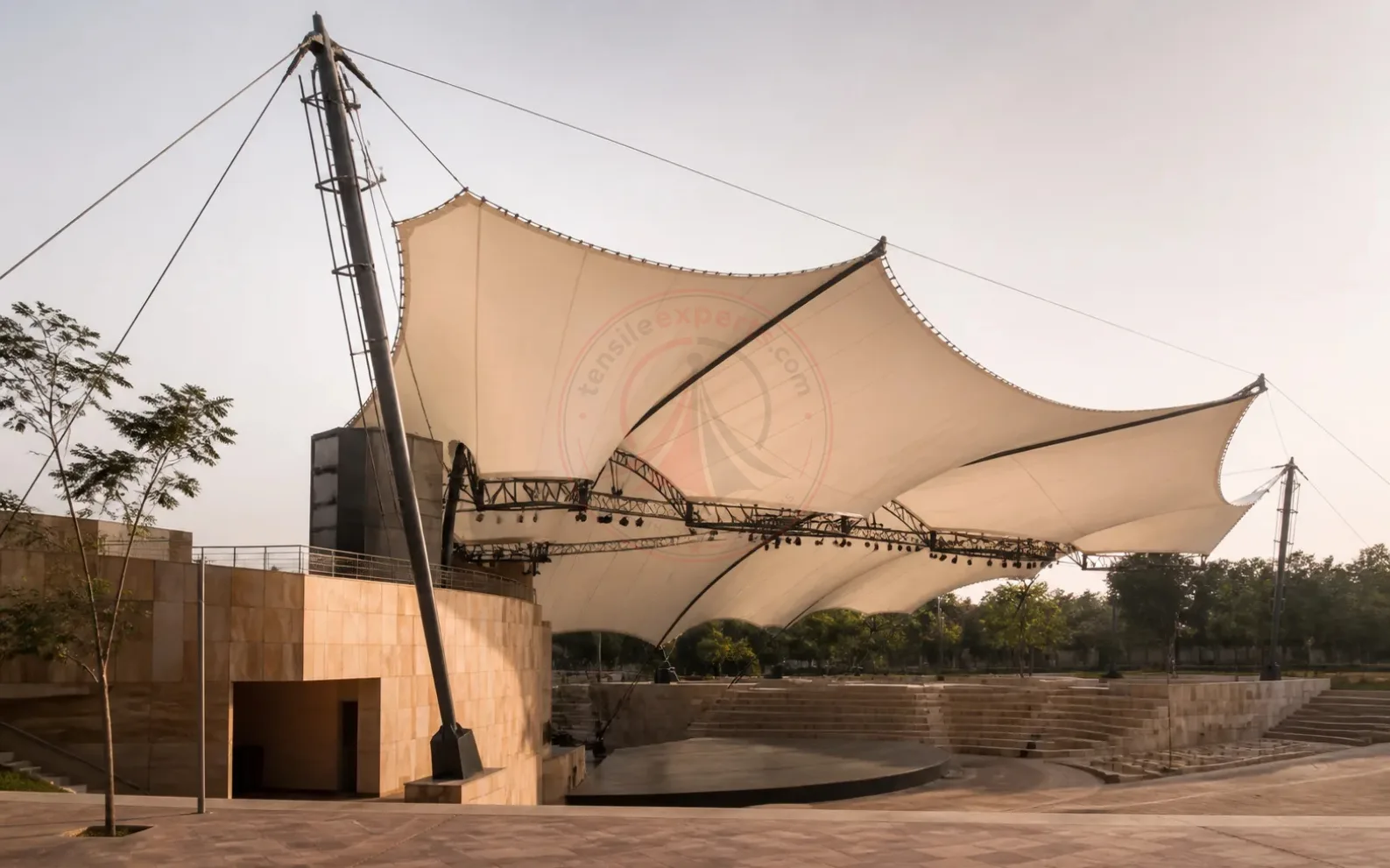






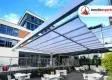

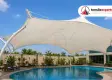
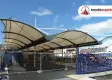
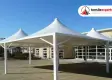

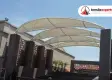
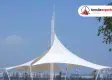


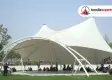


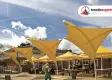













A tensile gazebo looks like a simple garden feature from the outside, but the choices behind it — conical vs. pyramid, open-sided vs. partially enclosed, single unit vs. a small cluster, PVC vs. PTFE — genuinely change how it looks and holds up over time. This guide goes through all of it, plus how a gazebo actually differs from a pergola or umbrella structure, since those three get grouped together more than they should.
In This Guide
- What Is a Tensile Gazebo
- Design Forms: Conical vs. Pyramid
- Open-Sided vs. Partially Enclosed
- Sizing: Single Unit vs. a Cluster
- Choosing a Fabric Grade
- Technical Specifications
- Foundation & Placement
- What Actually Drives the Cost
- Gazebo vs. Pergola vs. Umbrella
- Our Process, Step by Step
- Maintenance
- Related Guides
- Available in Your City
- Explore by Product
- Frequently Asked Questions
What Is a Tensile Gazebo
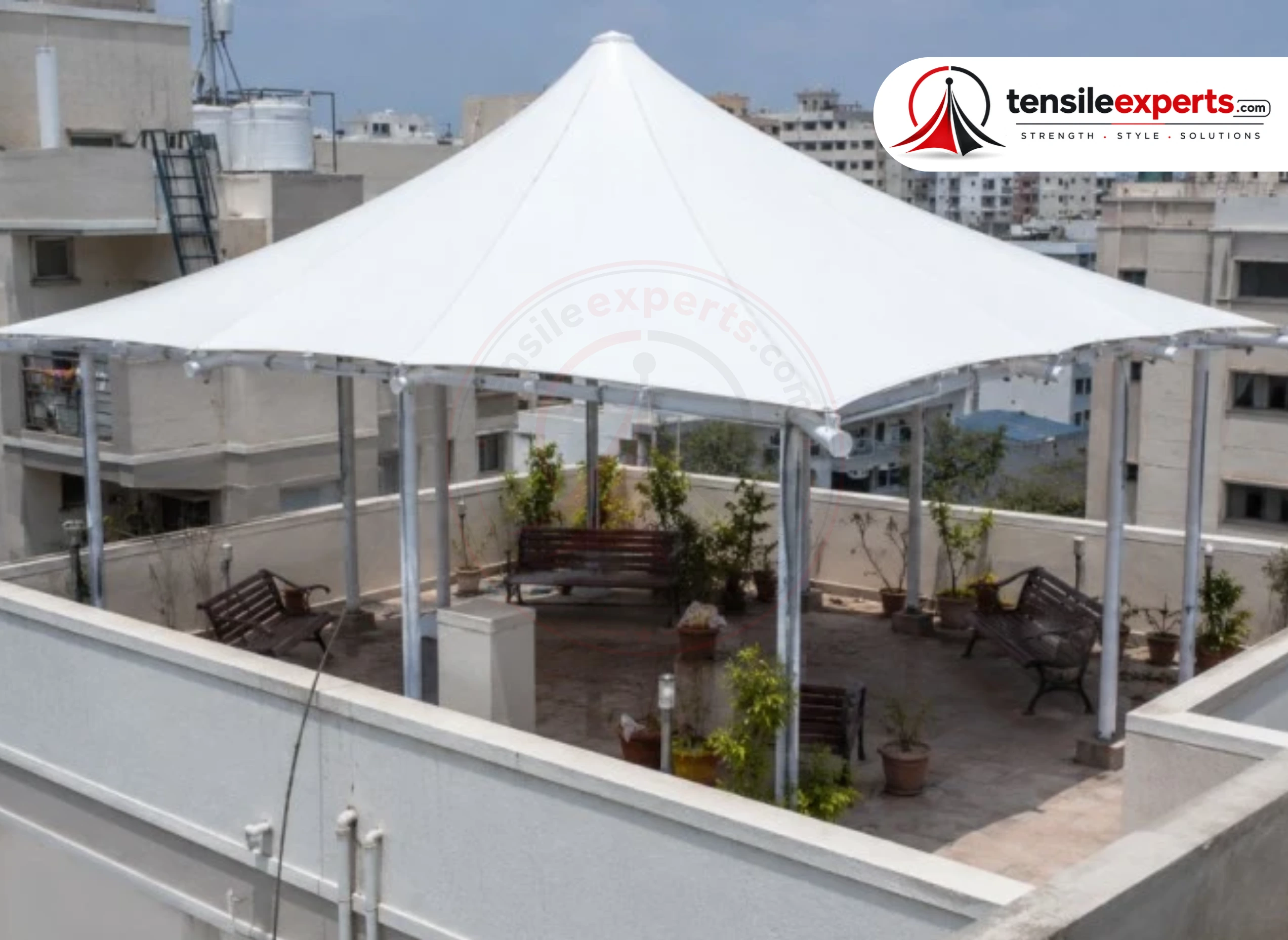
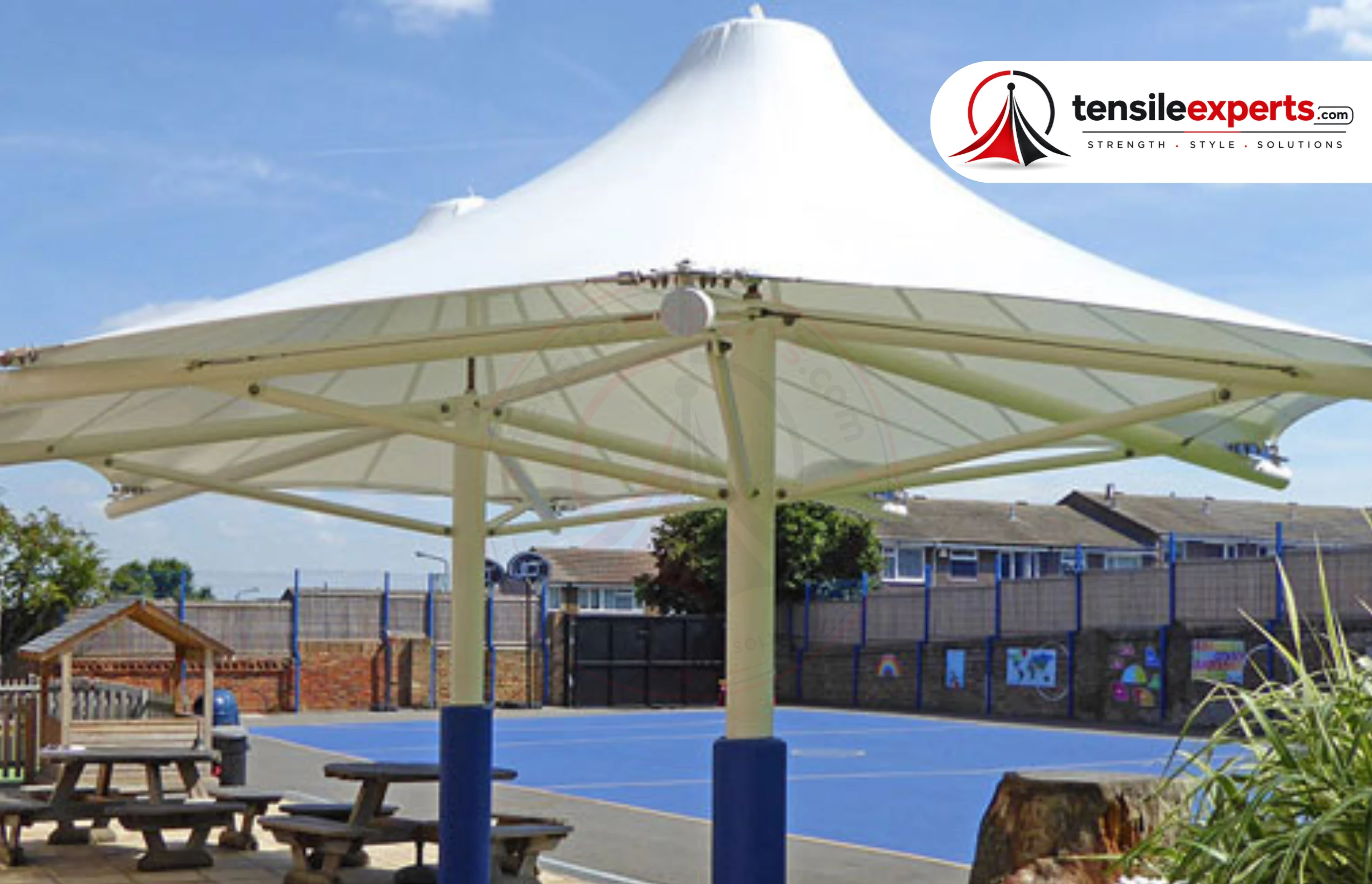
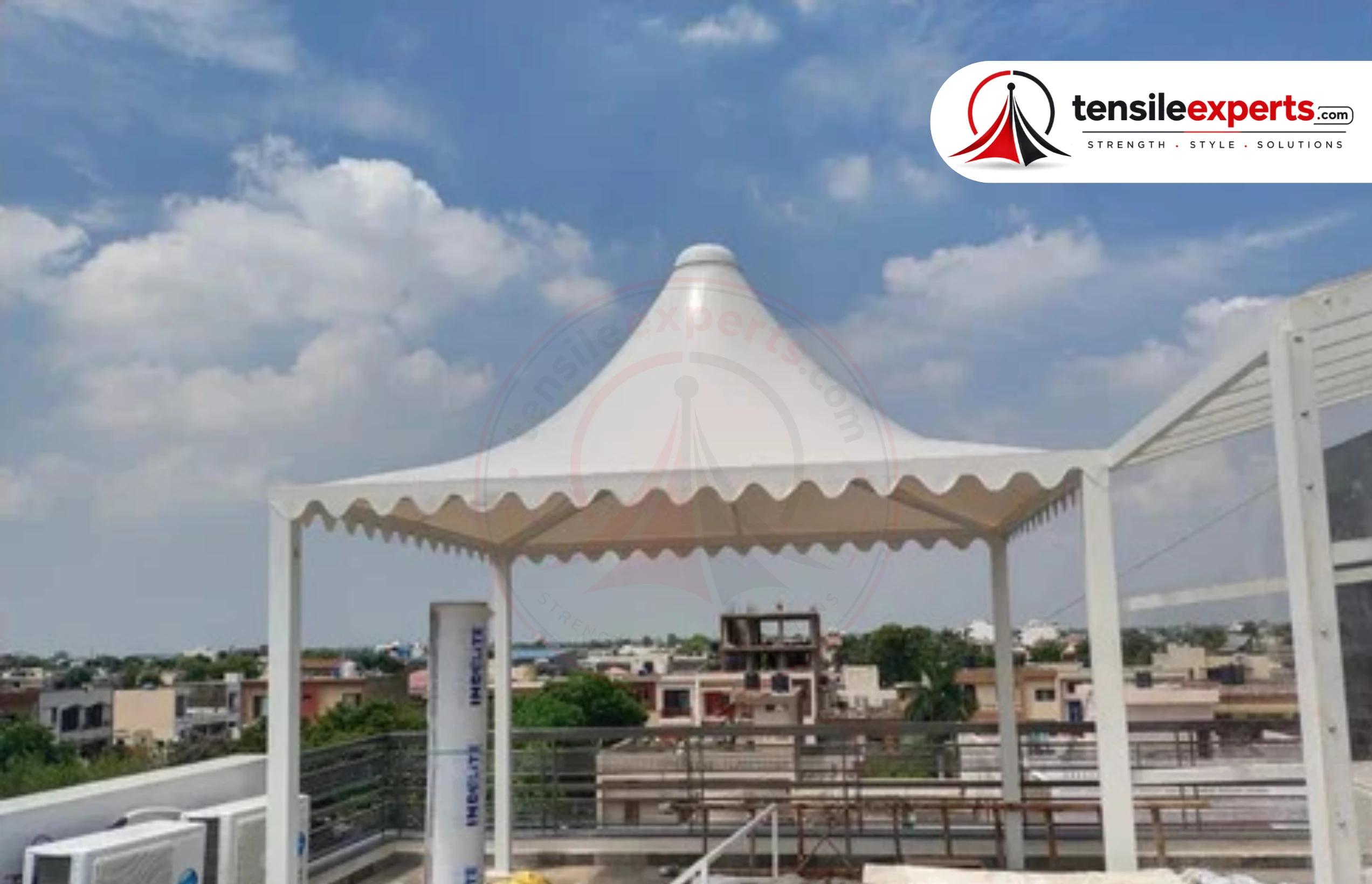
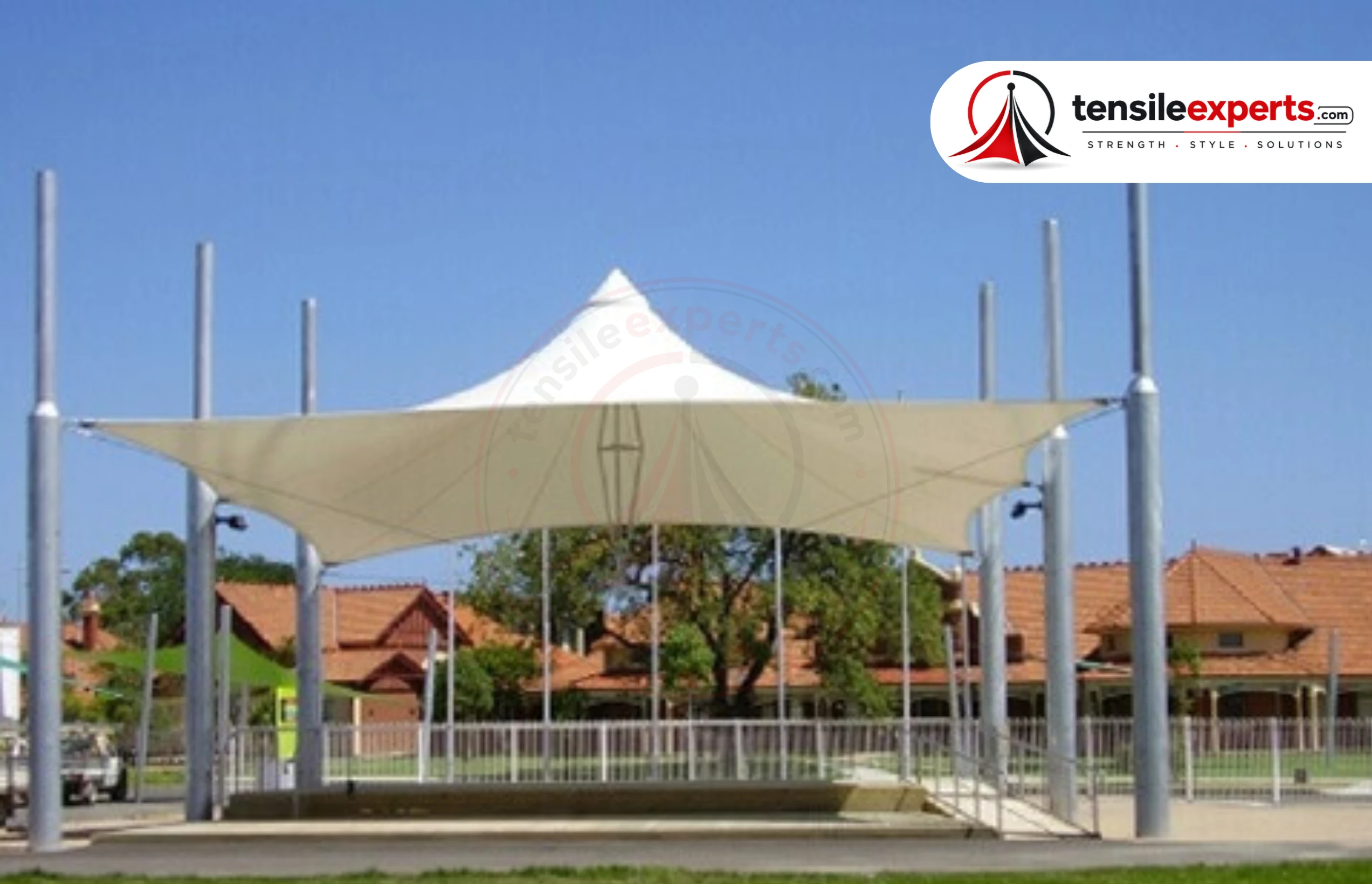
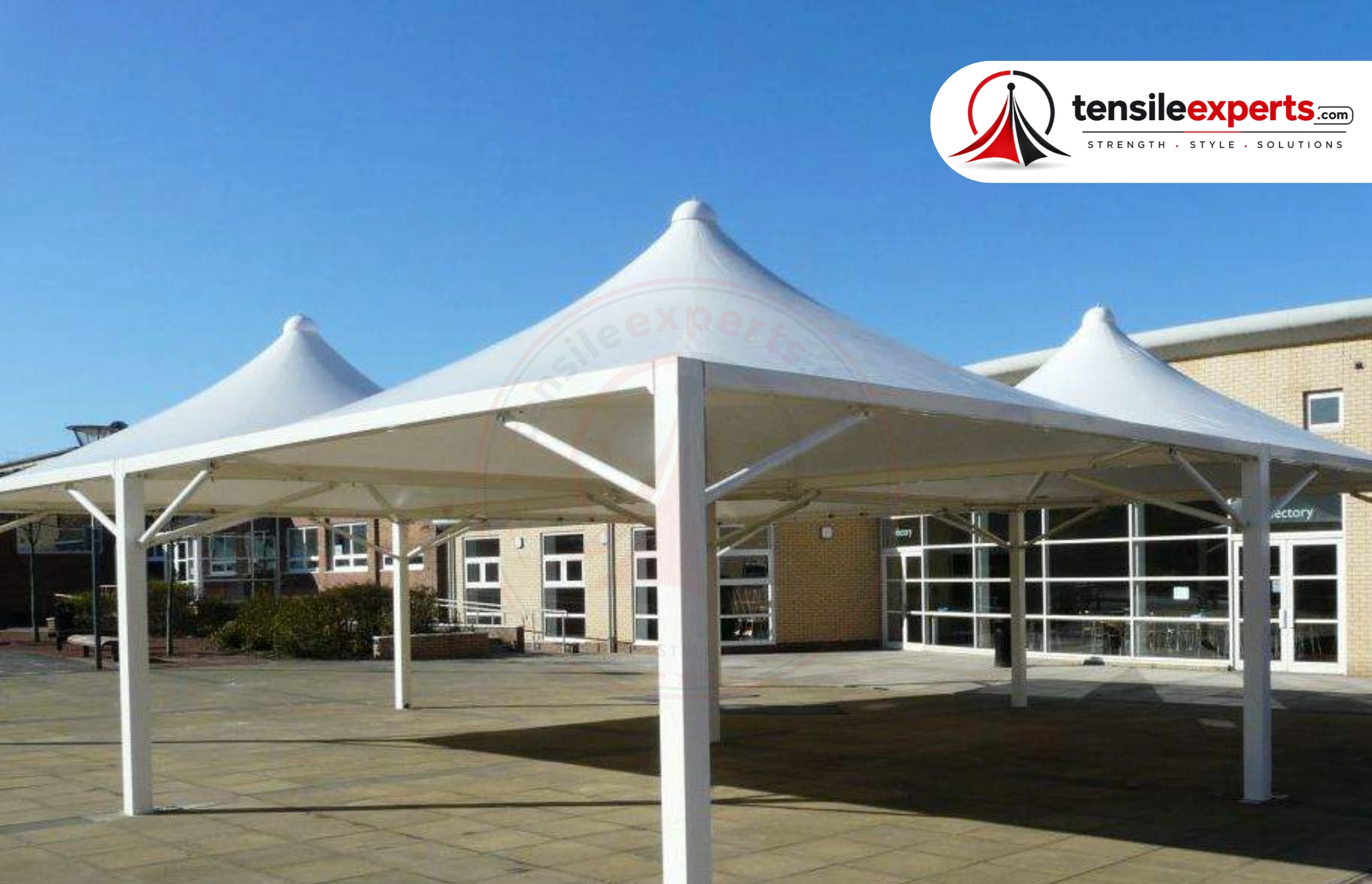
A tensile gazebo is a freestanding fabric-membrane structure, standing on its own footing rather than attached to a building, deck, or patio. That standalone footprint is what makes gazebos work as garden and resort features, poolside structures, or lawn focal points — placed wherever the landscaping calls for it, not tied to an existing surface the way a pergola or entrance canopy is.
Fabrication and installation timelines are typically shorter than larger connected structures, since a gazebo is a standalone unit with a compact footprint and doesn't need to tie into an existing building's mounting points.
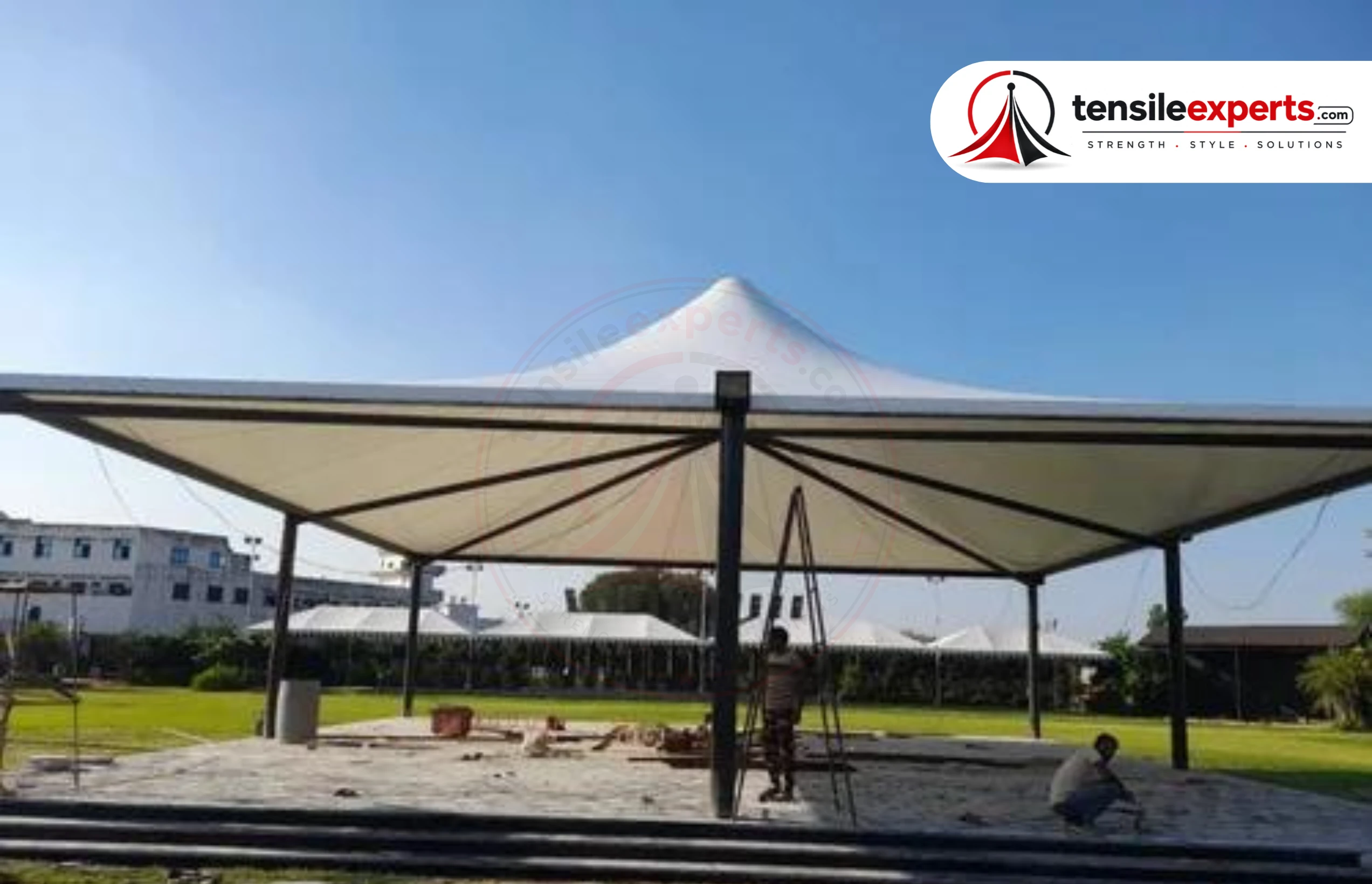
Design Forms: Conical vs. Pyramid
We confirm which shape actually fits your setting during the design discussion — here's the real distinction:
| Aspect | Conical | Pyramid |
|---|---|---|
| Visual Style | Organic, softer silhouette | Cleaner straight lines, more architectural |
| Best Suited Setting | Gardens, resorts, informal landscaping | Modern courtyards, formal poolside/lawn layouts |
| Structural Basis | Central mast, radial fabric panels | Central mast, flat triangular fabric faces |
| Fabric Grade | PVC standard, PTFE for longer life | PVC standard, PTFE for longer life |
Open-Sided vs. Partially Enclosed
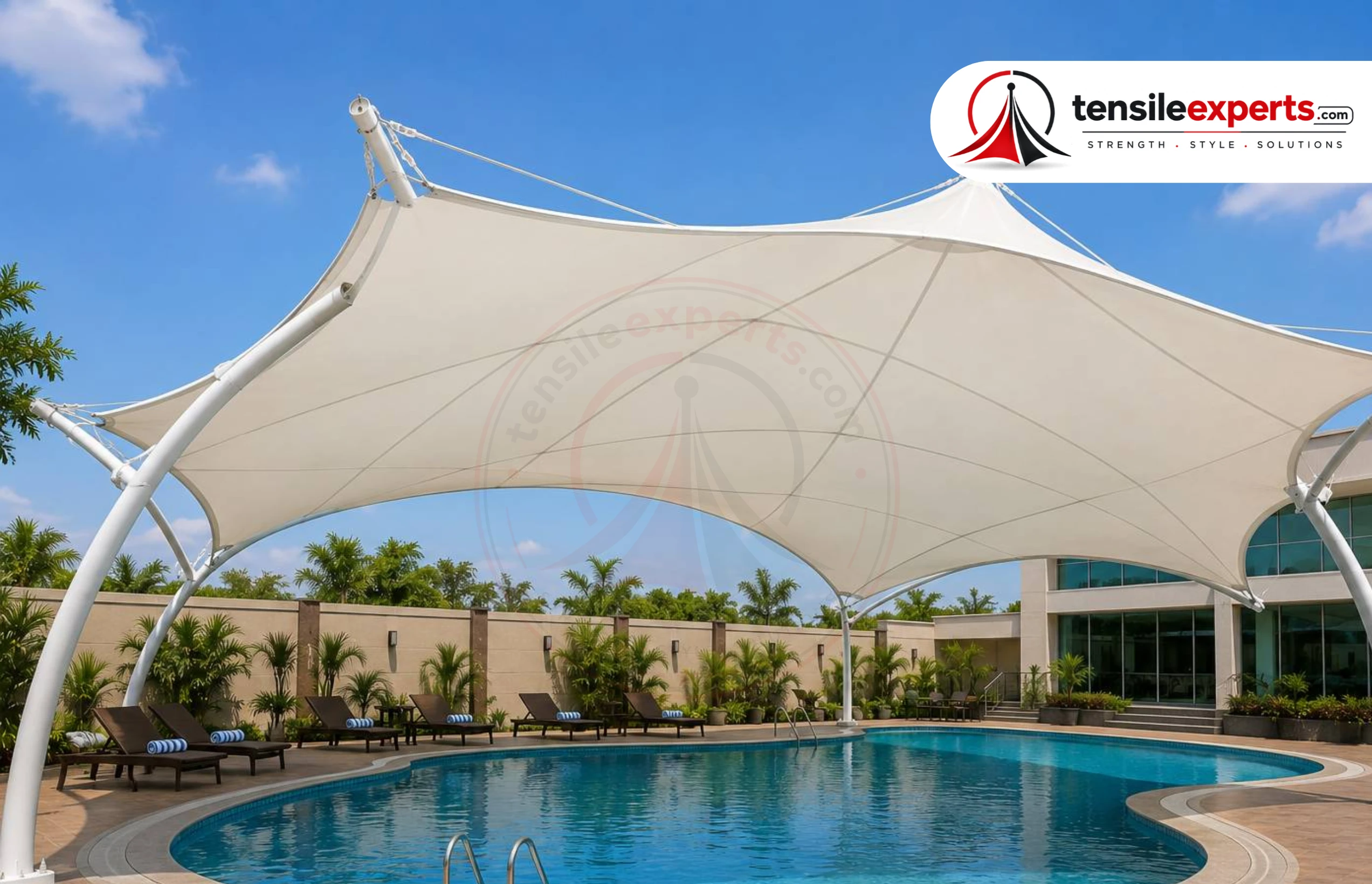
Open-sided is the more common choice for gardens and poolside settings, where airflow and an unobstructed view matter more than wind/insect protection. Partially enclosed designs add fabric or mesh side panels — worth considering for a spot exposed to strong prevailing wind, or where some privacy is wanted. Either way, the roof structure and central mast don't change — only the sides do.
Sizing: Single Unit vs. a Cluster
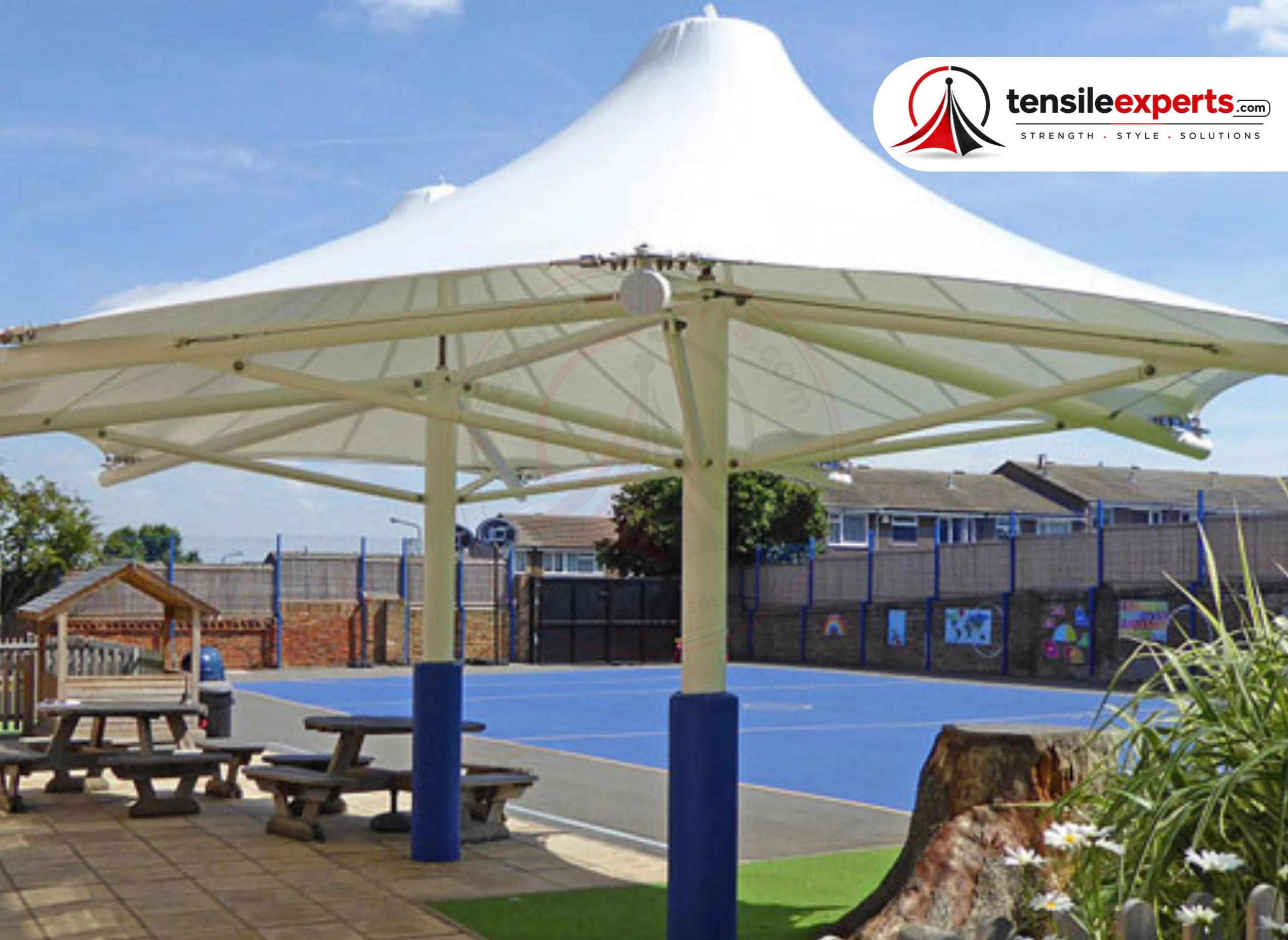
Most residential and garden projects use one gazebo sized to the seating/relaxation area it covers — 3m to 8m diameter or side length covers most needs, from a small 2-seater lawn feature to a larger resort-scale gathering spot. For resorts and hospitality projects, a cluster of 2-3 smaller gazebos spaced across a garden or poolside area is common too, giving guests multiple standalone spots rather than one large shared structure — worth discussing if you're planning for a hospitality or multi-family layout rather than a single home.
Choosing a Fabric Grade
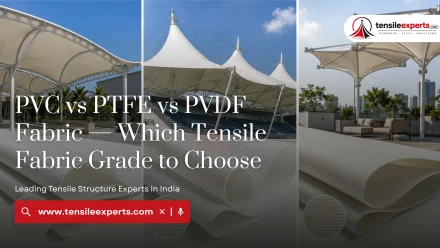
PVC is the standard choice for most gazebos — it's cost-effective and holds up well for typical garden/resort exposure. PTFE is worth considering if you want a longer service life without needing to re-cover the fabric down the line, particularly for a resort or commercial property where the gazebo sees continuous use and exposure year-round. See our tensile structure page for the full fabric-grade breakdown.
Technical Specifications
| Specification | Details |
|---|---|
| Typical Span / Size | 3m–8m diameter/side |
| Typical Height / Clearance | Mast height 2.5m–4m |
| Structural Form | Conical or pyramid, freestanding |
| Recommended Fabric Grade | PVC standard; PTFE for longer service life |
| Typical Use Cases | Gardens, resorts, poolside/lawn features |
| Ideal Site Conditions | Garden or lawn ground suited to a standalone freestanding footing |
| Foundation / Anchoring | Standalone post footing, freestanding from other structures |
Foundation & Placement
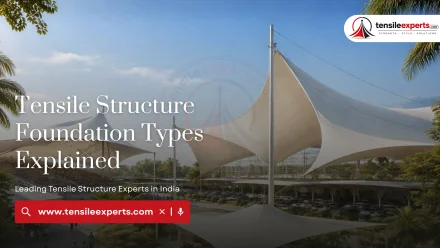
Since a gazebo is freestanding, its footing is independent of any nearby structure — a standalone post footing sized to the mast height and local soil conditions, confirmed during the site visit. Placement relative to landscaping, views, and existing garden features matters more here than for most structures, since a gazebo is often as much a visual feature as a functional one — we factor this into the design discussion, not just the engineering.
What Actually Drives the Cost
Diameter and fabric grade are the two biggest levers — a small PVC garden gazebo costs meaningfully less than a larger PTFE resort-scale unit. Site accessibility (garden ground vs. a paved area) and whether you're ordering a single unit or a cluster also factor in.
Tensile Gazebo Structure — From ₹350/sq.ft.
Gazebo vs. Pergola vs. Umbrella — Which One Do You Need?
These three get confused with each other more than any other group in our range. Here's the real distinction:
| Aspect | Gazebo | Pergola | Umbrella |
|---|---|---|---|
| Footprint | Freestanding, standalone | Attached to/integrated with a deck | Single-column, standalone |
| Coverage | Fully covered, walk-in | Partial or full, open-frame feel | Single spot, one table/seating |
| Typical Setting | Gardens, resorts, lawns | Patios, decks, terraces | Cafes, poolside, individual seating |
| Best For | A standalone visual/relaxation feature | Shading an existing outdoor living space | Flexible, spot-by-spot shade |
See our full pergola vs. gazebo comparison for a deeper breakdown between just those two, or our umbrella structure page if flexible spot-shading fits your space better.
Our Process, Step by Step
| Step | What Happens |
|---|---|
| 1. Initial Discussion | A call or site visit to understand your garden/lawn layout and intended use. |
| 2. Site Assessment | Placement, soil/anchoring check, and sun/wind exposure review. |
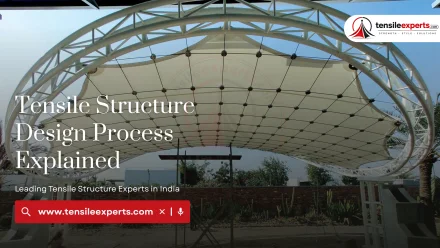
| 3. Design & Fabric Recommendation | Conical or pyramid, open-sided or enclosed, and fabric grade proposed to fit your setting. |
| 4. Quote & Sign-Off | A site-specific quote confirmed before fabrication begins. |
| 5. In-House Fabrication | Cutting, welding, and frame preparation carried out by our own team. |
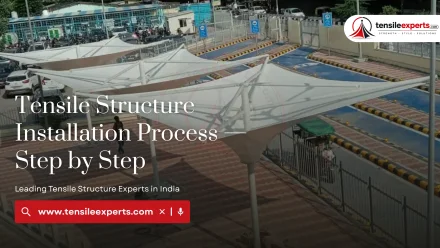
| 6. Installation | On-site erection and tensioning, scheduled around your site's access. |
| 7. Handover & After-Sales | Final inspection with you, followed by ongoing maintenance support. |
Maintenance
Periodic cleaning, re-tensioning, and hardware inspection are recommended, same as any tensile fabric structure — a gazebo's smaller, freestanding footprint generally makes inspection quicker than a larger connected structure. See our full maintenance guide for the complete checklist.
Related Guides

Available in Your City
We design, fabricate, and install tensile gazebos pan-India. Here's the product page for several major cities to start with:
Not seeing your city? We install pan-India — get in touch to confirm coverage.
Explore by Product
See the full product directory for everything we design and fabricate.
Frequently Asked Questions
Planning a tensile gazebo? Get in touch for a free site consultation.