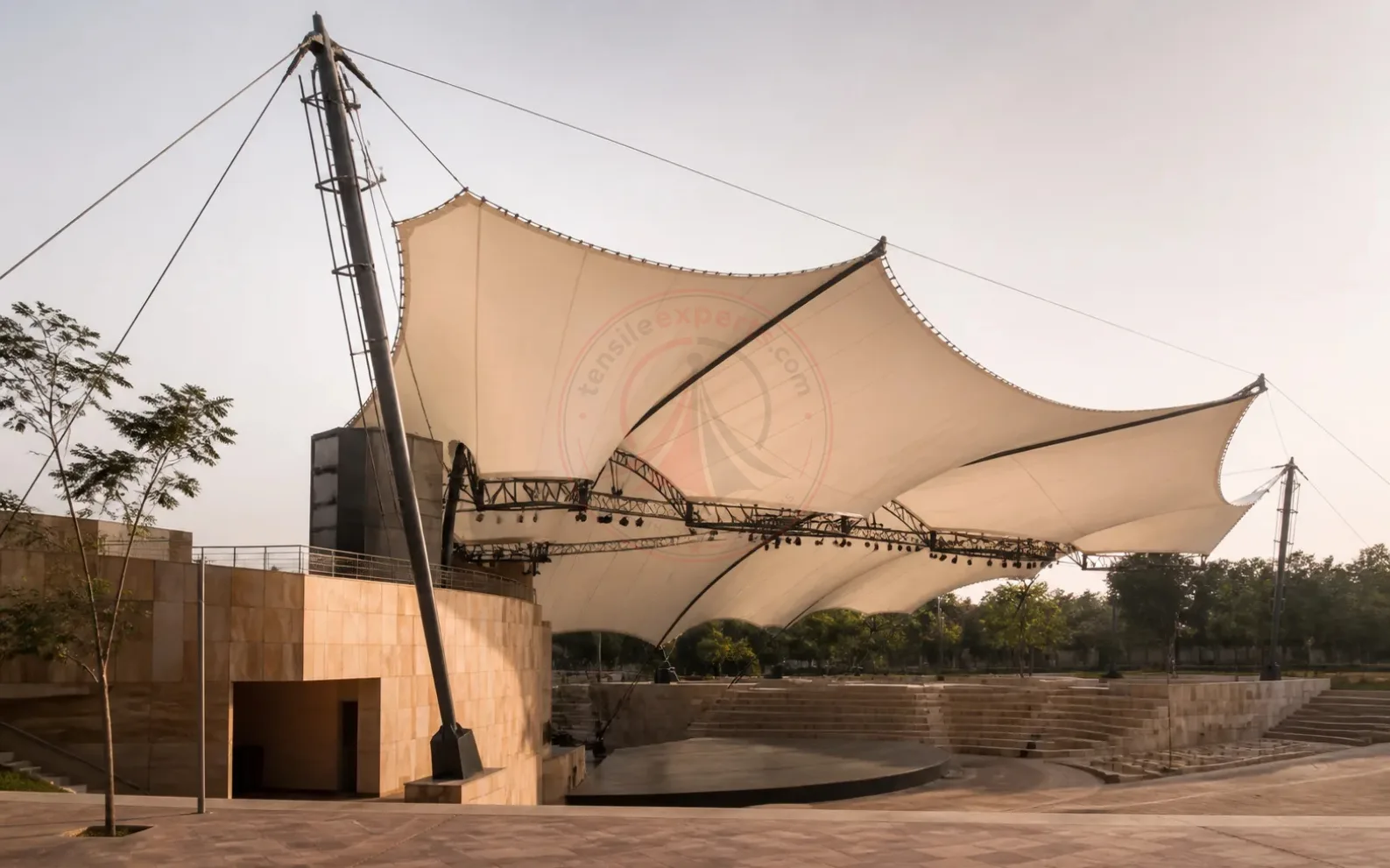





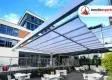

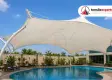
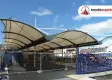
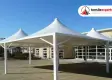



















A badminton court roof has real sport-specific requirements a generic sports-court cover doesn't automatically solve for — genuine overhead clearance for shuttle flight, wind-sensitivity, and even lighting without harsh shadows. This guide goes through what a proper tensile badminton court structure needs, grounded in real court dimensions rather than a generic canopy sized by guesswork.
In This Guide
- What a Badminton Court Structure Needs to Solve
- Real Court Dimensions & Clearance
- Single Court vs. Multi-Court Layouts
- Wind Sensitivity & Enclosure
- Lighting for Competitive Play
- Choosing a Fabric Grade
- What Actually Drives the Cost
- Badminton Court Structure vs. General Stadium Structure
- Our Process, Step by Step
- Maintenance
- Related Guides
- Available in Your City
- Explore by Product
- Frequently Asked Questions
What a Badminton Court Structure Needs to Solve
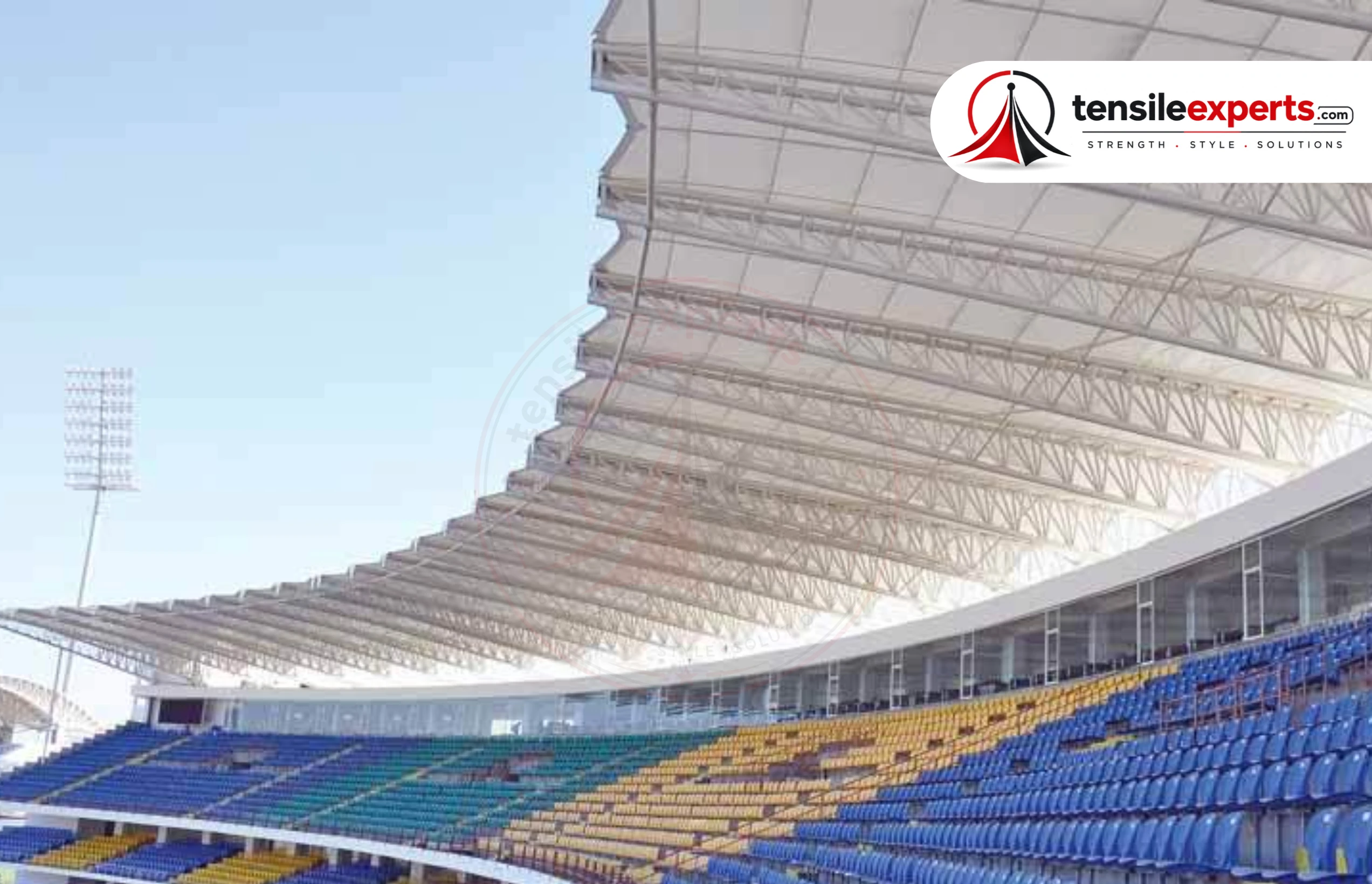
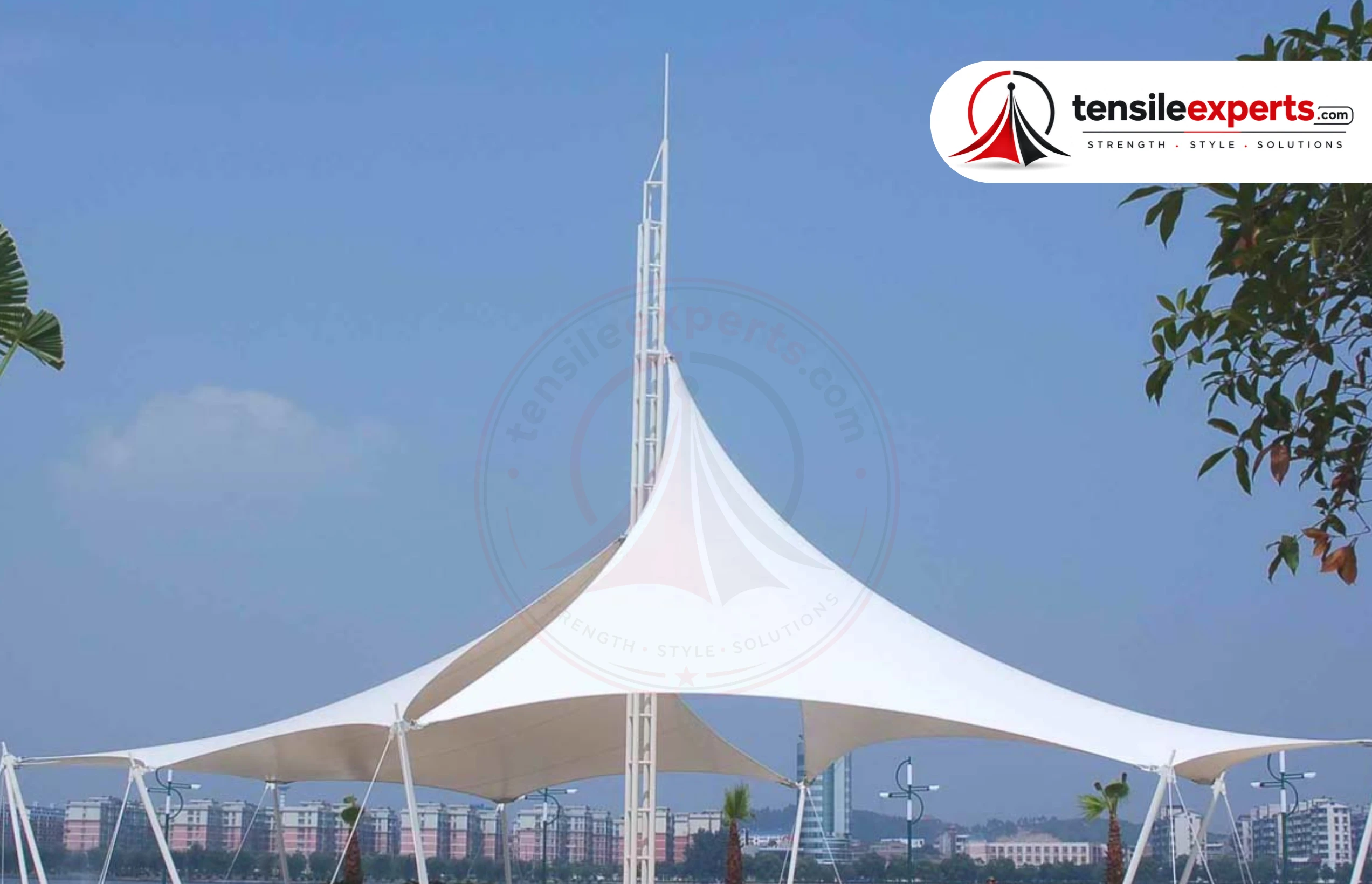
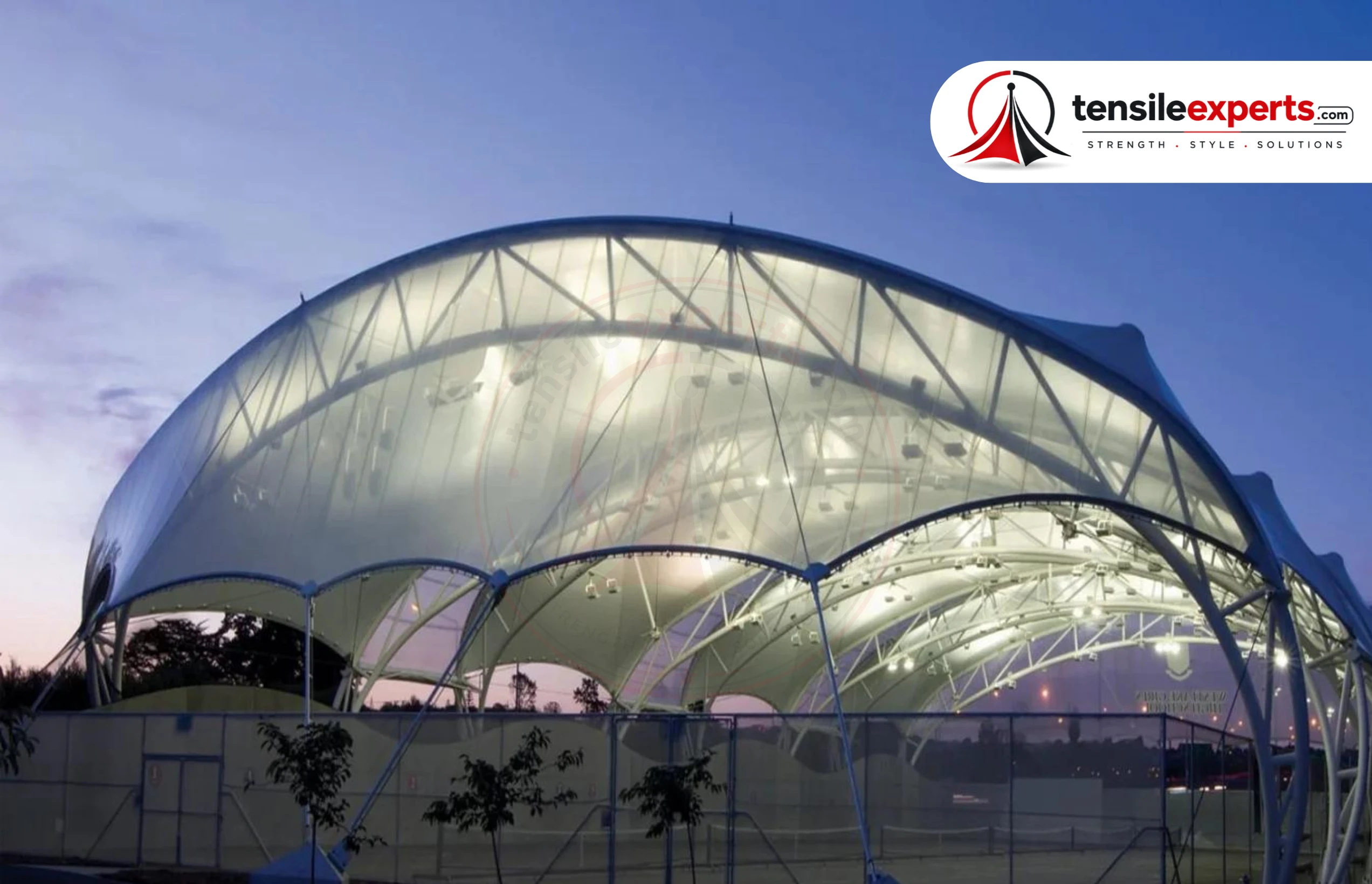
Tennis, badminton, and other sports courts needing roof cover are a real use case within our stadium tensile structure product line — but a badminton court isn't just a smaller version of a stadium roof. The sport's real requirements — shuttle-flight clearance, wind sensitivity, even lighting — shape the design more than span size alone does.
Real Court Dimensions & Clearance
A BWF-standard badminton court is 13.4m x 6.1m for doubles play, but the structure covering it needs to account for more than the court lines — overhead clearance for shuttle flight during a smash is the real design constraint, well beyond net height. We size clearance specifically for badminton use during the design phase rather than applying a generic sports-court default that might leave the space feeling cramped overhead.
Single Court vs. Multi-Court Layouts
Multi-court complexes are common for commercial and club facilities — the structure spans several courts side by side, either under one continuous roof or connected modular bays. Tell us your court count and layout during the initial discussion so we can plan support placement that doesn't intrude on any individual court's play area.
Wind Sensitivity & Enclosure
Badminton is genuinely more wind-sensitive than most other court sports — the shuttle's flight is affected by even moderate air movement, which is why fully enclosed or at least well-sheltered coverage matters more here than for a tennis or basketball court. We favor more enclosed structural forms over a fully open-sided design specifically for this reason.
Lighting for Competitive Play
Even lighting without harsh shadows matters for competitive badminton, and evening use is common for club and commercial facilities. Lighting mounting points are planned into the structure during design if you tell us your usage pattern and whether the facility hosts competitive play or casual/recreational use.
Choosing a Fabric Grade
PTFE is worth considering for a multi-court commercial facility in continuous use, given its durability over PVC's typical service life. PVC suits smaller or budget-conscious single-court projects. See our tensile structure page for the full fabric-grade breakdown.
What Actually Drives the Cost
Court count is the biggest cost driver — a multi-court commercial facility costs proportionally more than a single backyard or club court. Fabric grade and enclosure level (fully enclosed vs. partially open-sided) are the next factors.
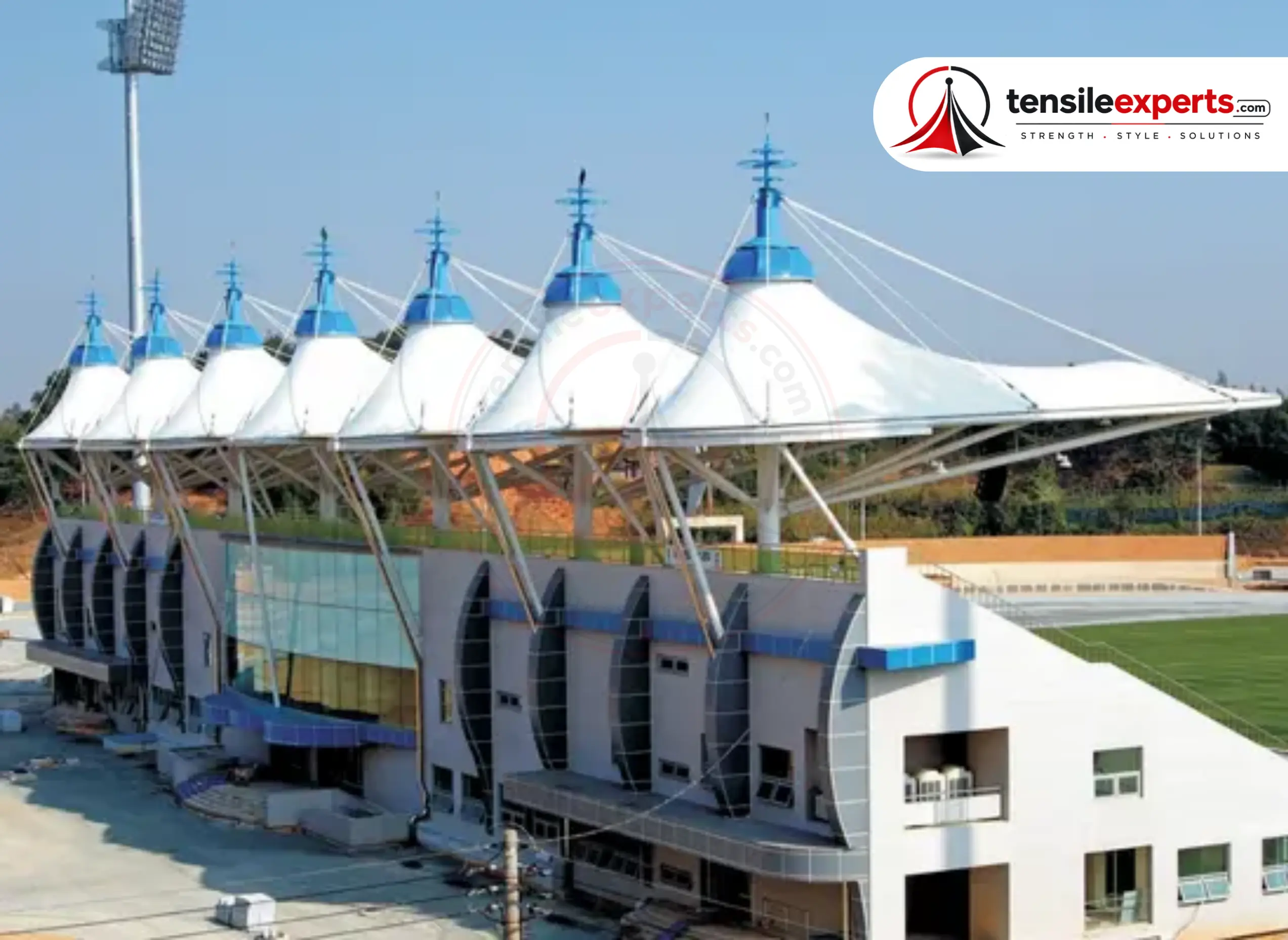
Stadium Tensile Structure — From ₹400/sq.ft.
Badminton Court Structure vs. General Stadium Structure
Both use the same underlying product, but scale and requirements differ sharply:
| Aspect | Badminton Court Structure | General Stadium Structure |
|---|---|---|
| Typical Span | One or several 13.4m x 6.1m courts | 30m–150m+, spectator-stand scale |
| Key Requirement | Wind-sheltered enclosure, shuttle clearance | Sightlines, wind uplift over an open stand |
| Enclosure | Favor fully enclosed or sheltered | Typically open-sided |
| Typical Setting | Clubs, schools, commercial sports facilities | Sports stadiums, spectator stands |
See our stadium structures guide for the large-scale, open-air spectator version of this product.
Our Process, Step by Step
| Step | What Happens |
|---|---|
| 1. Initial Discussion | A call or site visit to understand your court count and usage pattern. |
| 2. Site Assessment | Clearance-height measurement, wind-exposure review for the site. |
| 3. Design & Fabric Recommendation | Enclosure level and fabric grade proposed for wind-sheltered coverage. |
| 4. Quote & Sign-Off | A site-specific quote confirmed before fabrication begins. |
| 5. In-House Fabrication | Cutting, welding, and frame preparation carried out by our own team. |
| 6. Installation | On-site erection and tensioning, with lighting mounting points installed as planned. |
| 7. Handover & After-Sales | Final inspection with you, followed by ongoing maintenance support. |
Maintenance
Periodic cleaning, re-tensioning, and hardware inspection are recommended, same as any tensile fabric structure — a commercial multi-court facility in continuous evening use is worth inspecting somewhat more often than a lightly-used single court. See our full maintenance guide for the complete checklist.
Related Guides




Available in Your City
We design, fabricate, and install tensile badminton court structures pan-India. Here's the underlying product page for several major cities to start with:
Not seeing your city? We install pan-India — get in touch to confirm coverage.
Explore by Product
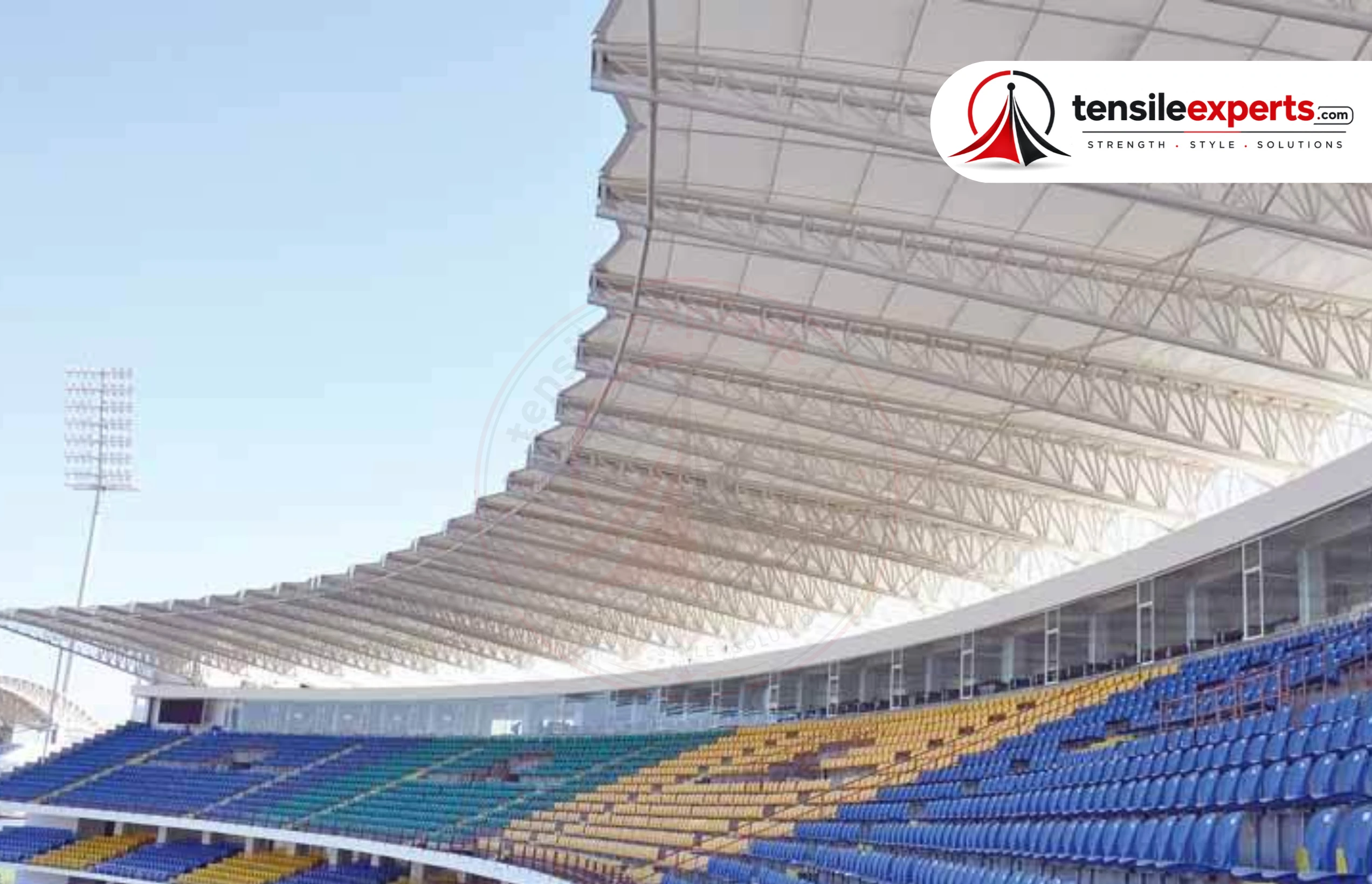

See the full product directory for everything we design and fabricate.
Frequently Asked Questions
Planning a tensile badminton court structure? Get in touch for a free site consultation.