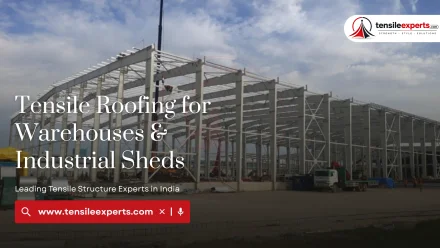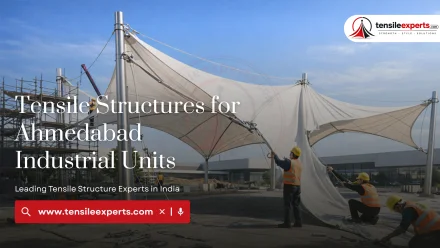



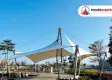



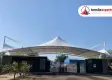
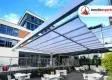


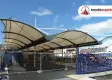
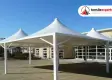

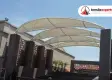



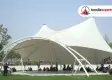
















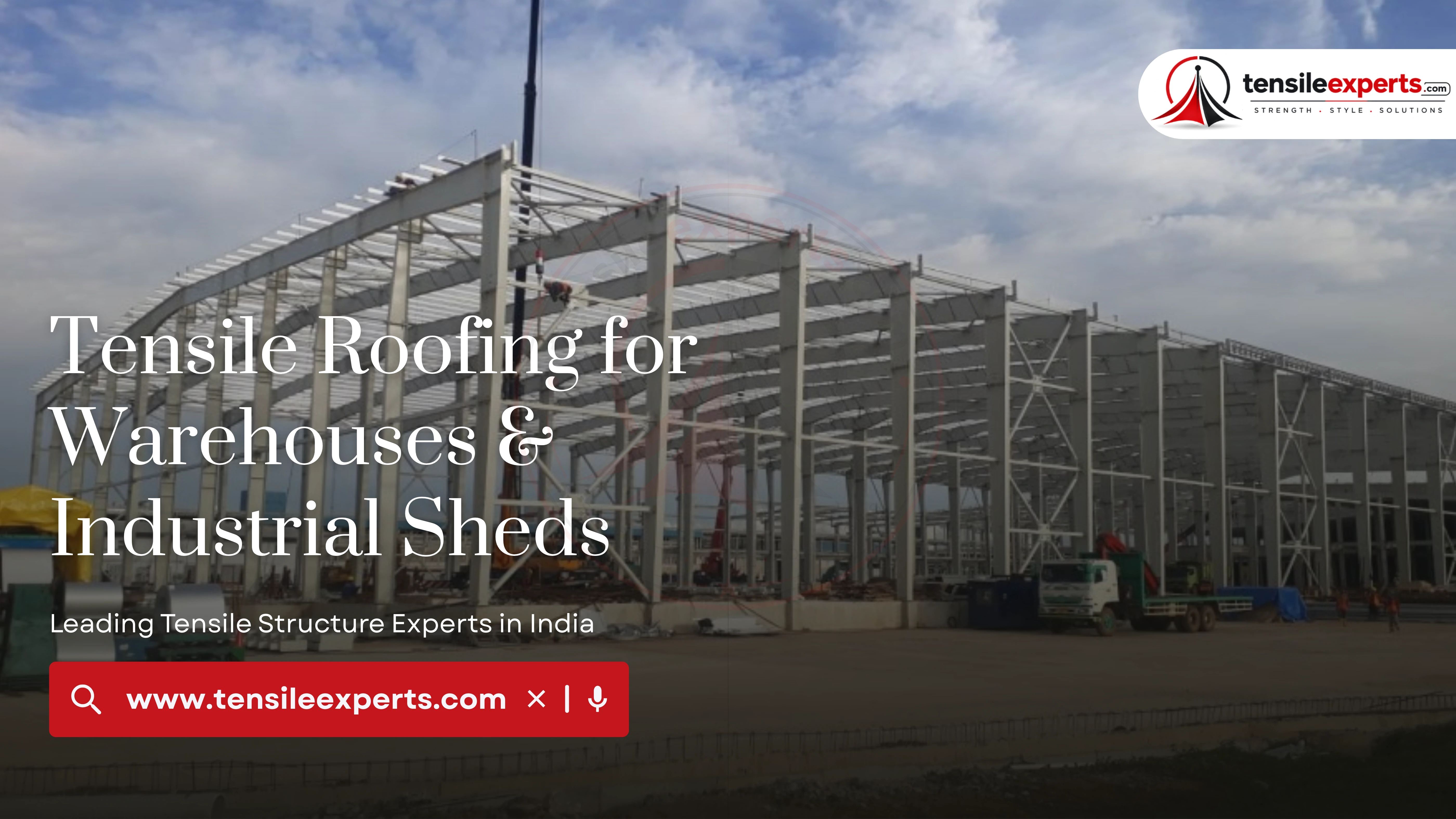
Industrial and warehousing projects are function-first: the buyer cares about clear span for machinery or racking, drainage that won't leak onto stock, and a faster install than conventional RCC or metal roofing. We've worked on industrial sheds across Faridabad, Sonipat, Manesar, Ahmedabad, Nagpur, and Coimbatore, and while the roofing product itself is largely the same across these projects, the site-specific stressors — heat and dust in Ahmedabad, lint/fiber-dust fire safety in textile units, monsoon load in some regions — genuinely change the fabric grade and drainage design each time.
Where Tensile Structures Fit In Industrial & Warehousing
- Primary roofing for industrial sheds and warehouses, as an alternative to conventional RCC or metal roofing
- Column-free or column-light spans for spinning, weaving, or other machinery-floor operations
- Warehouse roofing with racking-height clearance for storage operations
- Multi-bay industrial park roofing across several connected units
Recommended Structures

Why These Structures Suit This Industry
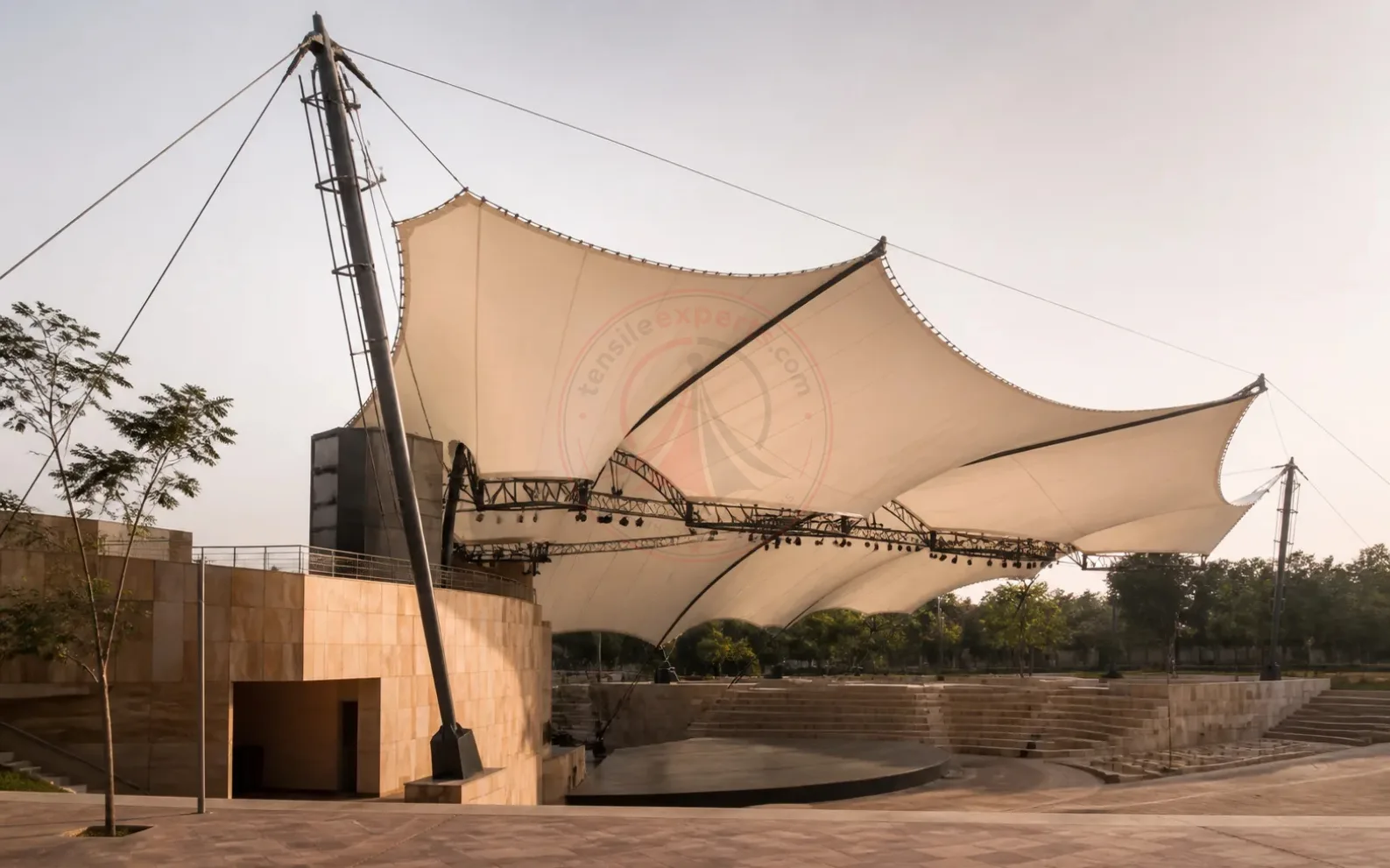
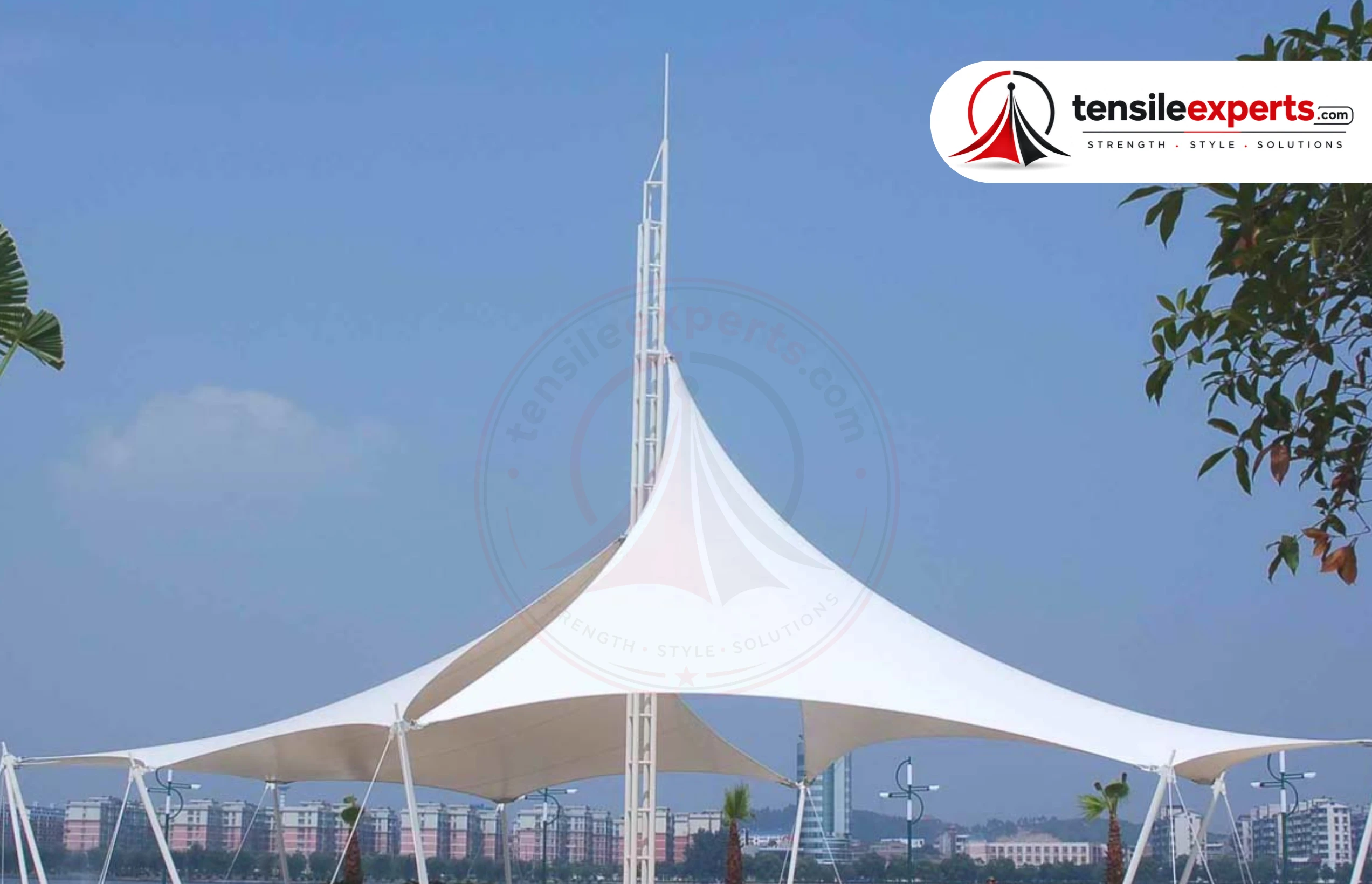
Tensile roofing is generally faster to install than a conventional RCC or metal roof of the same span, which matters when an industrial or warehousing project has a production or operational deadline. Large-span coverage (up to 100m+) also solves the column-free floor problem that machinery-heavy or racking-heavy operations need, without the load-bearing weight of a conventional roof structure of the same size.
Design Considerations
- Roof span and slope for water drainage across a large industrial footprint
- Racking-height clearance if the structure covers a warehouse rather than a production floor
- Insulation/heat considerations for the space below, depending on what the building houses
- Integration with the existing building structure if this is a retrofit rather than new-build
Material & Fabric Considerations
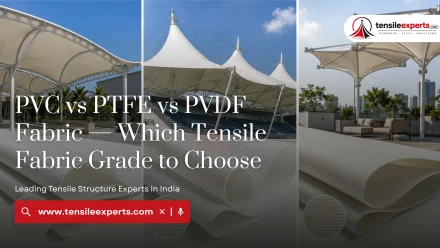
PVC, PTFE, or PVDF are all viable depending on span, building type, and budget — a large warehouse roof leans toward PTFE or PVDF for long-term weather performance over a continuously-exposed span, while a smaller industrial shed can often use PVC. Sites with heavy dust or lint exposure (textile units, for example) specifically benefit from PVDF's self-cleaning top-coat and fire-retardant-rated fabric options.
Practical Project Considerations
- Large-span industrial roofs typically involve a structural engineering review before fabrication, same as any large-span project
- Site soil conditions affect anchoring depth — this varies by region and is checked during the site survey, not assumed
- Retrofitting an existing building's roof needs an assessment of the current structure's condition and attachment points
Available Across India
We design, fabricate, and install industrial & warehousing tensile structures for clients across India, including: