































Government and public-sector projects — municipal buildings, public offices, civic infrastructure — bring a slower, more process-driven procurement path than most private commercial work, but the underlying structural needs draw from the same product range we use across transit infrastructure and institutional campuses. This guide covers what genuinely sets a public-sector project apart.
In This Guide
Covered Walkways Between Government Buildings
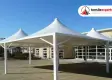
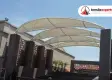
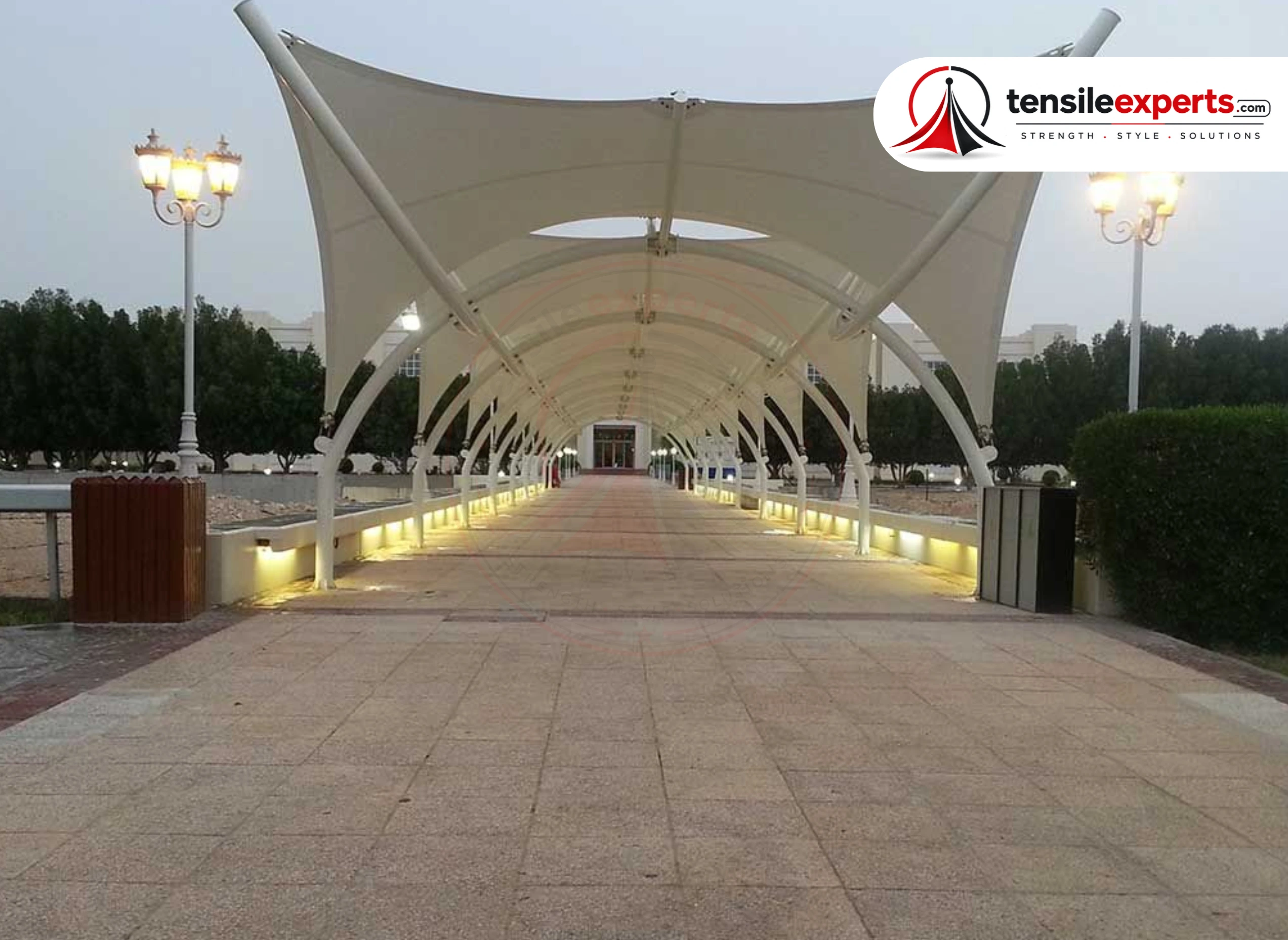
Public buildings need the same continuous, all-weather access as a hospital or transit hub — a covered walkway connecting government or municipal buildings is built as a linear run, with the full route between buildings planned and anchored during the site assessment, not just at the two ends.

Entrance Canopies for Civic Offices
Entrance canopies for public buildings and civic offices follow the same facade-mounting and design considerations as any other entrance structure — checked against the existing building's facade strength during the site visit, with reinforcement flagged before fabrication if needed.
How Procurement Actually Differs
The underlying design and fabrication process is genuinely the same as private commercial work, but government projects typically involve a longer procurement and approval cycle, and often specify material certification requirements upfront as part of the tender — worth confirming early, since it directly affects fabric grade selection rather than being a formality checked at the end.
Budget approval cycles for public-sector work also tend to follow a fixed annual or fiscal-year rhythm rather than a purely commercial timeline — understanding where a project sits in that cycle helps set a realistic expectation for when fabrication and installation can actually begin, rather than assuming private-sector pacing applies.
Fire Safety and Material Certification
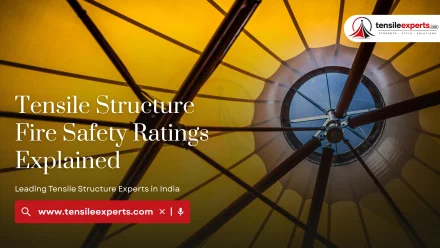
Fire-rated and certified fabric options are available and are the standard recommendation for public-use buildings, the same approach we use for transit infrastructure and hospitals — public tenders often specify these requirements explicitly, so confirming them early avoids a fabric-grade mismatch discovered late in the process.
Documentation matters more here too — a public tender often expects formal certification paperwork accompanying the fabric, not just a verbal assurance that a fire-rated grade is being used, so this is worth confirming as part of the initial scope discussion.
Related Guides

Why Procurement Is the Real Differentiator
The products here aren't a separate category — it's the buyer relationship and approval process that's genuinely different, which is why we maintain a dedicated Government & Public Infrastructure industry page — see it for the fuller picture, alongside our other industry pages.
Public-Sector vs. Private Commercial Process
Here's how the process genuinely differs, even though the products are largely the same:
| Aspect | Government/Public Sector | Private Commercial |
|---|---|---|
| Approval cycle | Longer, tender-driven | Faster, direct client decision |
| Certification | Often specified upfront in tender | Discussed during design phase |
| Coordination | Public-works/facilities department | Building owner or facility manager |
| Timeline predictability | Varies with procurement stage | More predictable once contracted |
Explore by Product

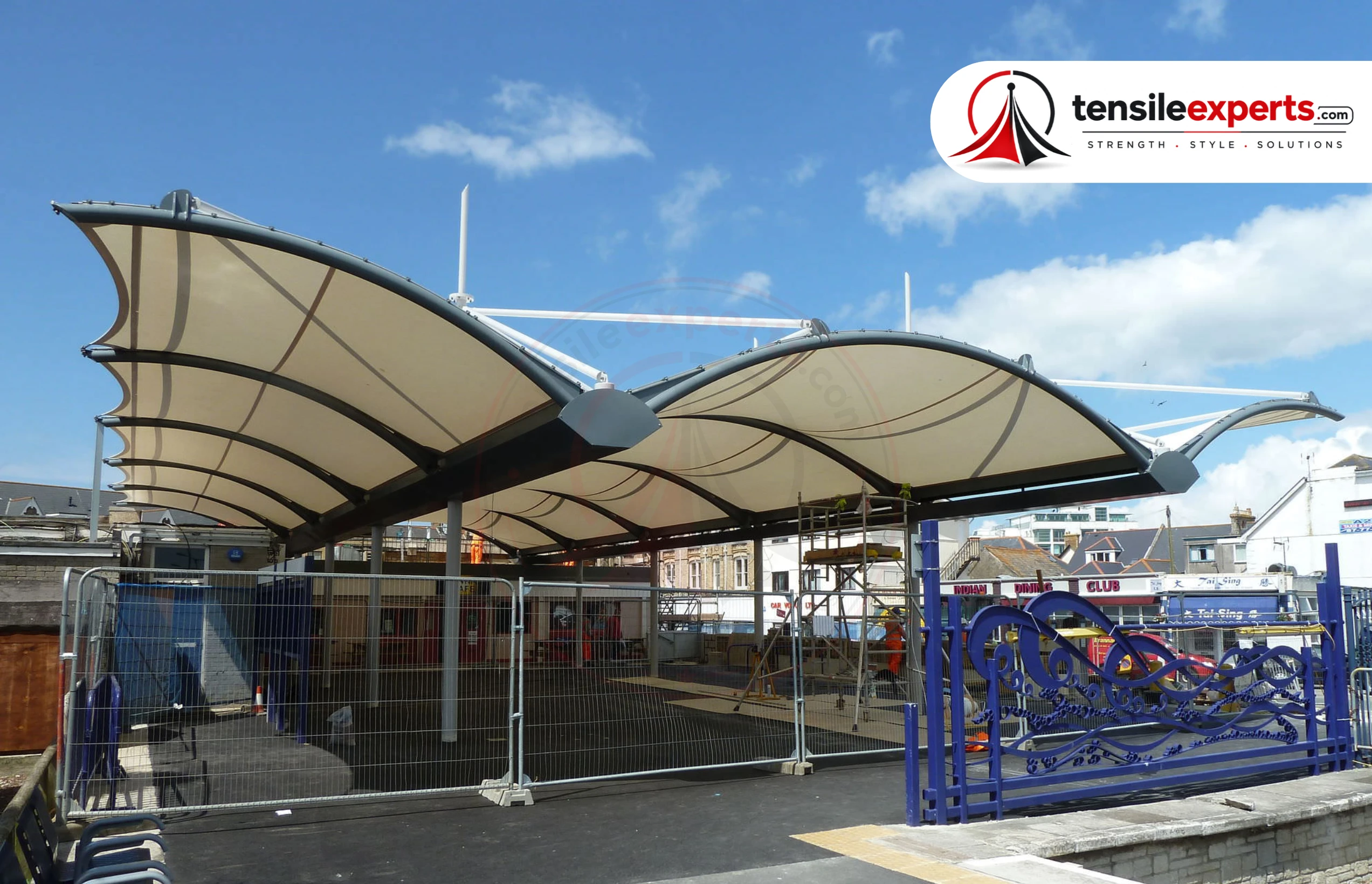



See the full product directory for everything we design and fabricate.
Frequently Asked Questions
Planning a government or public infrastructure project? Get in touch to discuss your requirements.