




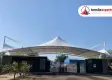
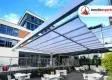

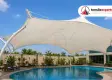
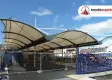
















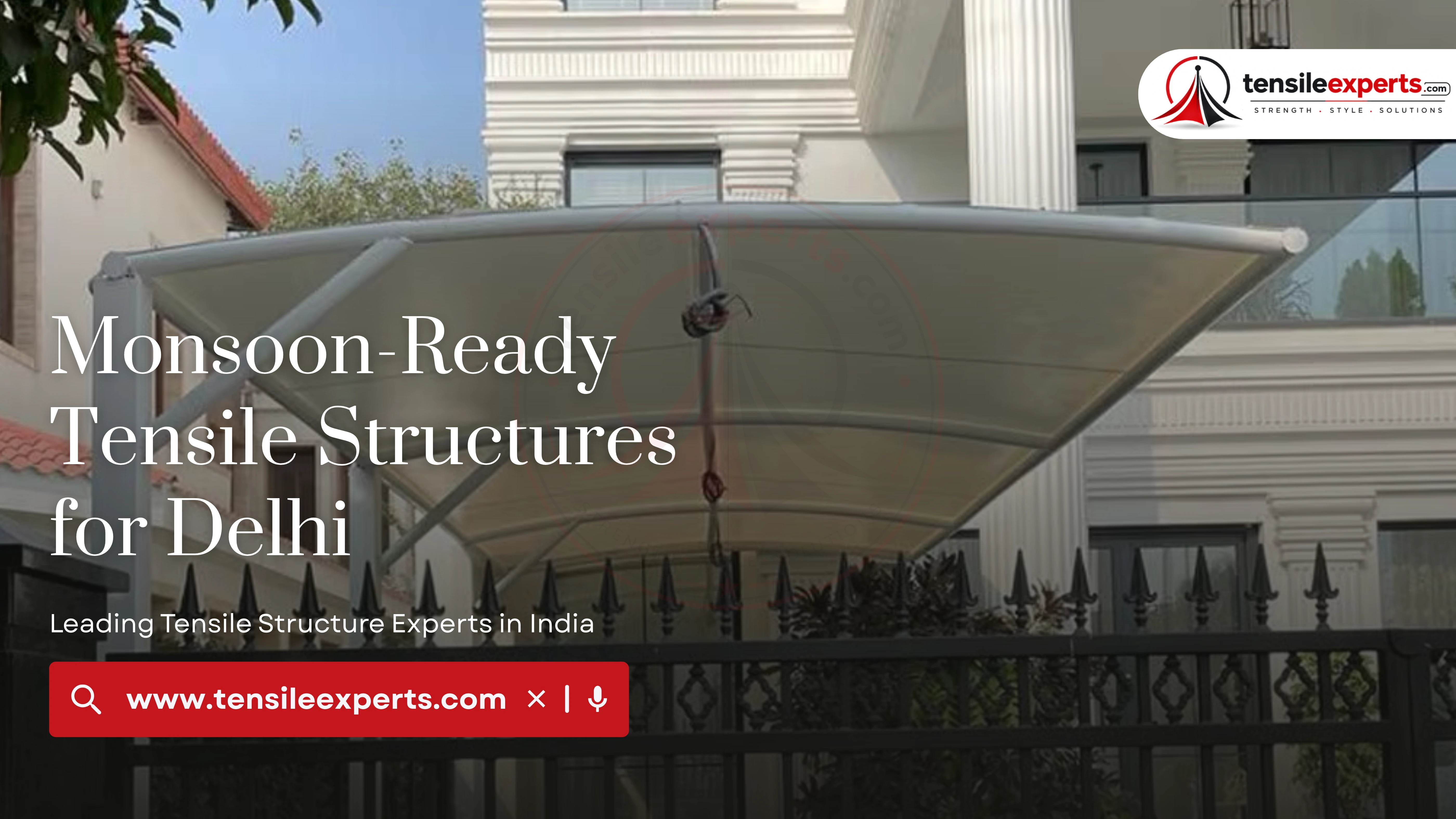
Delhi's monsoon brings sudden heavy downpours and occasional high winds between July and September — and a tensile structure that isn't designed around that will show it, in pooled water on the roof or strain on the anchoring. "Monsoon-ready" isn't a special product category; it's a set of design decisions — drainage, fabric grade, and anchoring — that get made differently depending on how exposed a structure is. Here's what actually goes into it.
In This Guide
- Why Monsoon-Readiness Matters for a Delhi Installation
- Which Structures Need the Most Monsoon-Specific Design
- Drainage Design — Where the Water Actually Goes
- Fabric Grade for Monsoon Performance
- Anchoring for Wind and Softened Soil
- Areas We Cover
- Related Guides
- Our Process, Step by Step
- Explore by Product
- Frequently Asked Questions
Why Monsoon-Readiness Matters for a Delhi Installation
Every tensile structure we design factors in wind, rain, and sun exposure for the specific site — but a Delhi installation that will actually sit through several monsoon seasons needs this planned in from the start, not treated as an afterthought. That's also why we recommend an early site visit: confirming exact dimensions, anchoring points, and local drainage before design work starts matters more heading into the wetter months, and installation slots naturally fill up quickly around the pre-monsoon period.
Which Structures Need the Most Monsoon-Specific Design
Exposure varies a lot by structure type and use — here's how it breaks down:
| Structure | Monsoon Exposure | Key Consideration |
|---|---|---|
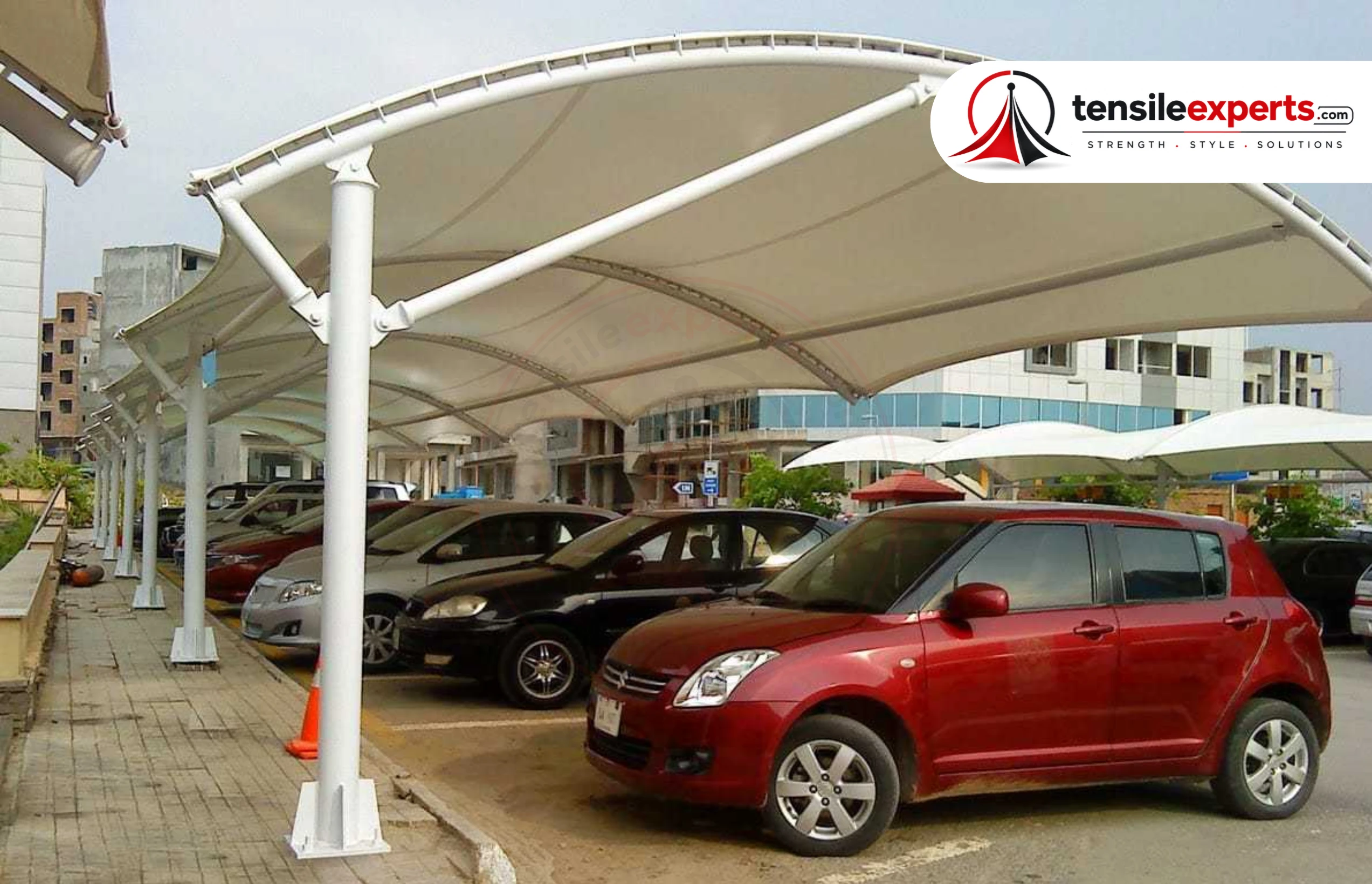
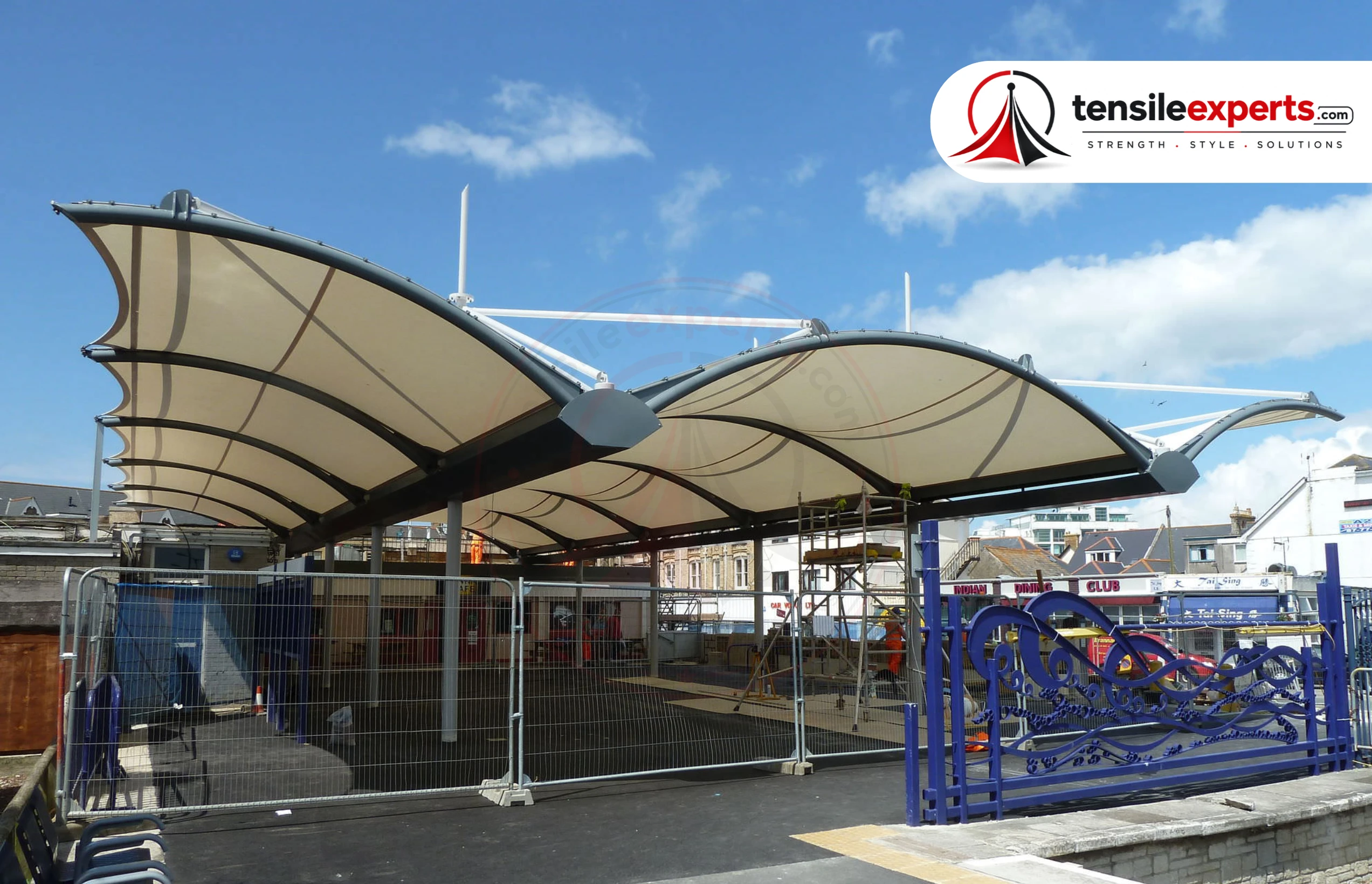
| Car Parking Shed | High | Drainage design so rainwater doesn't pool on the roof |
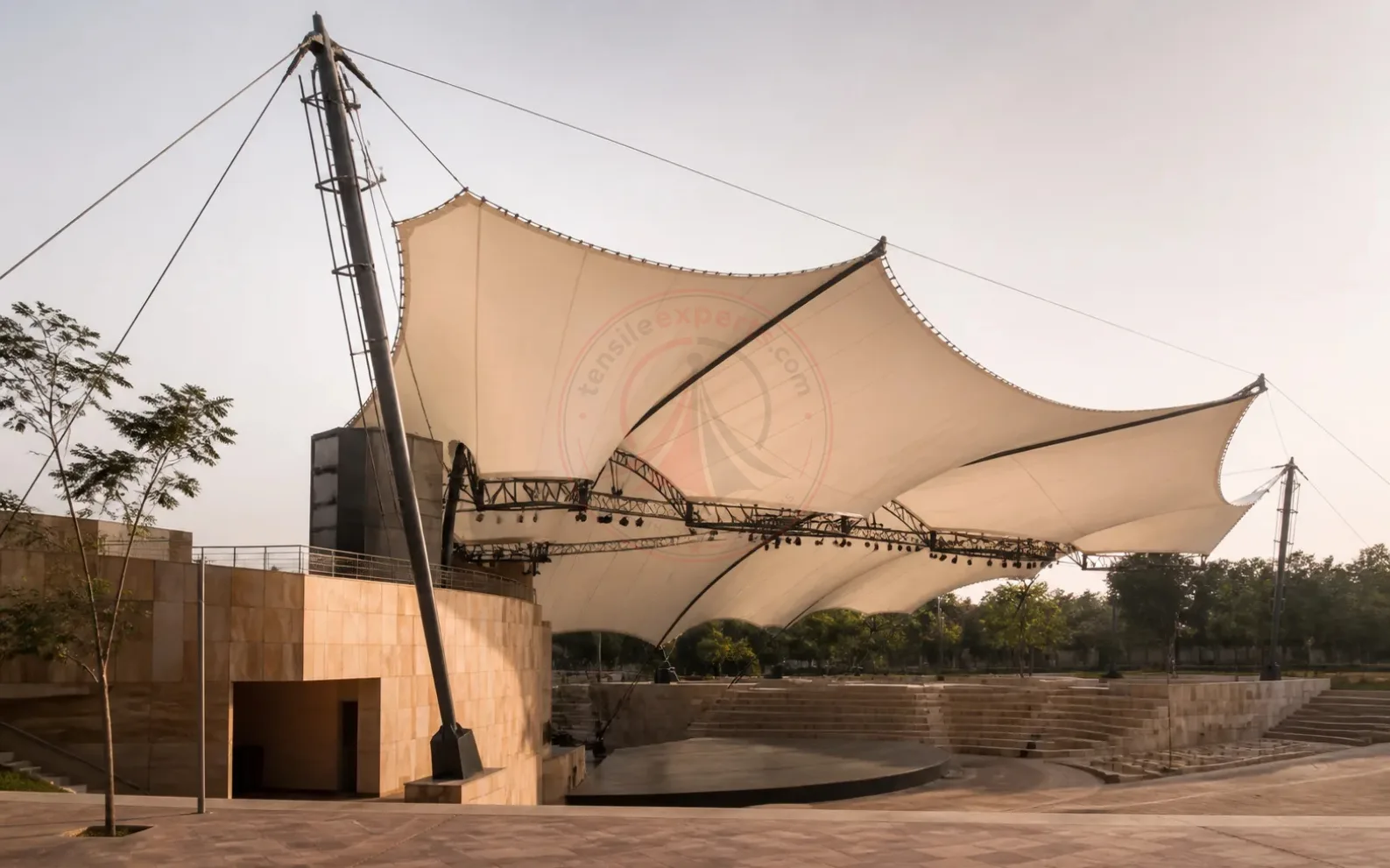
| Outdoor Structure | High | Full weather exposure — drainage, runoff, and wind-load anchoring all factored in together |
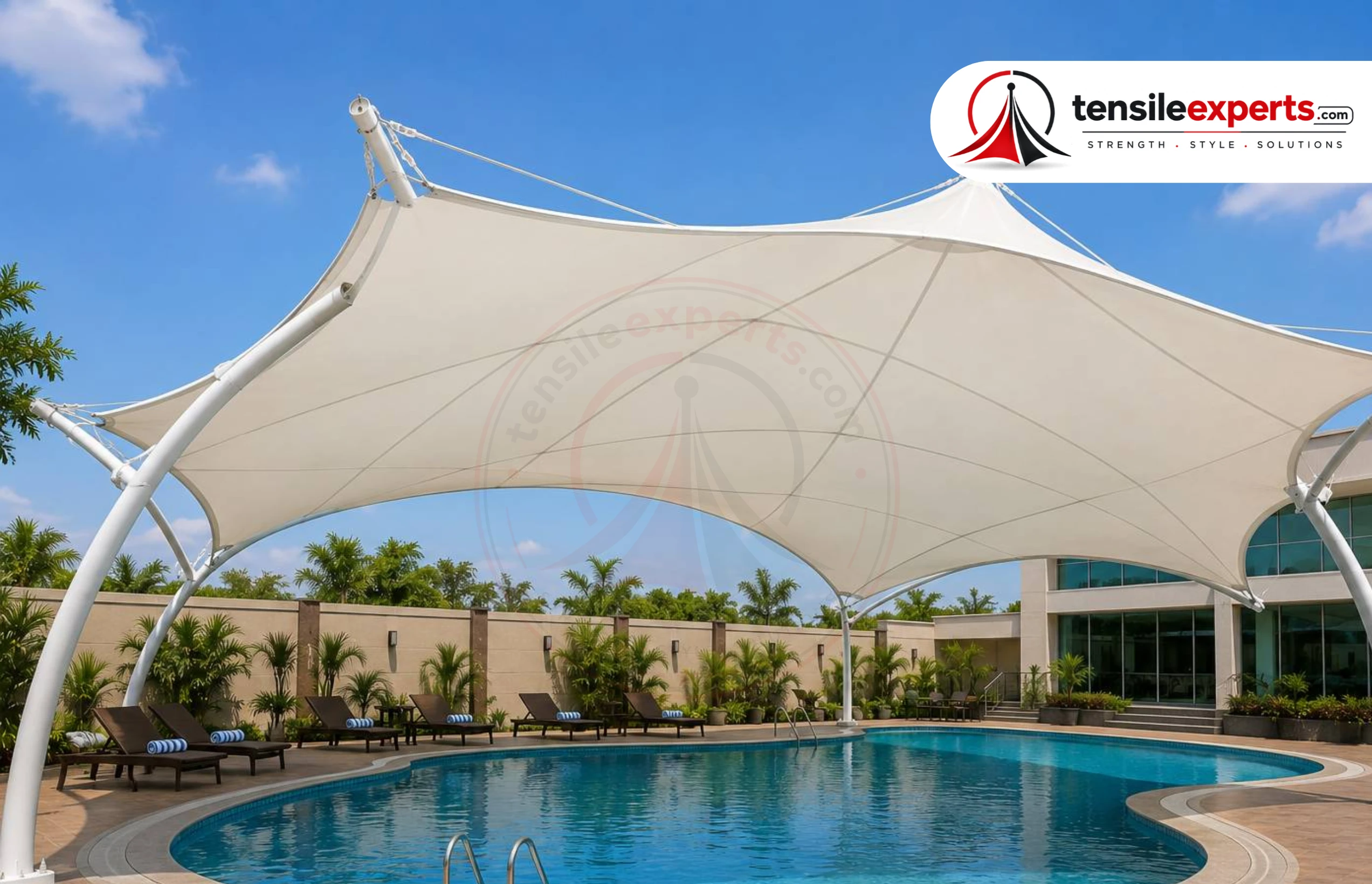
| Pool Structure | High | Drainage so water doesn't collect on the structure above the pool |
| Canopy Structure | Medium | Drainage direction so water doesn't run toward the entrance |
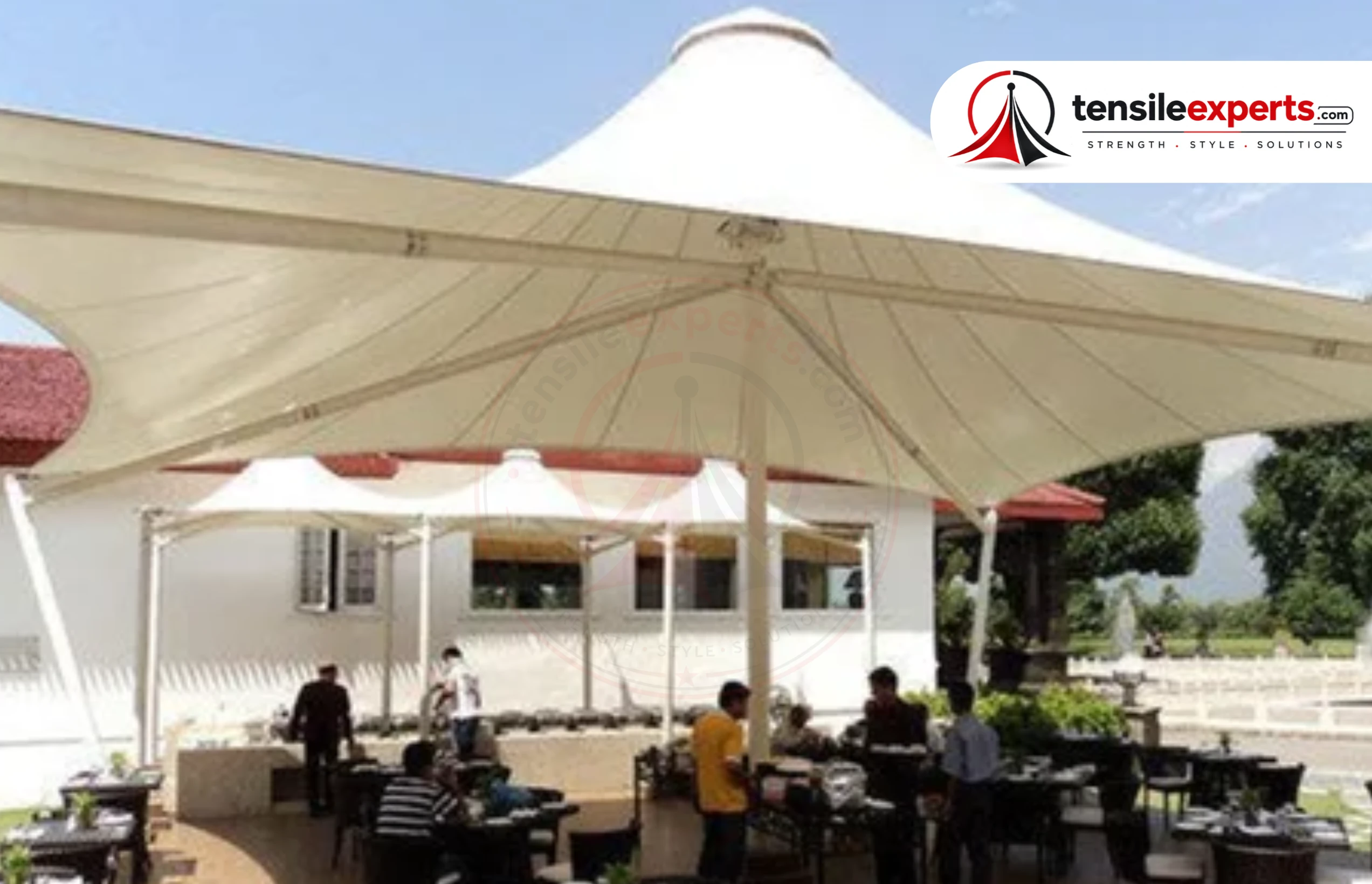
| Food Court Structure | Medium | Multi-bay layout needs drainage planned across every stall/seating zone |
| Retractable Structure | Variable | Wind-load limits define when it's safe to keep extended |
| Indoor Structure | Low | No weatherproofing or drainage engineering involved |
Drainage Design — Where the Water Actually Goes
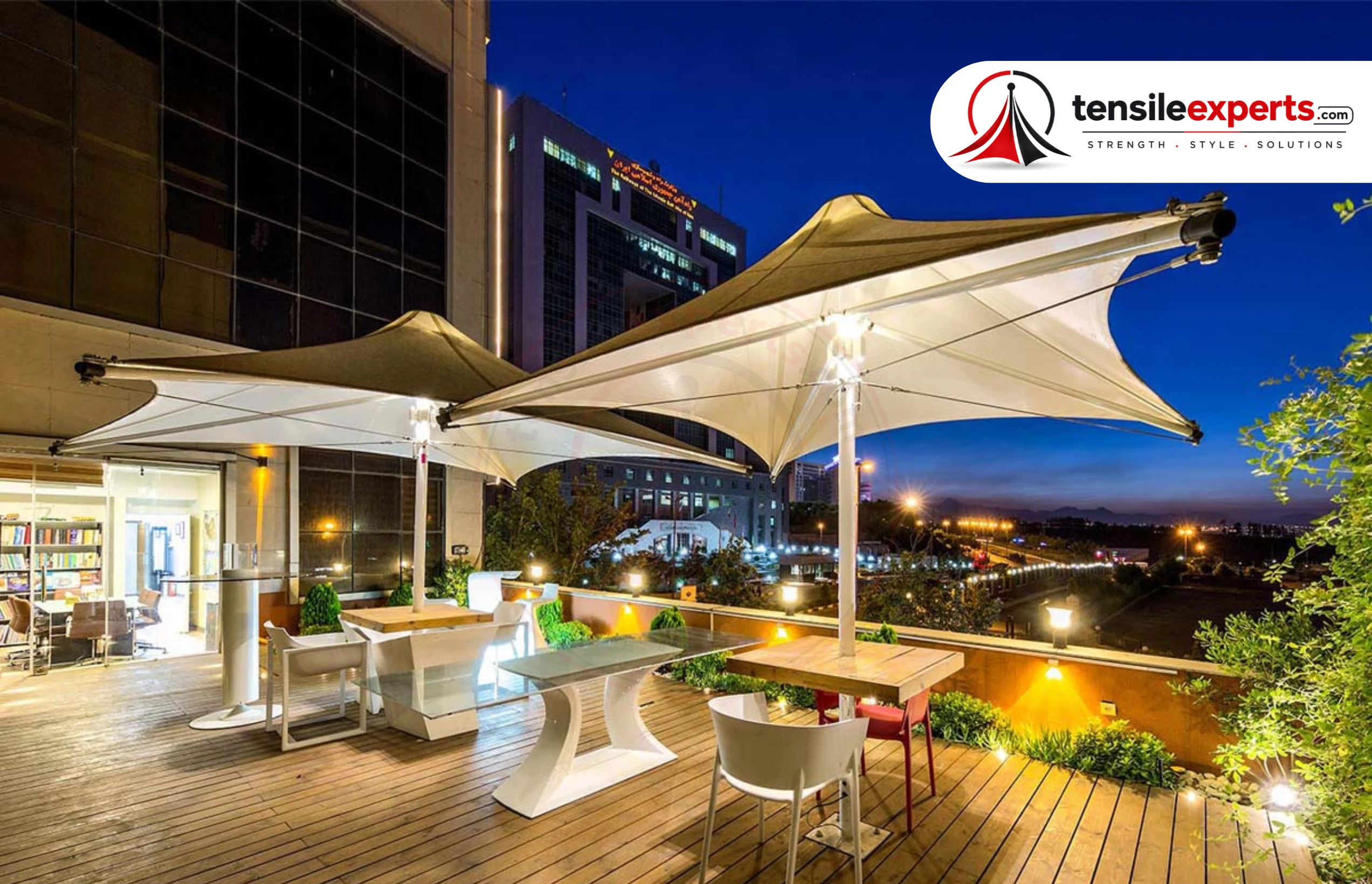
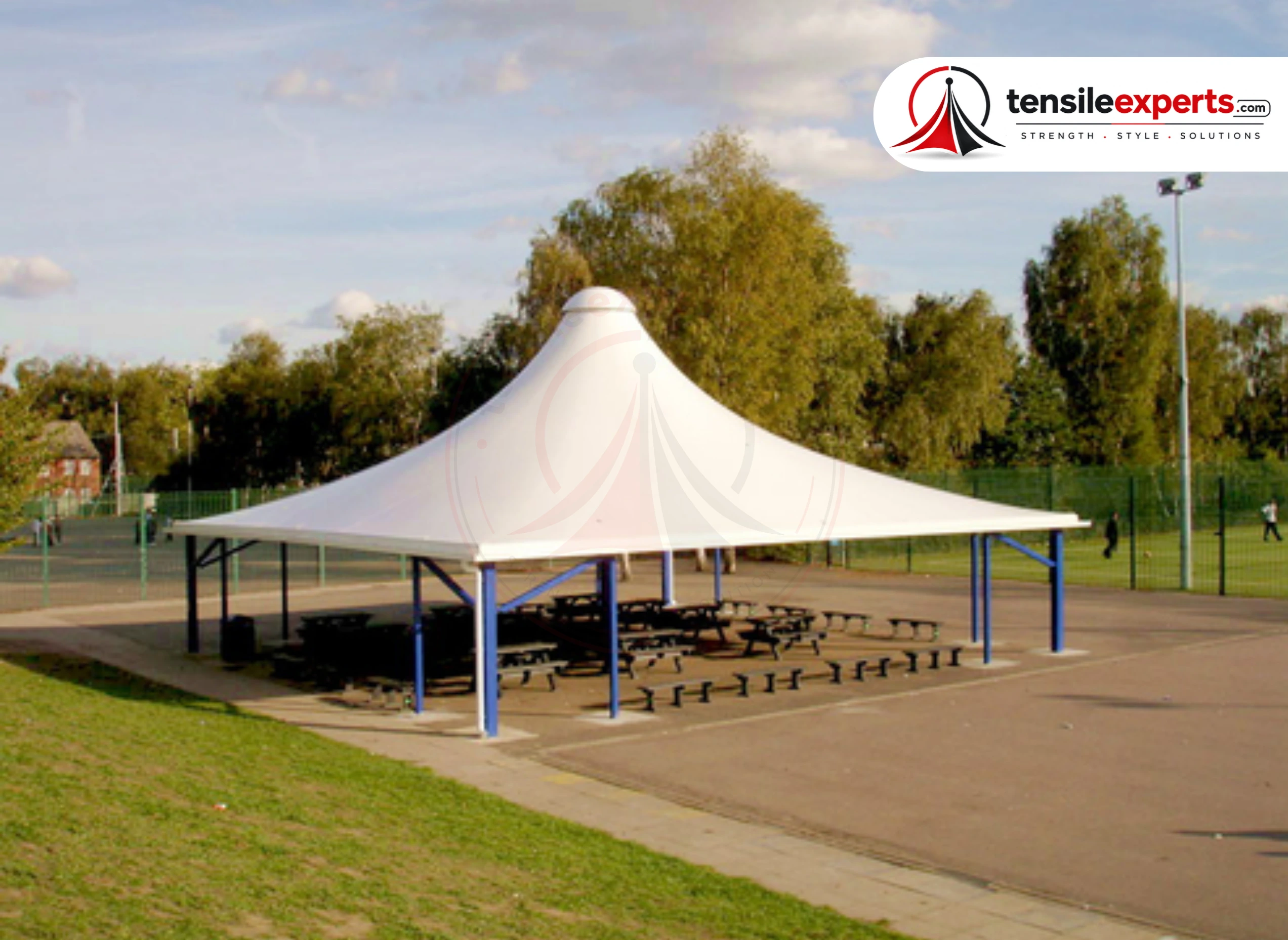
The consistent principle across every product we design is the same: water needs a planned path off the structure, not a flat surface to collect on. That means roof slope and runoff direction get worked out during design — routed away from the structure itself, and away from an entrance or walkway wherever that applies. For multi-bay layouts like a food court structure, drainage has to be planned across every stall and seating zone, not just the overall footprint.
Fabric Grade for Monsoon Performance
| Fabric | Monsoon-Relevant Strengths |
|---|---|
| PVC | Cost-effective, suits most residential/commercial spans and moderate exposure |
| PTFE | Higher UV/weather resistance — the usual choice for larger or long-life installations |
| PVDF | Self-cleaning top-coat, originally for dusty/high-pollution sites, that also helps with monsoon-season grime |
See our tensile structure page for the full PVC/PTFE/PVDF breakdown.
Anchoring for Wind and Softened Soil
Foundations are chosen per site survey — RCC footing, ground anchors, or wall-mounting — and anchoring depth needs to suit local soil conditions, which is exactly why this gets confirmed on-site rather than assumed. For retractable structures specifically, wind-load limits define when it's safe to keep the structure extended, and track/frame maintenance matters for smooth, safe operation through the season.
Areas We Cover
Within Delhi, we take on projects across:
See our Delhi tensile structure page for full local service details, or browse other locations across the region:
Related Guides


Our Process, Step by Step
| Step | What Happens |
|---|---|
| 1. Initial Discussion | Understanding the space and how exposed it is to sun, rain, and wind. |
| 2. Site Visit | Dimensions, anchoring points, and local drainage confirmed — book early pre-monsoon, since slots fill up quickly. |
| 3. Design | Roof form, drainage path, and fabric grade proposed for the site's exposure level. |
| 4. Quote | A site-specific quote before fabrication begins. |
| 5. In-House Fabrication | Handled by our own team. |
| 6. Installation | Scheduled with enough buffer to complete before peak monsoon where possible. |
Why Tensile Experts for a Monsoon-Ready Structure
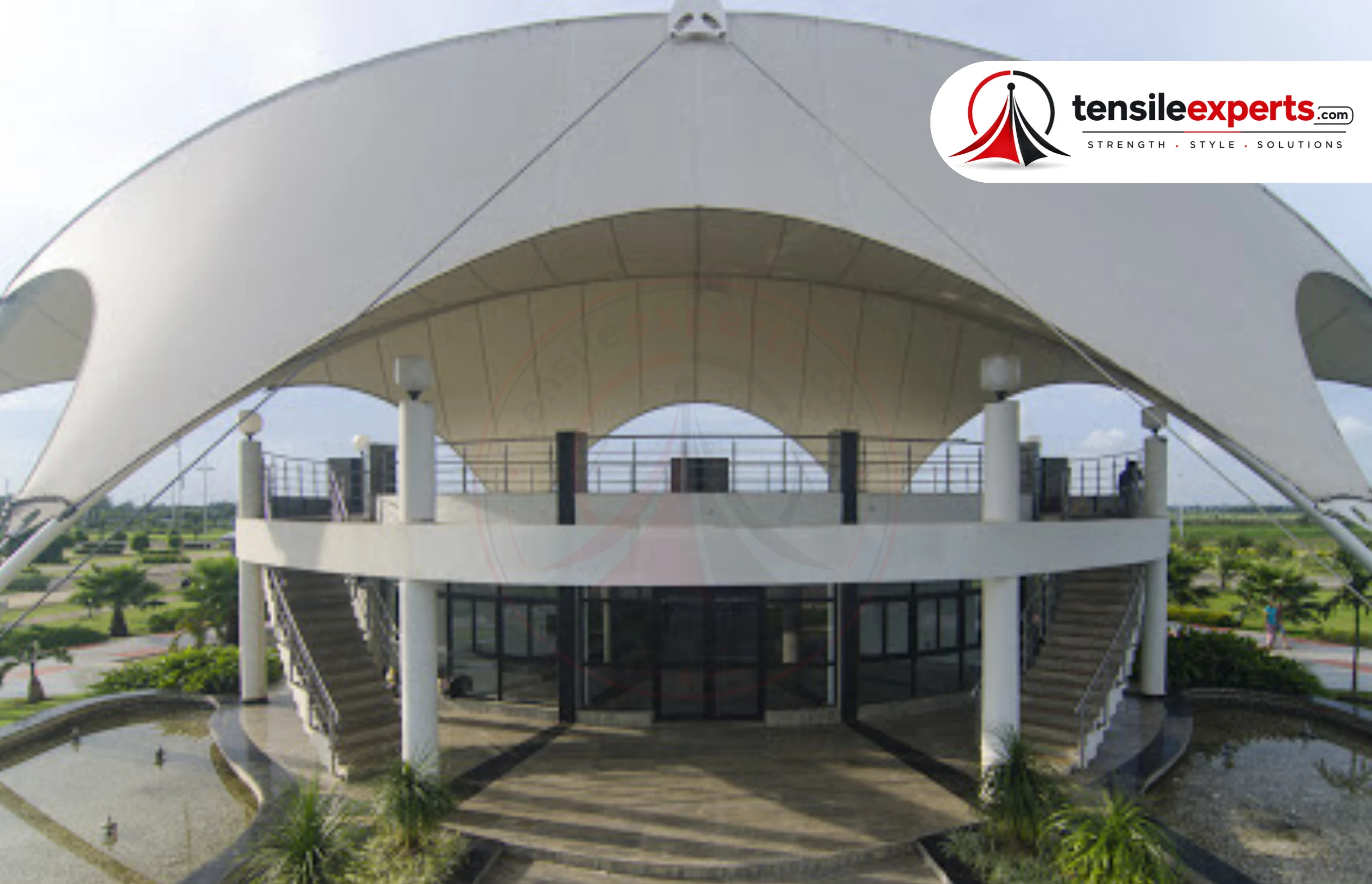
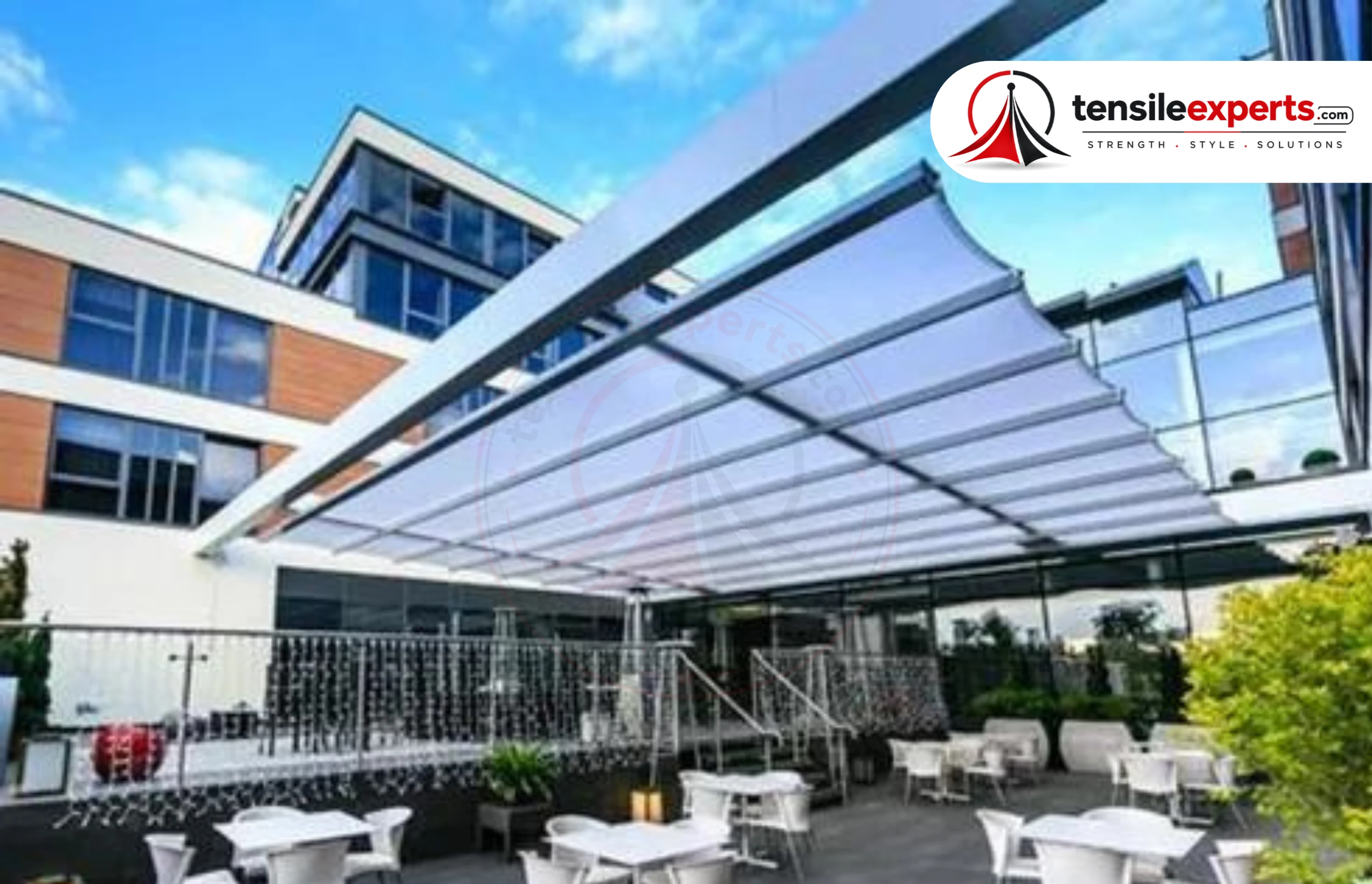
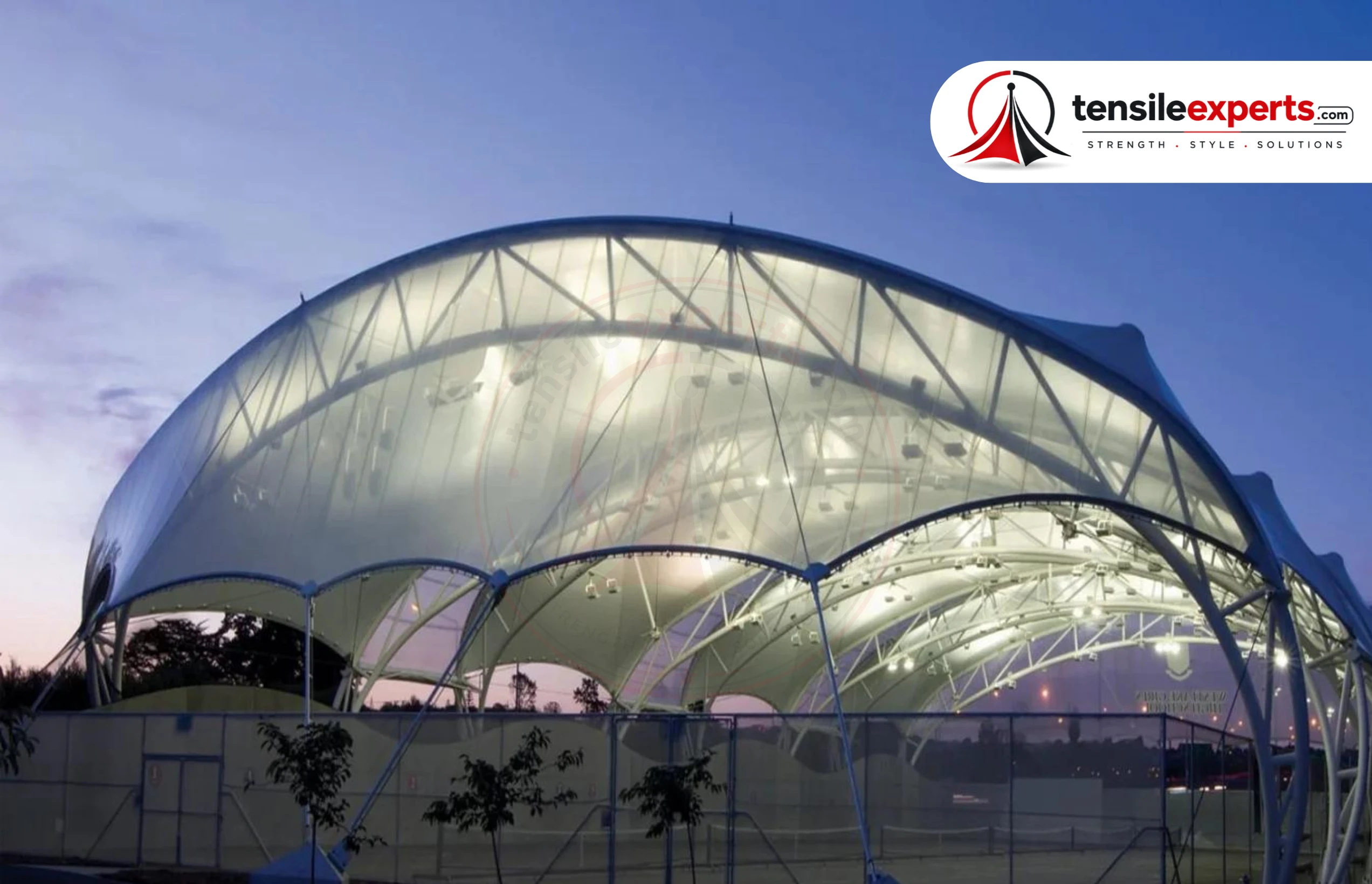
Tensile Experts designs, fabricates, and installs tensile structures in-house across Delhi, with drainage, fabric grade, and anchoring planned around each site's actual exposure. Browse the project gallery for real project photos of the structure types we build.
Explore by Product

See the full product directory for everything we design and fabricate.
Frequently Asked Questions
Planning ahead of this year's monsoon? Get in touch for a free site consultation.