



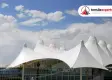
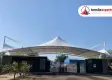
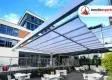
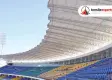
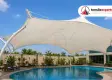
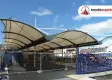
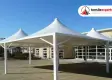
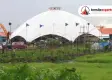














"Shade structure" covers a lot of ground — and canopy, umbrella, pergola, gazebo, and entrance structure are the 5 types we get asked to compare most often, usually because a customer knows they want fabric shade somewhere but isn't sure which category actually fits their space. This guide goes through what each one is actually built for, a real side-by-side comparison, and a straightforward way to figure out which type fits your project before you start requesting quotes.
In This Guide
- The 5 Types at a Glance
- Canopy Structures
- Umbrella Structures
- Pergola Structures
- Gazebo Structures
- Entrance Structures
- How to Choose the Right Type
- Fabric Grade — Does It Change by Type?
- What Actually Drives the Cost
- Our Process, Step by Step
- Maintenance
- Related Guides
- Areas We Cover
- Explore by Product
- Frequently Asked Questions
The 5 Types at a Glance
Before the detail on each, here's the real side-by-side — structural form, typical span, and what each is actually built to cover:
| Type | Structural Form | Typical Span | Built For |
|---|---|---|---|
| Canopy | Wall-mounted or standalone cantilever | 3m–20m | Entrances, walkways, seating areas along a fixed path |
| Umbrella | Single-column, inverted cone | 3m–8m diameter | Individual seating spots — cafe tables, poolside chairs |
| Pergola | Open frame, partial/full fabric cover | 3m–10m | Patios and decks wanting partial shade with an open feel |
| Gazebo | Freestanding conical or pyramid | 3m–8m diameter/side | Standalone garden or lawn feature, not attached to a deck |
| Entrance Structure | Cantilever or barrel canopy | 4m–15m | Building main entrances and statement facade canopies |
Canopy Structures
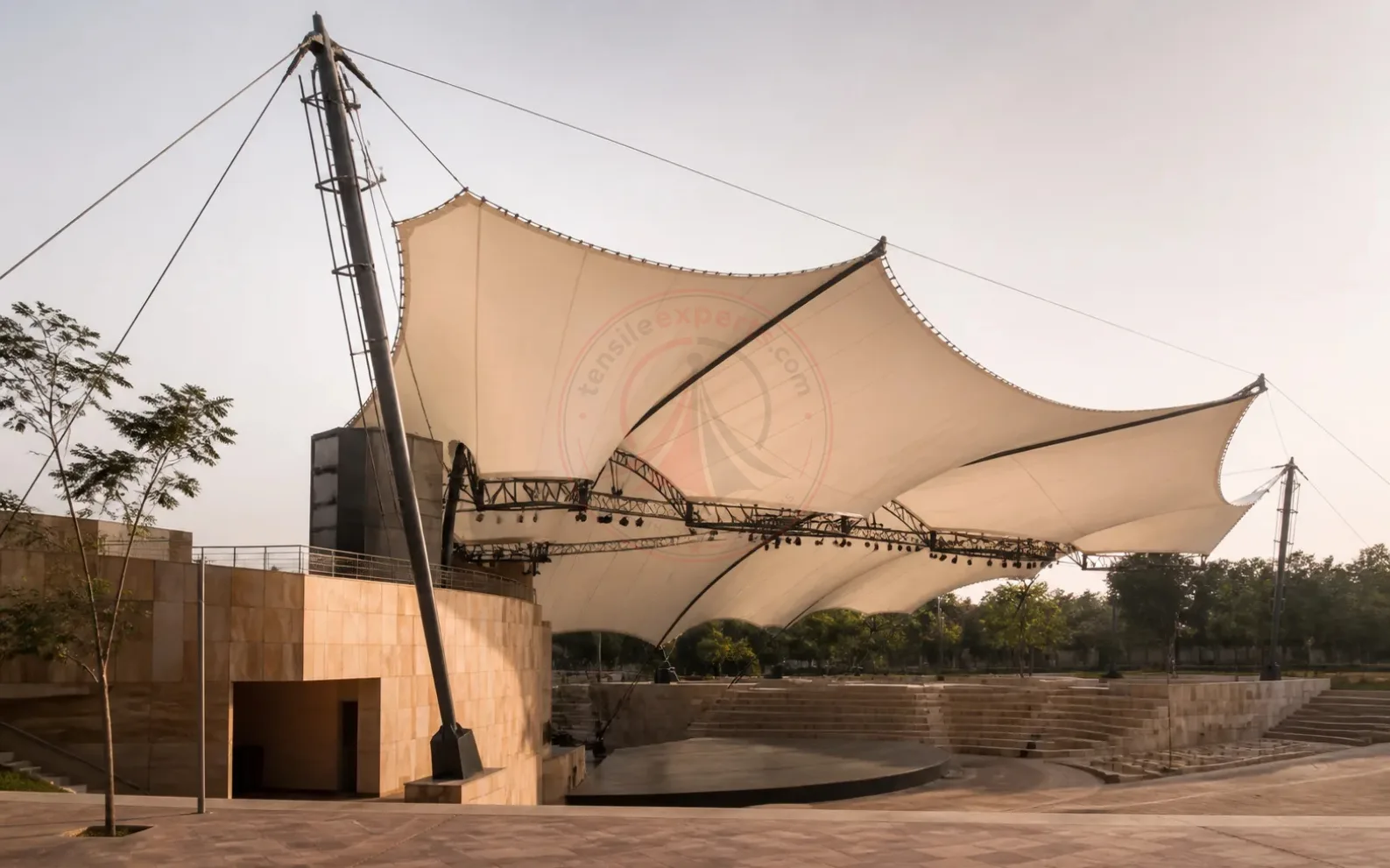
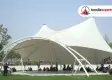
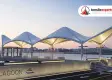
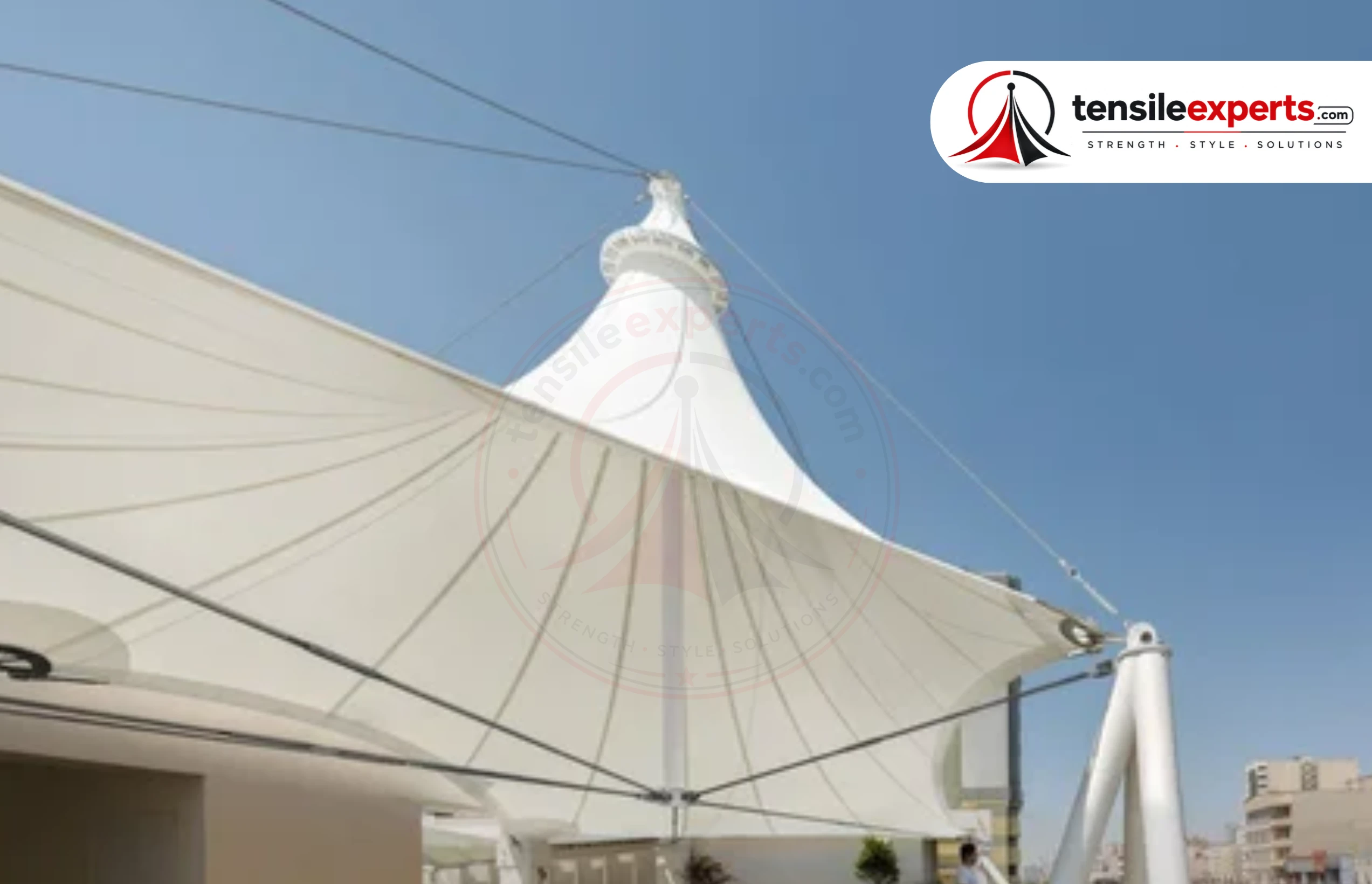
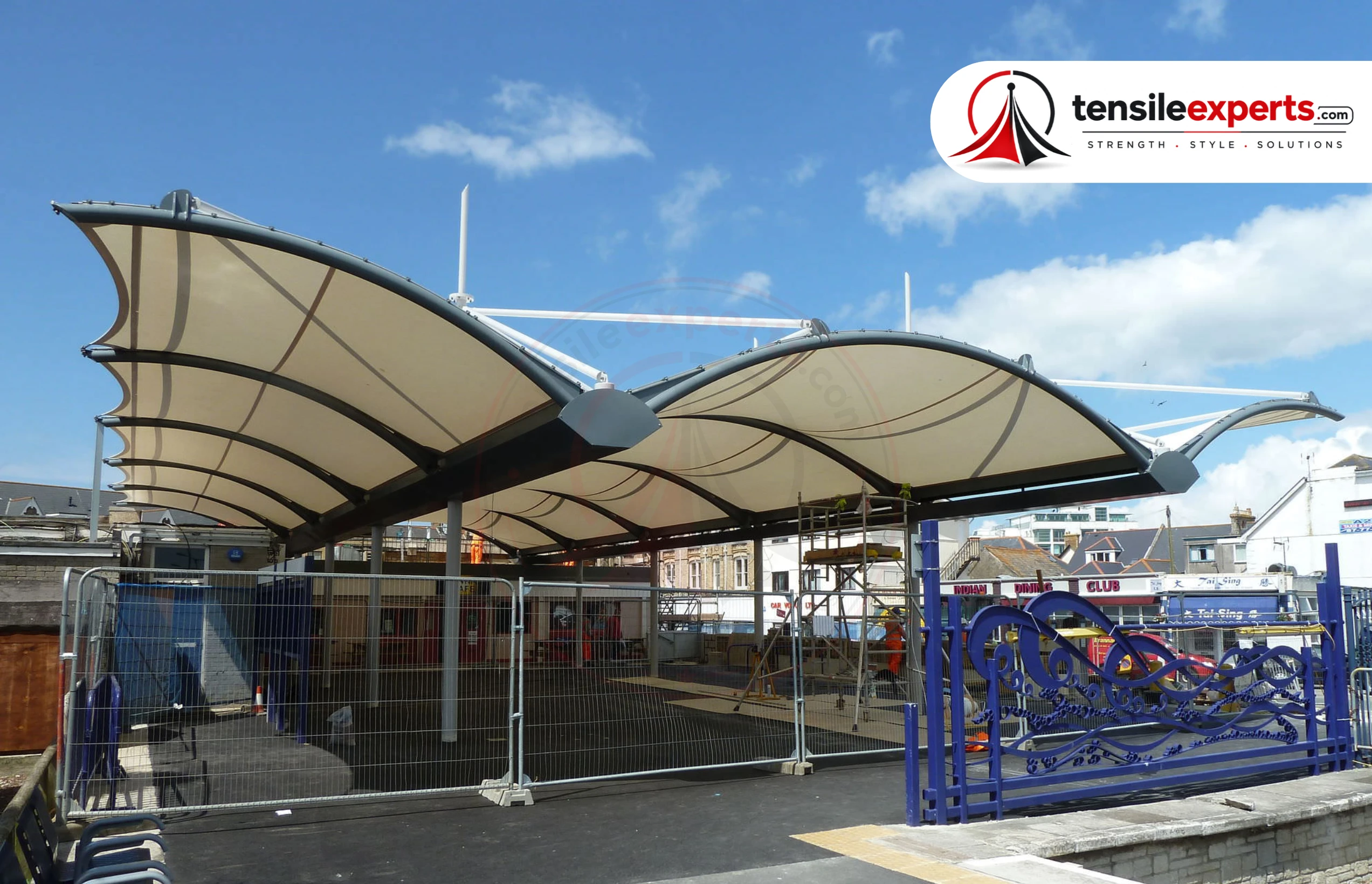
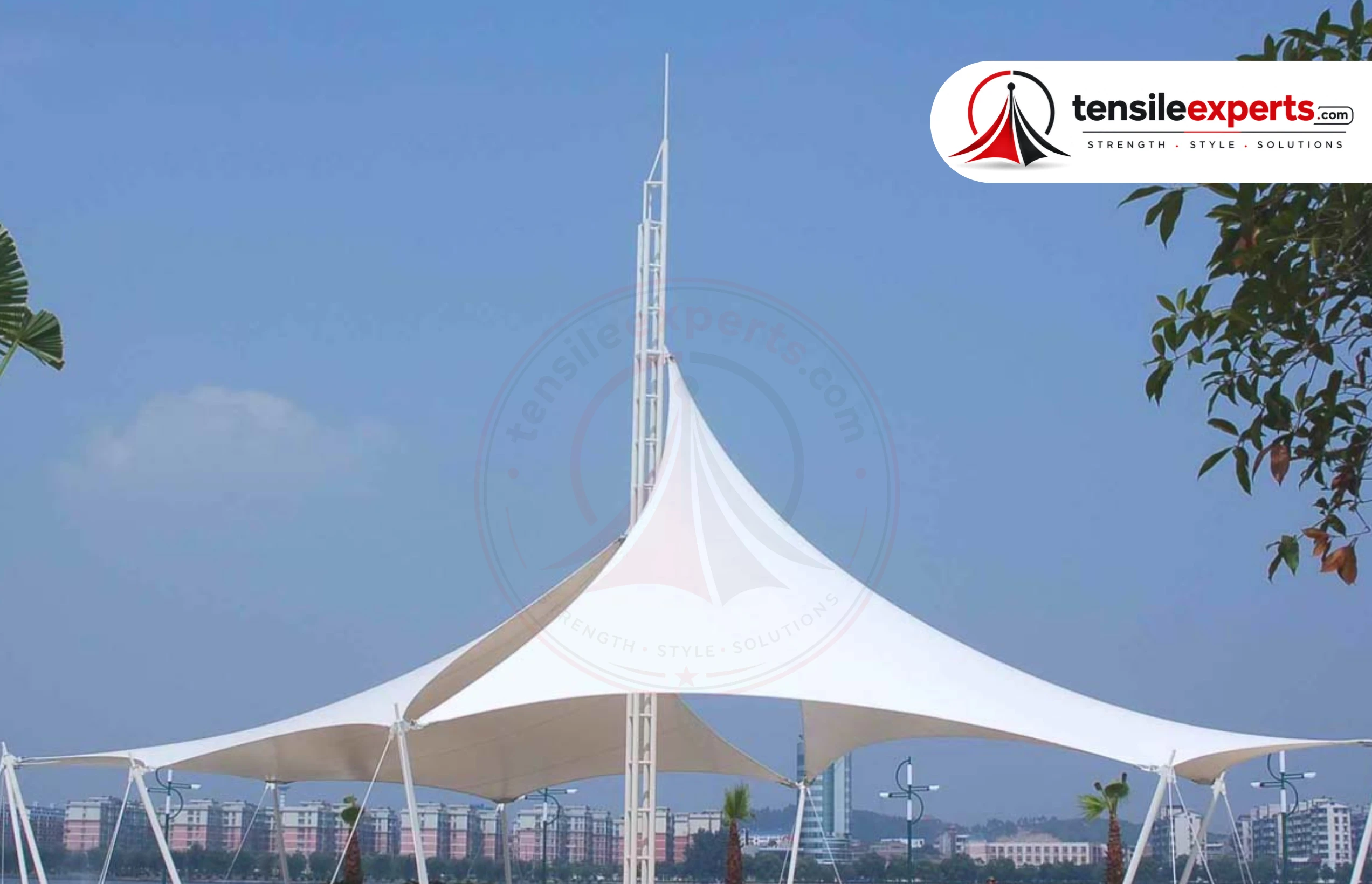
A tensile canopy is usually attached to an existing building or spans between fixed anchor points — the go-to choice for covering a walkway, an entrance approach, or a defined outdoor seating area. Spans run 3m–20m, with PVC standard and PTFE recommended for larger or high-traffic canopies. Because canopies are often wall-mounted, mounting-point strength on the existing structure gets checked as part of the site visit — that's a canopy-specific step the freestanding types below don't need.
Umbrella Structures
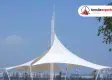
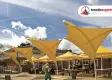
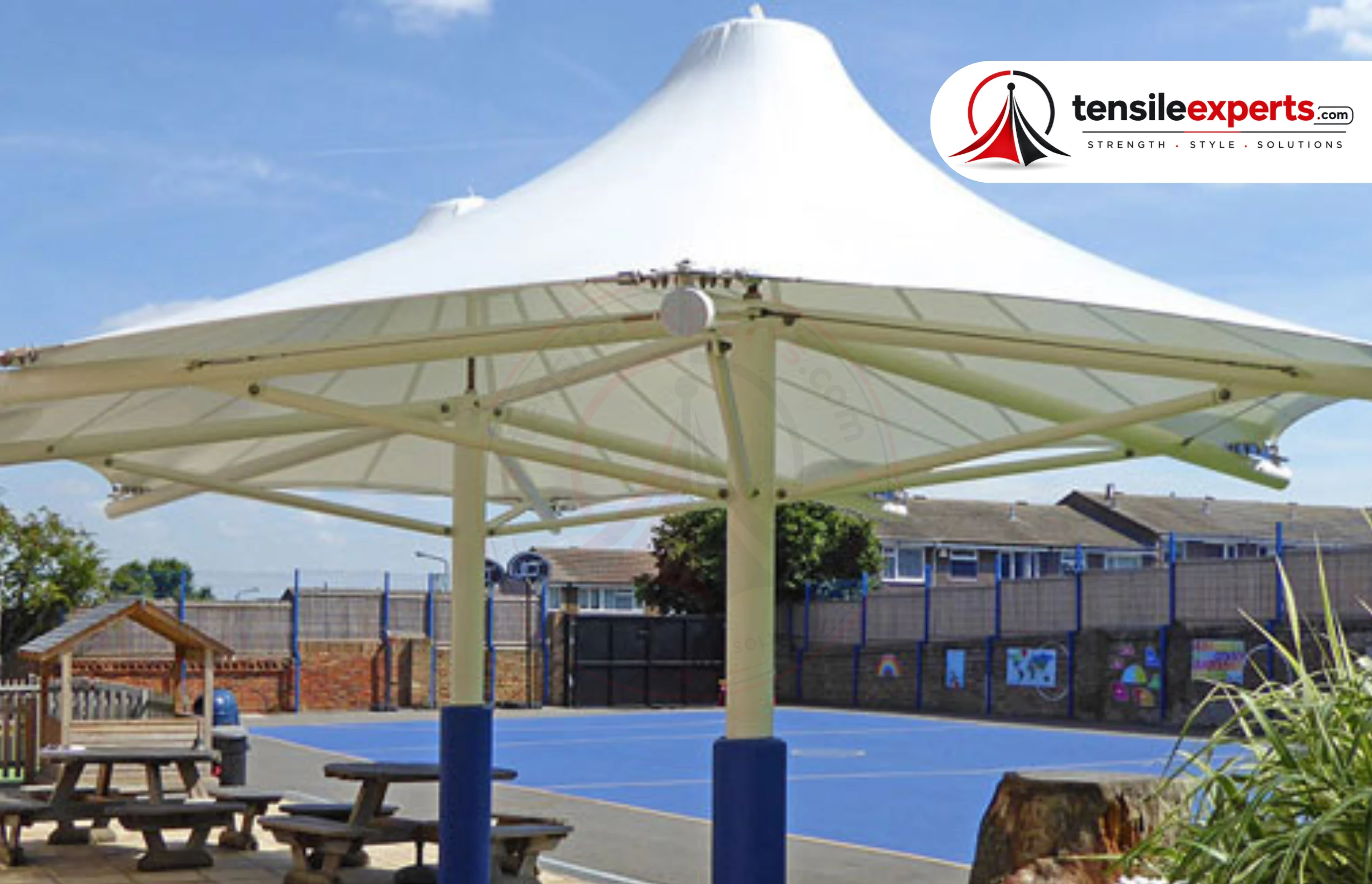
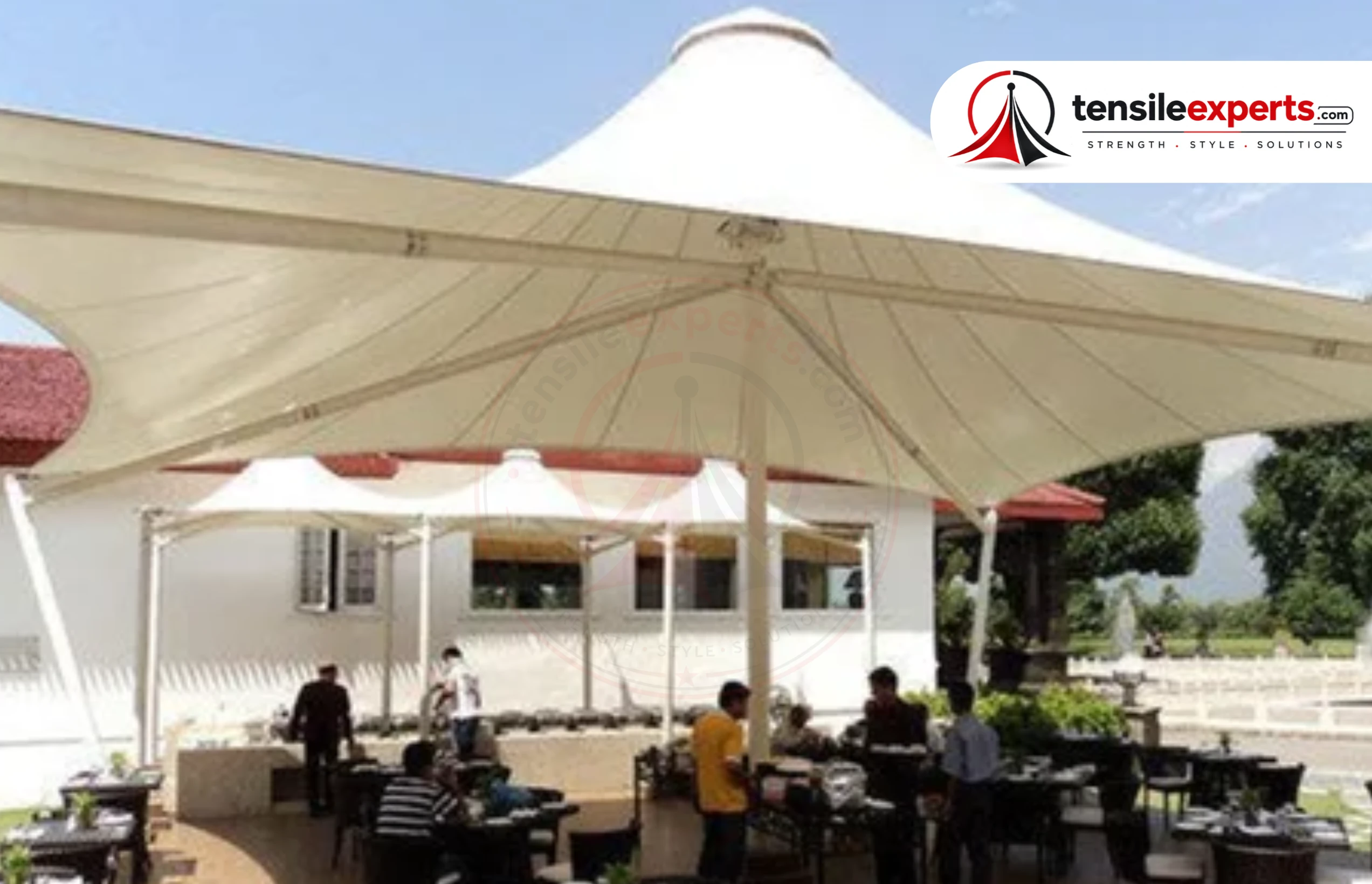
A tensile umbrella structure is a single-column, inverted-cone design — the point of the single column is keeping the space directly underneath fully open and usable, which is exactly what a cafe table or poolside seating spot needs. Spans run 3m–8m diameter per unit, and most projects use several units laid out across a seating area rather than one large structure. PVC is the standard fabric grade here since umbrella units are rarely engineered for the largest spans.
Pergola Structures
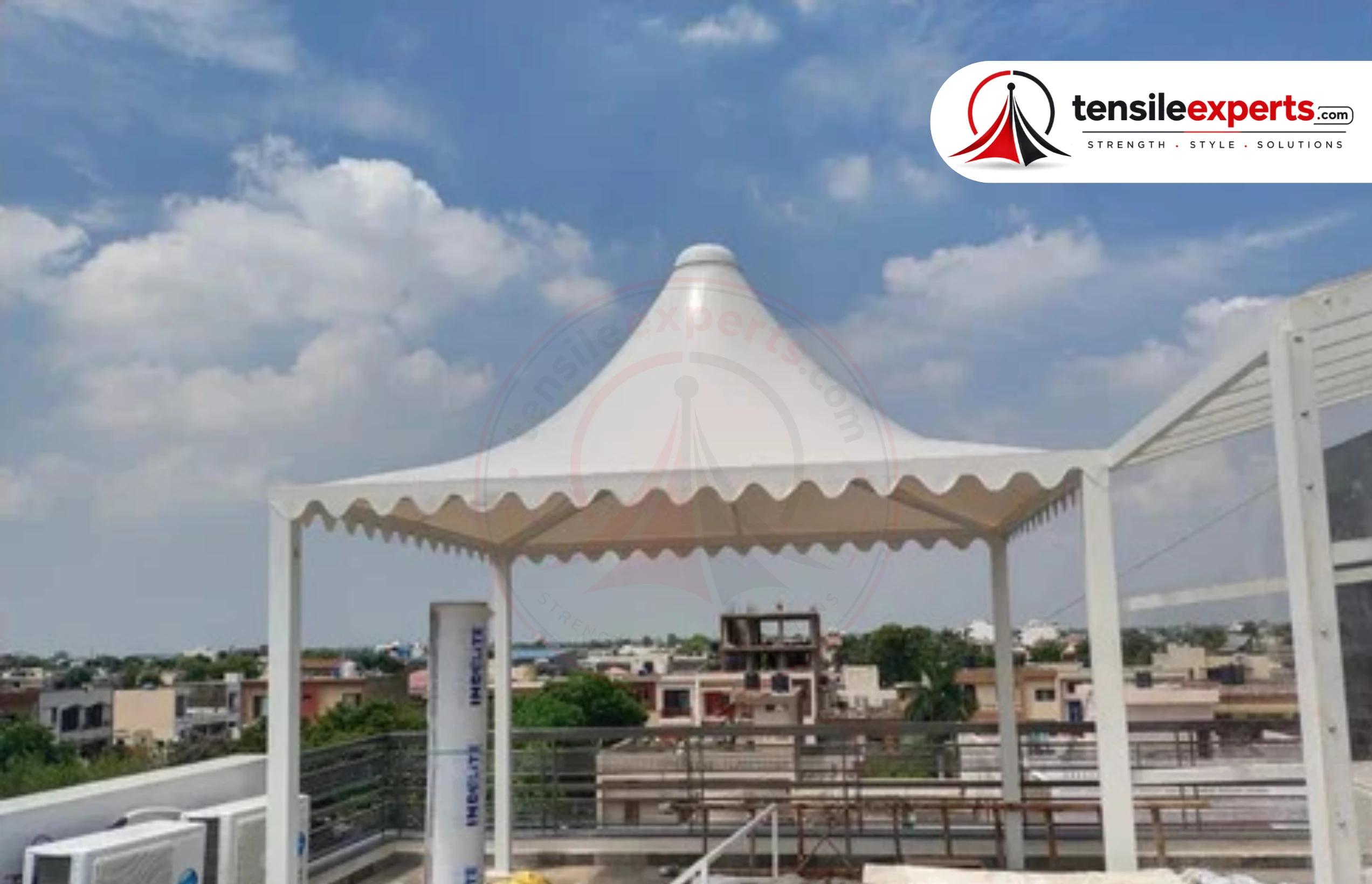
A tensile pergola combines an open structural frame with partial or full fabric coverage — the open-frame option is the key difference from a gazebo below, since it lets you choose how much shade vs. open-sky feel you want. Pergolas are usually integrated with existing decking or patio flooring rather than a standalone footprint, spanning 3m–10m. See the pergola vs. gazebo comparison in the next two sections, or our full pergola vs. gazebo guide for the complete breakdown.
Gazebo Structures
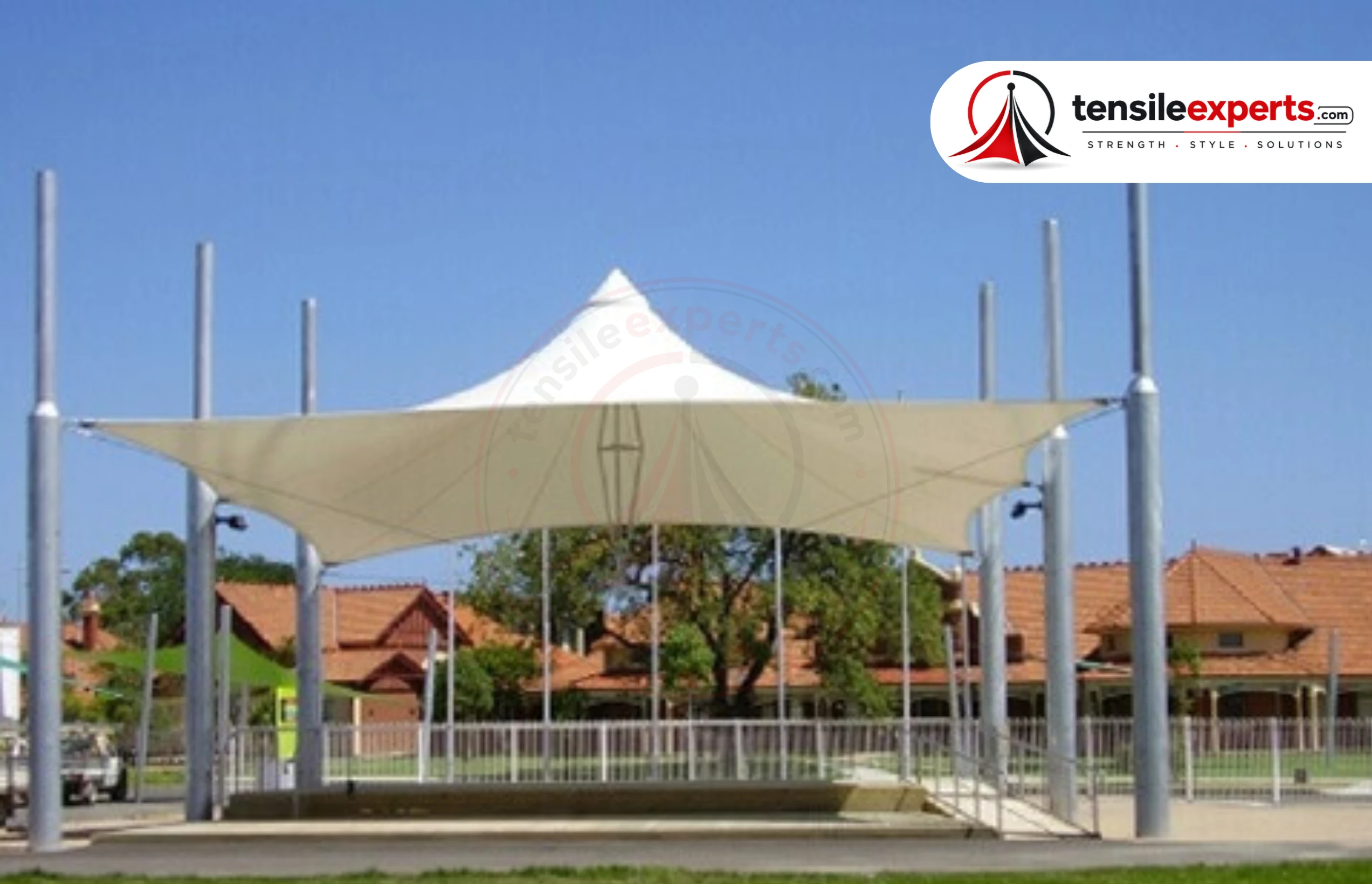
A tensile gazebo is a fully freestanding structure — a conical or pyramid form, standalone from any existing deck, patio, or building. That freestanding footprint is what makes gazebos common as a garden or lawn feature, or a poolside structure placed wherever the landscaping calls for it, rather than tied to an existing surface. Spans run 3m–8m diameter/side, and fabrication/installation timelines are typically shorter than larger connected structures since a gazebo is a standalone unit.
Entrance Structures
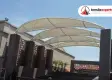
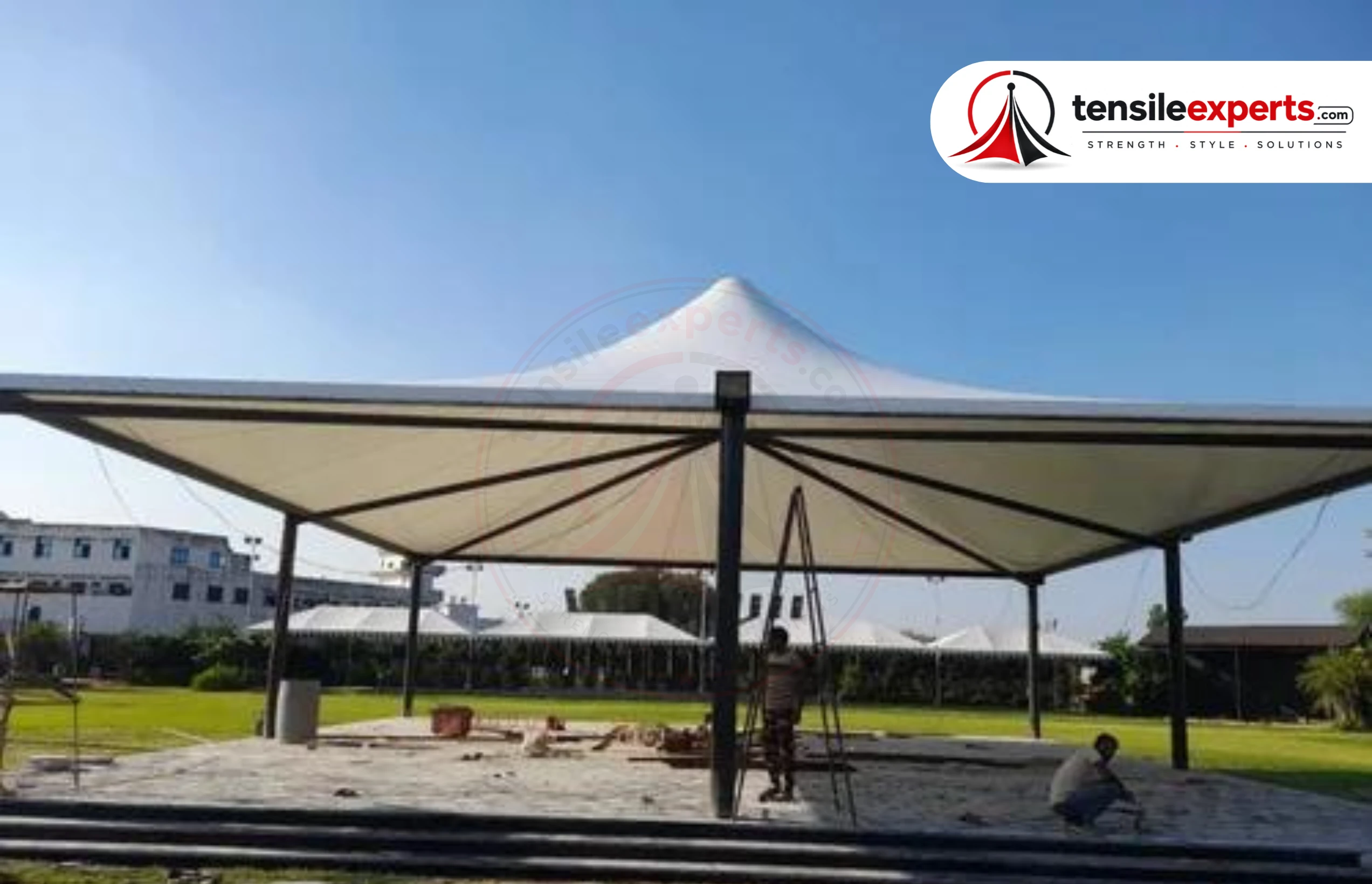
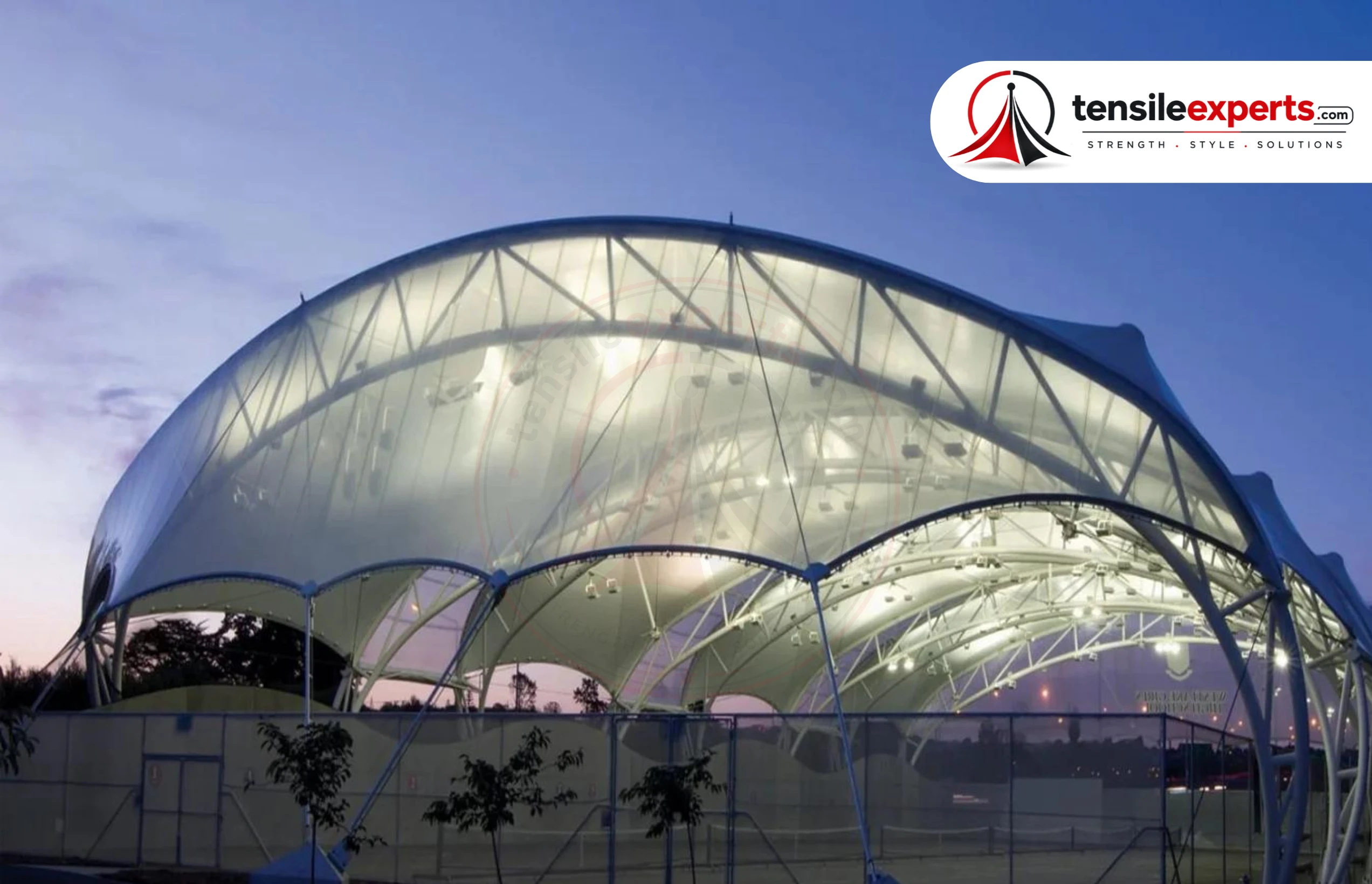
A tensile entrance structure is close to a canopy in structural form, but the distinction is prominence and purpose — this is specifically the statement piece at a building's main entrance or facade, not a general walkway cover. Spans run 4m–15m, and because it's usually the most visually prominent part of a commercial or institutional project, a design review with the client happens before fabrication begins, more so than with the other 4 types here.
How to Choose the Right Type
Start from what you're actually covering, not the product name:
| If Your Space Is... | You Probably Want |
|---|---|
| A building's main entrance or facade | Entrance Structure |
| A walkway or a fixed path between two points | Canopy |
| Individual cafe tables or poolside seating spots | Umbrella |
| An existing patio or deck wanting partial, open-feel shade | Pergola |
| A standalone garden or lawn feature, no existing deck | Gazebo |
Still not sure? Tell us about your space and we'll recommend a type during the initial discussion — no need to arrive with the right terminology already figured out.
Fabric Grade — Does It Change by Type?
The PVC/PTFE/PVDF choice is driven by span and exposure, not which of these 5 categories you pick — but scale correlates: entrance structures and larger canopies lean toward PTFE more often than the smaller umbrella and gazebo units, simply because they're more often the larger, longer-life installations. See our tensile structure page for the full fabric-grade breakdown with GSM and UV-resistance figures.
What Actually Drives the Cost
Span size and fabric grade drive cost more than which of these 5 types you choose — a large canopy and a large entrance structure of similar span cost similarly, while a small gazebo and a small umbrella installation cost similarly. Site conditions (anchoring, whether it's wall-mounted or freestanding) and foundation work are the other major factors. We confirm a site-specific quote after the site visit rather than a per-square-foot number that ignores which of these variables actually apply to your project.
Our Process, Step by Step
| Step | What Happens |
|---|---|
| 1. Initial Discussion | We talk through your space and help identify which of the 5 types actually fits, if you're not sure yet. |
| 2. Site Assessment | Measurements, anchoring/mounting-point check, and sun/wind/rain exposure review. |
| 3. Design & Fabric Recommendation | A structural form and fabric grade proposed to match your chosen type, span, and budget. |
| 4. Quote & Sign-Off | A site-specific quote confirmed before fabrication begins. |
| 5. In-House Fabrication | Cutting, welding, and frame preparation carried out by our own team. |
| 6. Installation | On-site erection and tensioning, scheduled around your site's access. |
| 7. Handover & After-Sales | Final inspection with you, followed by ongoing maintenance and repair support. |
Maintenance
All 5 types share the same core maintenance needs — periodic cleaning, re-tensioning, and hardware inspection. Freestanding types (gazebo, umbrella) are usually quicker to inspect given their smaller footprint; wall-mounted canopies and entrance structures need their mounting points checked alongside the fabric itself. See our full maintenance guide for the complete checklist.
Related Guides

Areas We Cover
Tensile Experts designs and fabricates all 5 of these shade/cover types across India. Here's the general product page for several major cities to start with:
Not seeing your city? We install pan-India — get in touch to confirm coverage.
Explore by Product

See the full product directory for everything we design and fabricate.
Frequently Asked Questions
Not sure which shade structure fits your space? Get in touch for a free site consultation.