




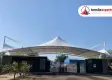
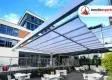
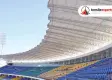
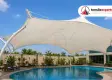
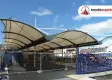
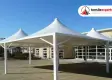
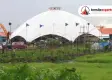
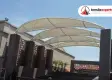
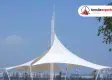


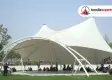


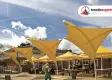

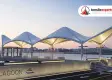










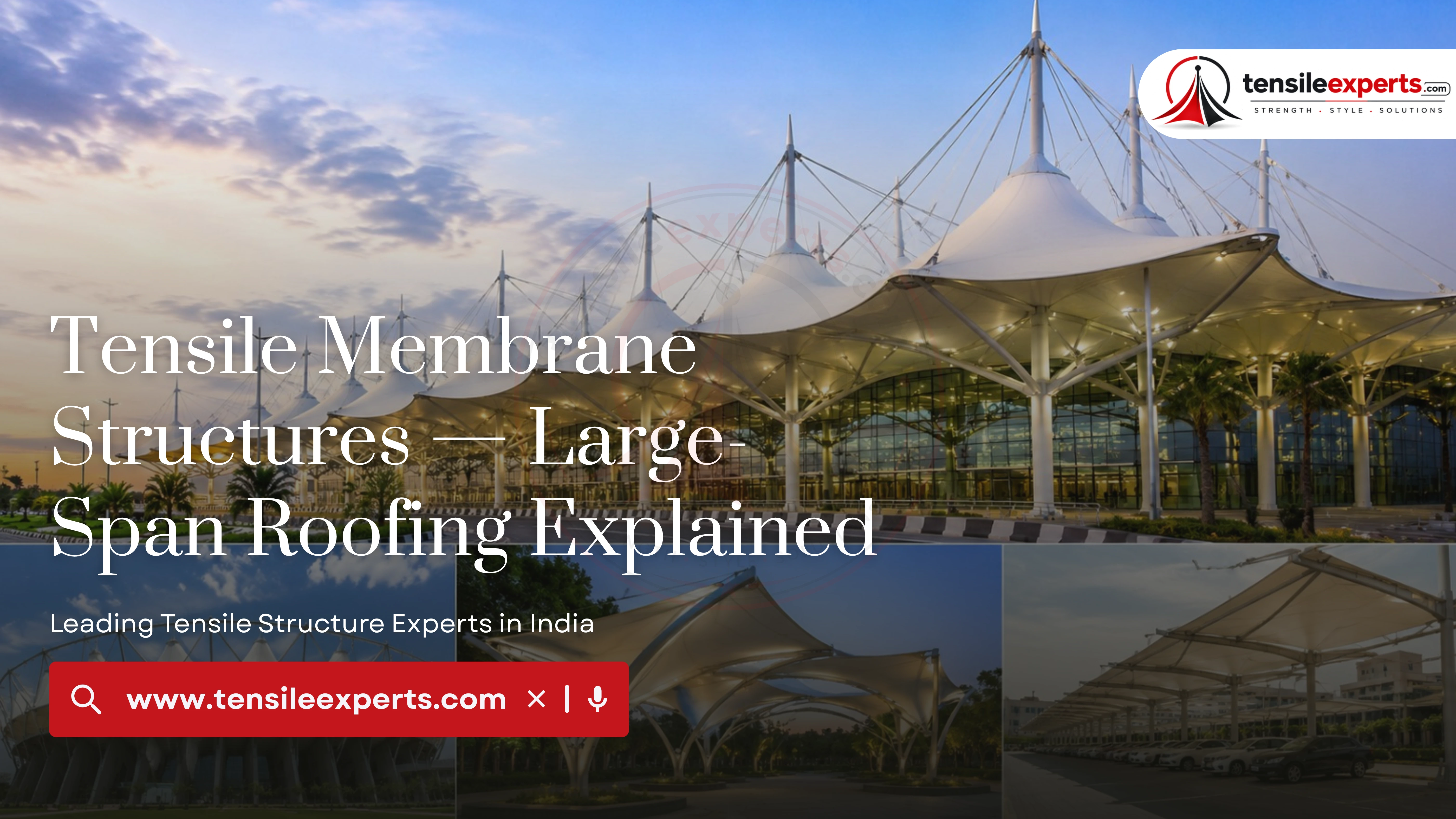
A tensile membrane structure is engineered as one continuous tensioned fabric surface across a large span — the cable/frame tensioning design is what makes the whole thing work, not an afterthought bolted on after the fabric is cut. This guide goes through the saddle vs. hyperbolic paraboloid form choice, how the tensioning system is engineered, and how a membrane structure compares to a dome or a standard tensile roof.
In This Guide
- What Is a Tensile Membrane Structure
- Saddle vs. Hyperbolic Paraboloid Forms
- Cable & Frame Tensioning Design
- Roof vs. Facade Application
- Choosing a Fabric Grade
- Technical Specifications
- What Actually Drives the Cost
- Membrane Structure vs. Dome vs. Roof Structure
- Our Process, Step by Step
- Maintenance
- Related Guides
- Available in Your City
- Explore by Product
- Frequently Asked Questions
What Is a Tensile Membrane Structure
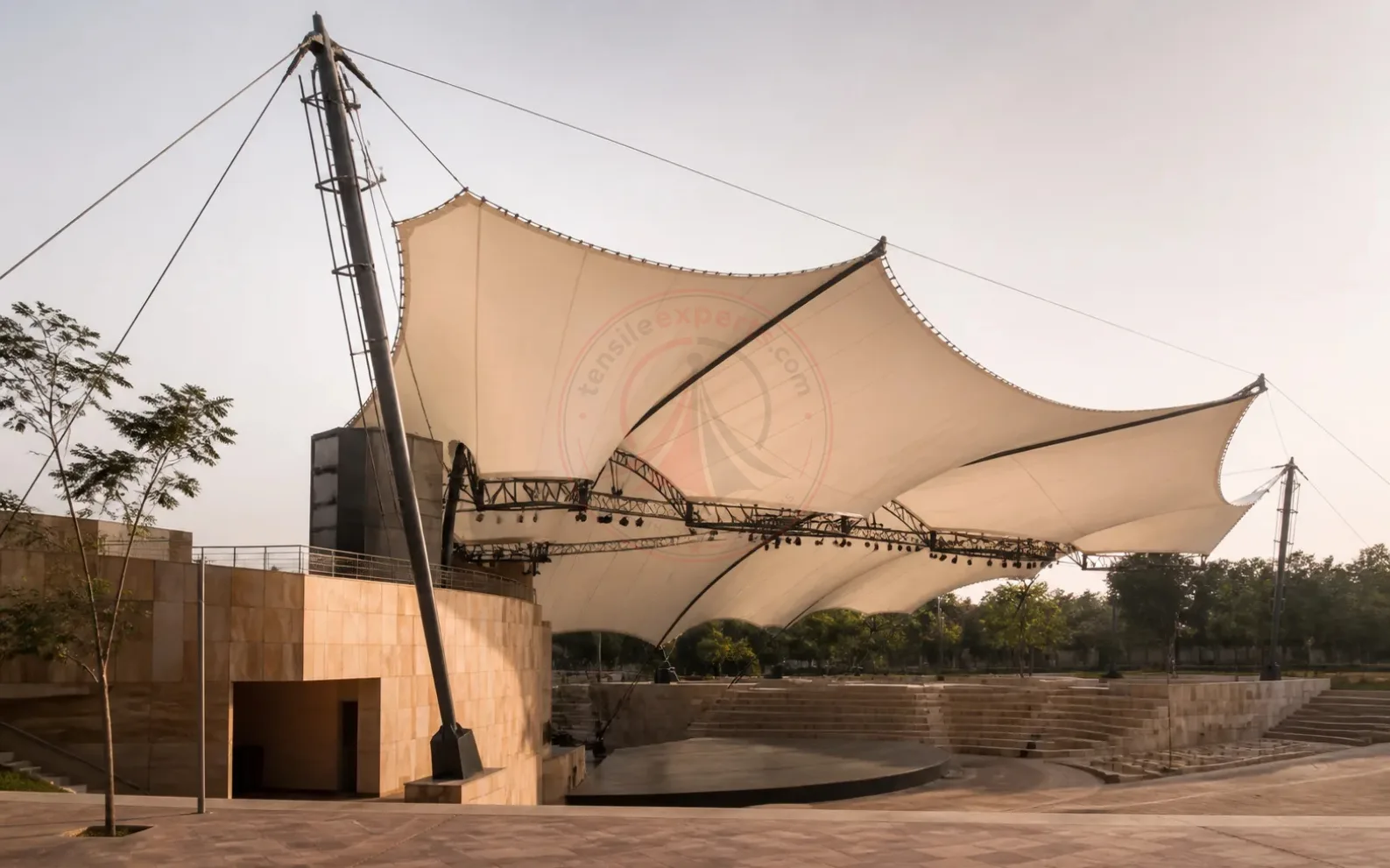
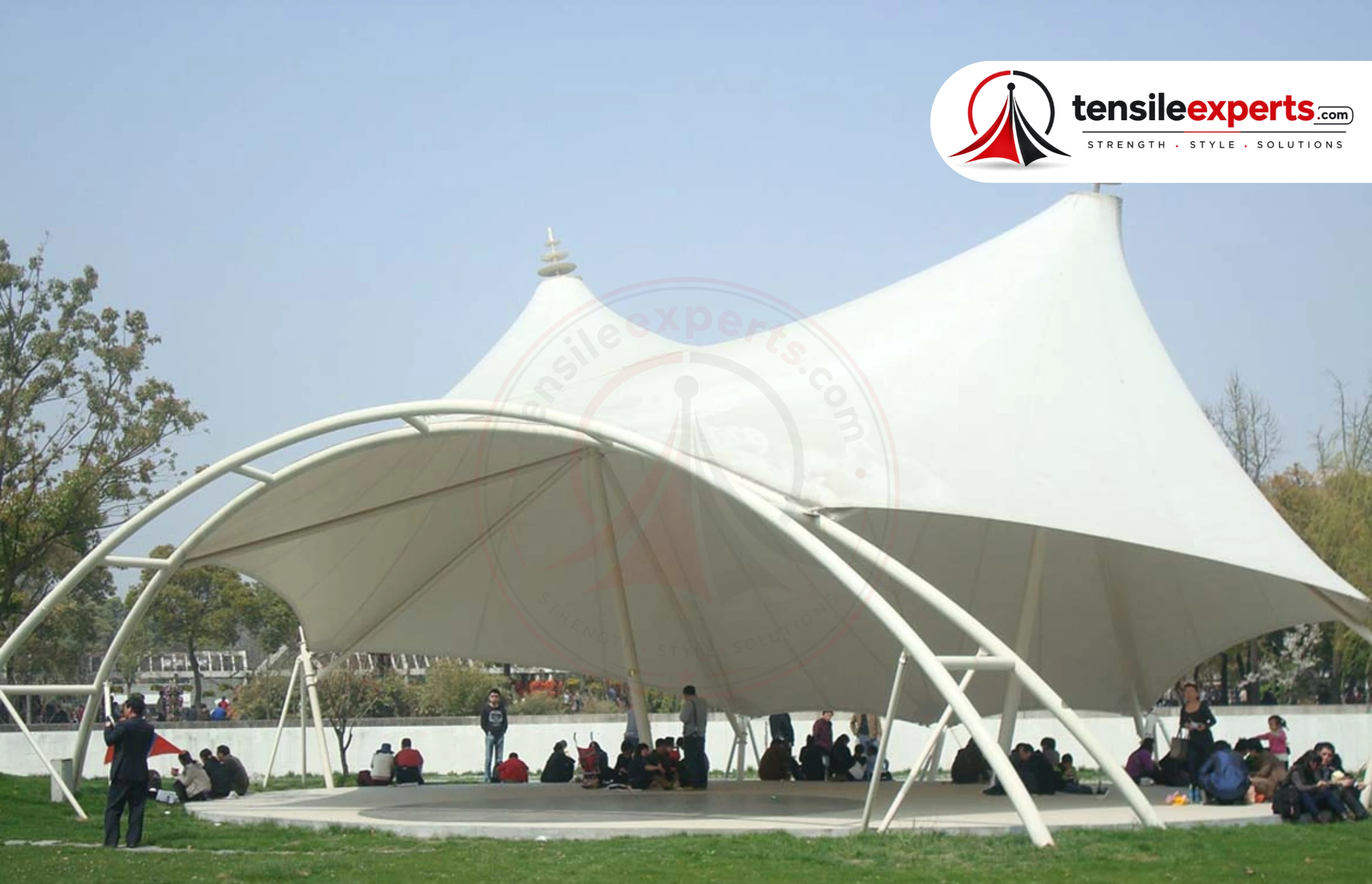
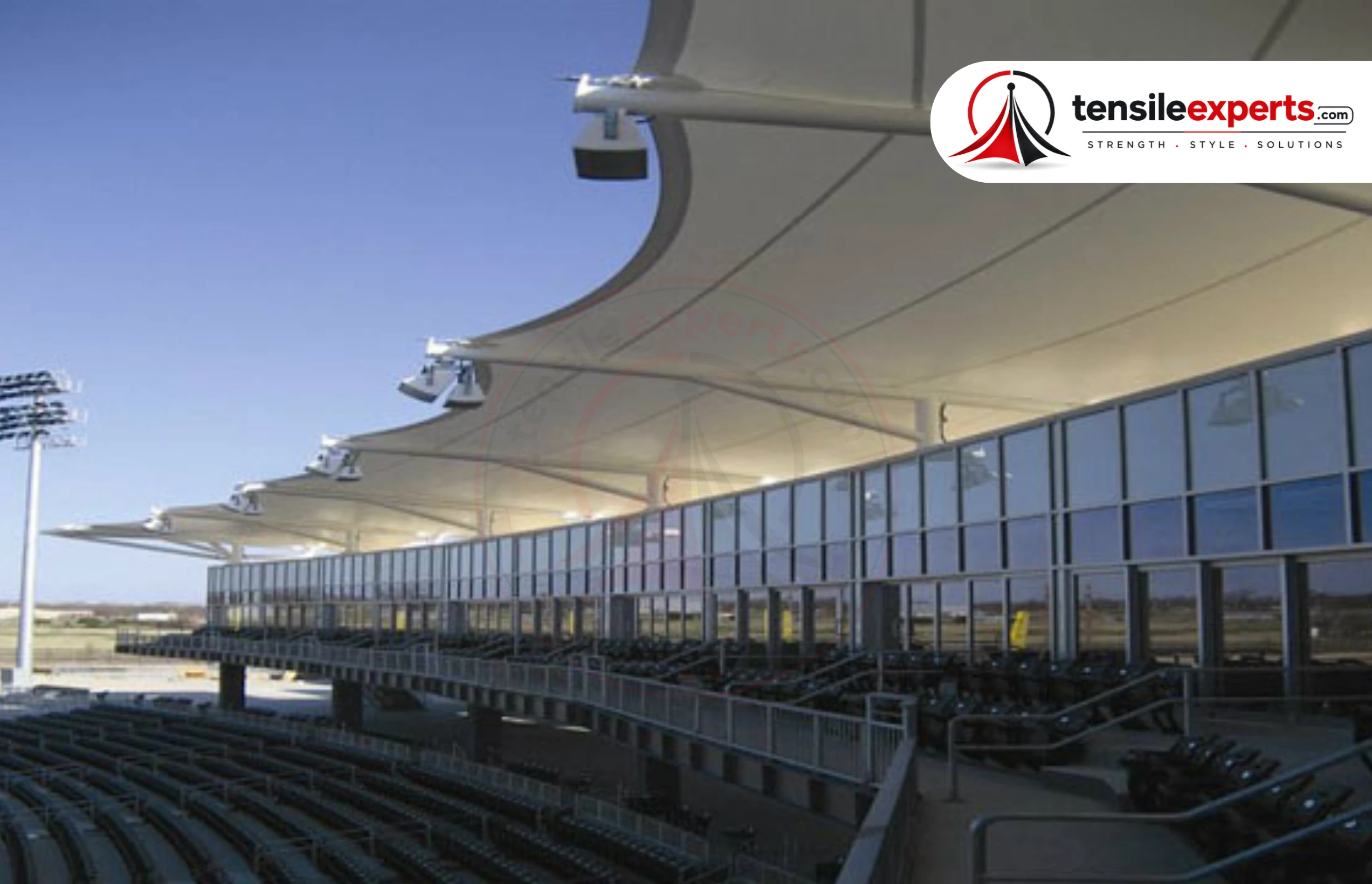
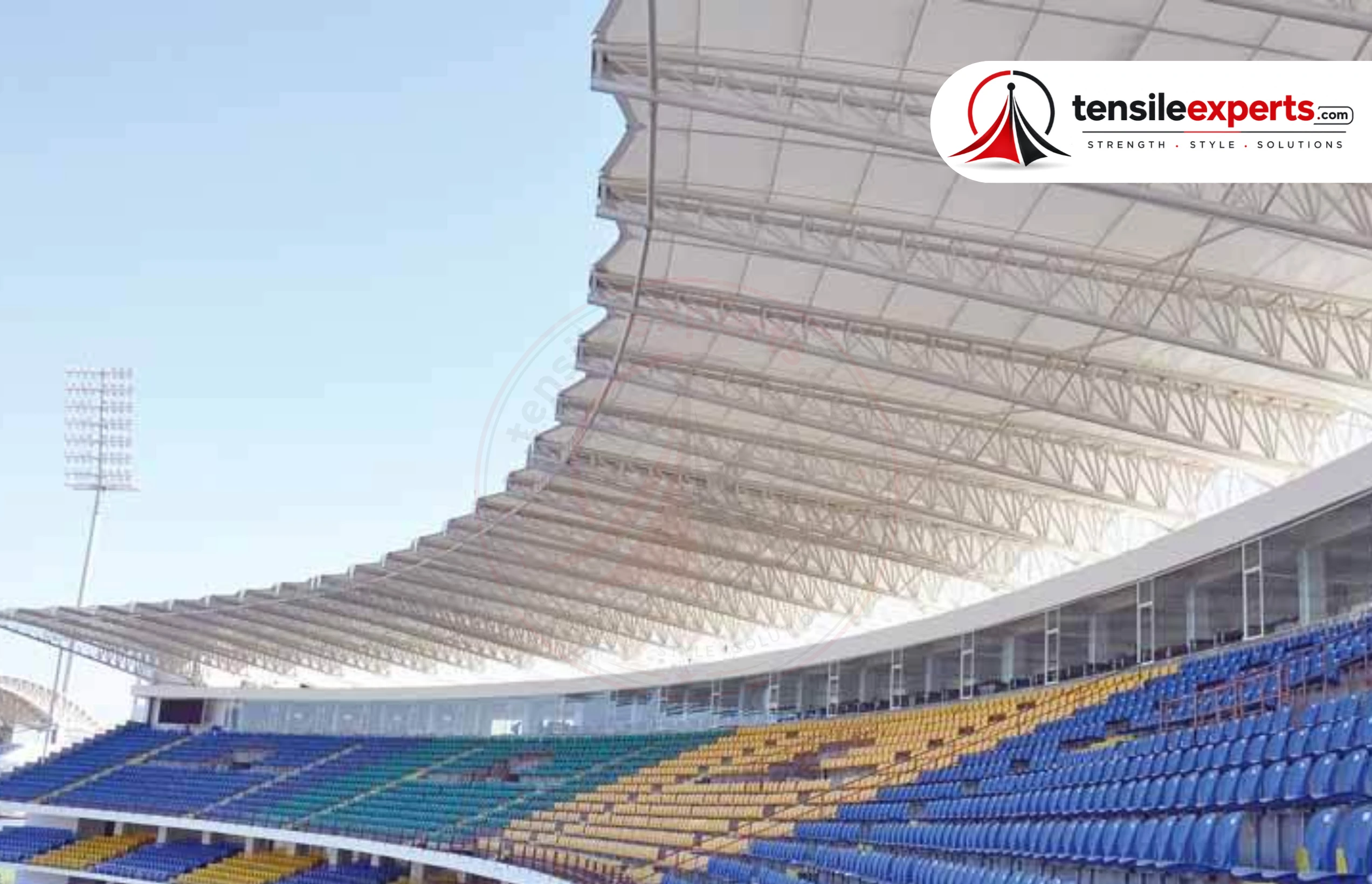
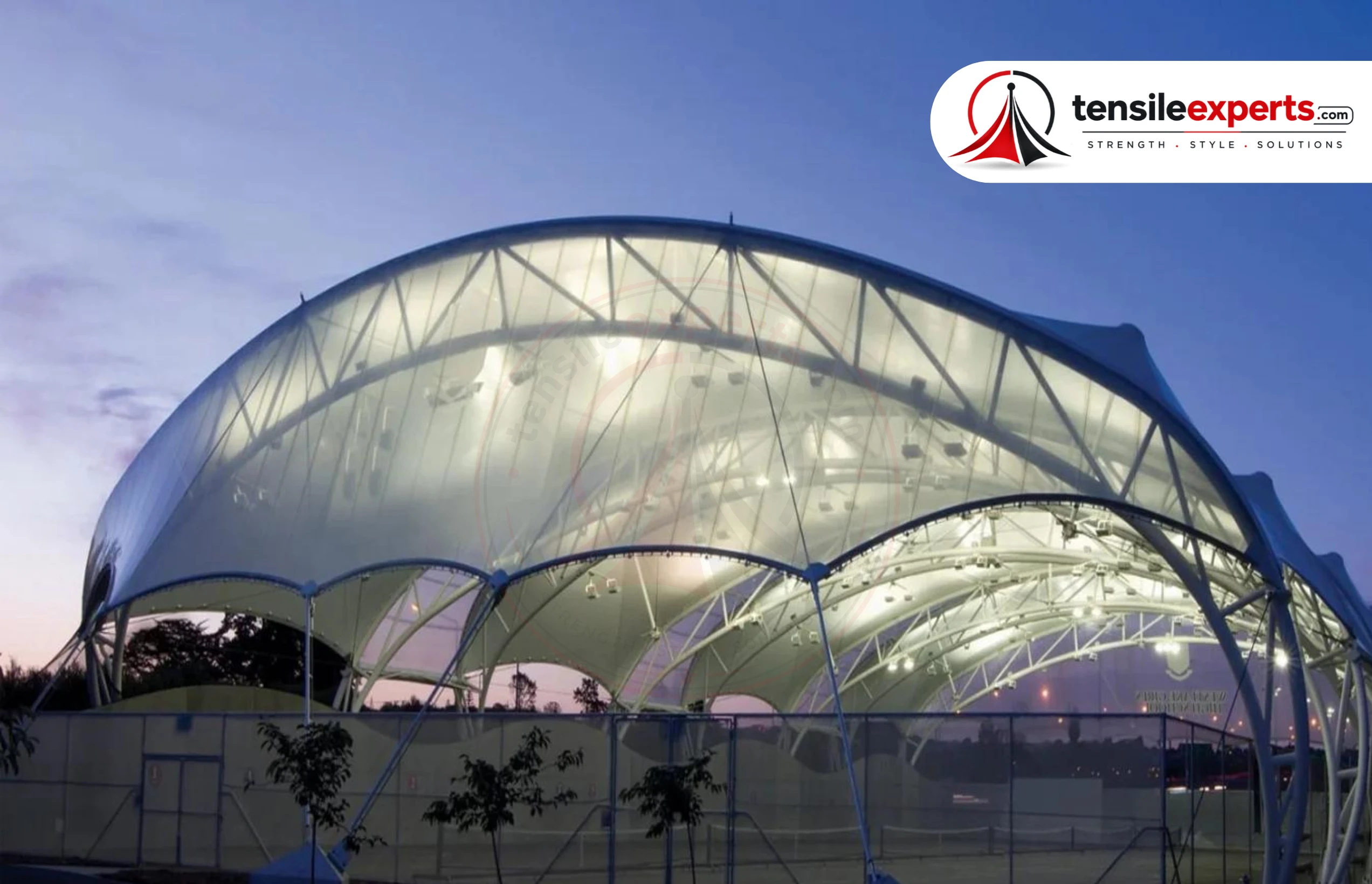
A tensile membrane structure is a large-span roof or facade built as a single continuous tensioned fabric surface — the double-curved geometry (rather than a flat panel) is what lets the membrane resist wind uplift and shed rain without pooling, across spans that would need heavy structural steel in a conventional building. This is the category we reach for when a project needs genuine large-span architectural roofing, not a scaled-up canopy.
Saddle vs. Hyperbolic Paraboloid Forms
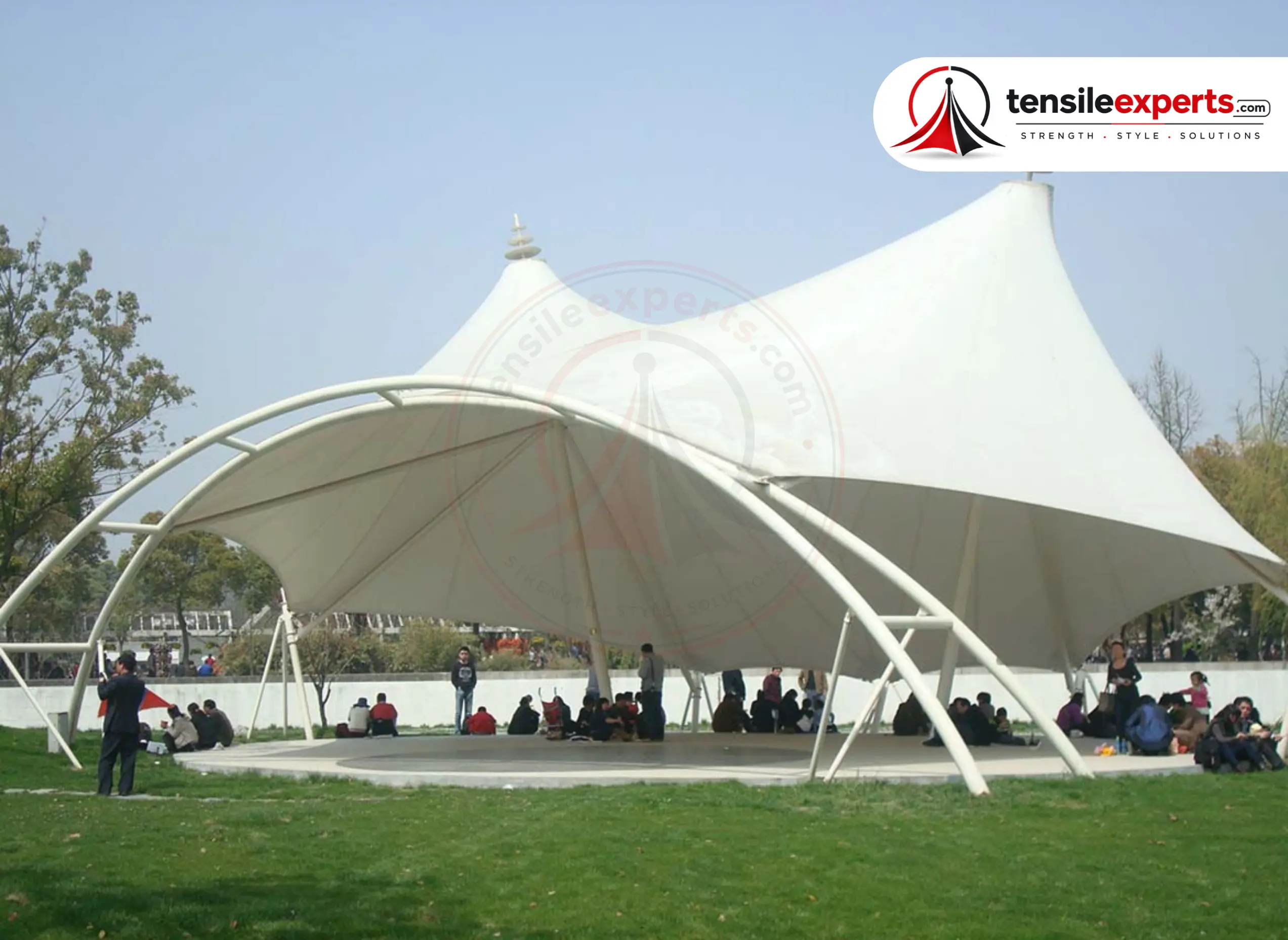
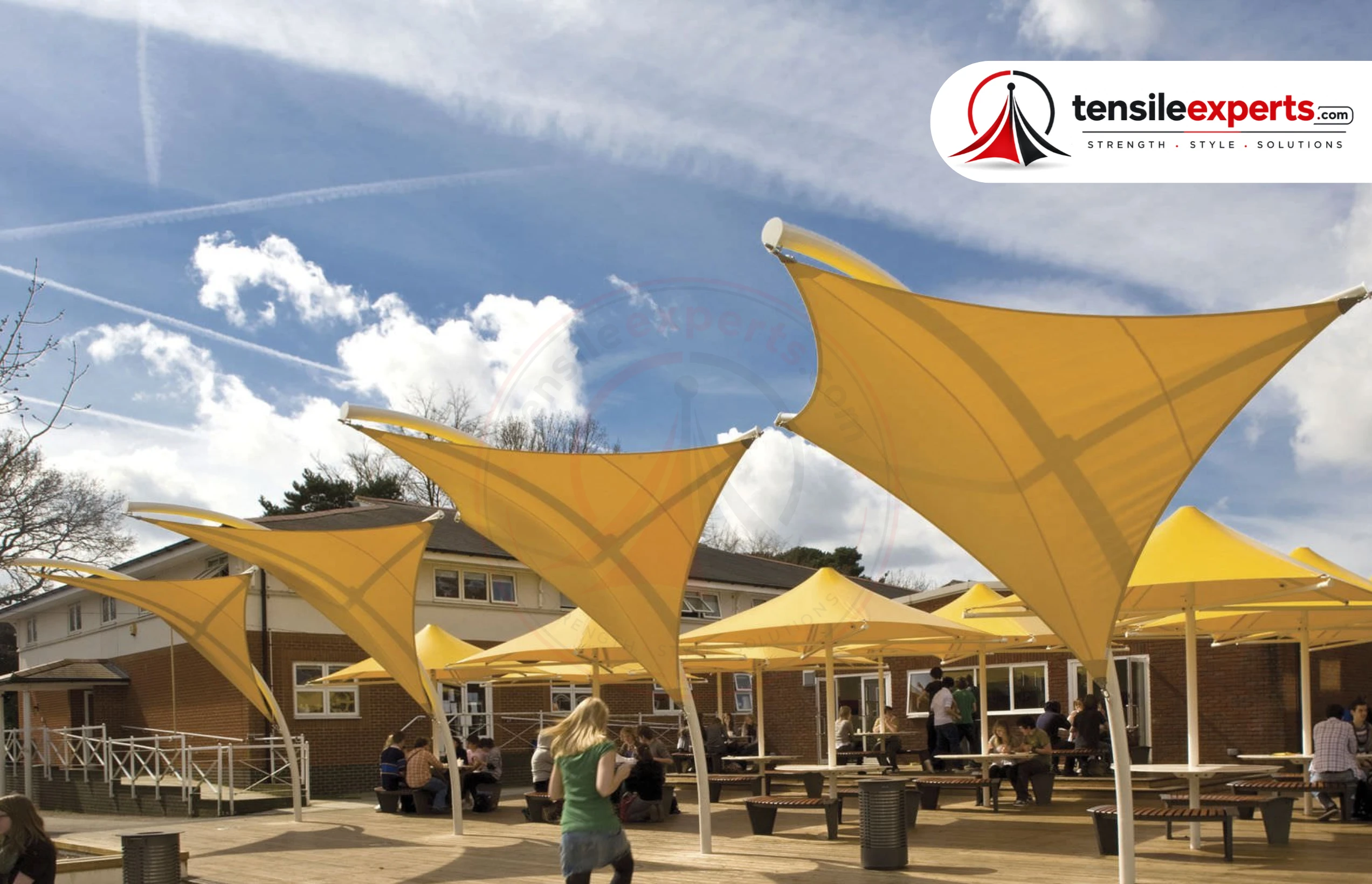
Both are double-curved membrane geometries that resist wind uplift and rain pooling better than a flat surface — the choice comes down to your site's anchor points and the architectural look you want:
| Aspect | Saddle | Hyperbolic Paraboloid |
|---|---|---|
| Curvature | Curves in two directions between high and low points | Twists between 4 corner points at different heights |
| Visual Character | Flowing, wave-like surface | Sharper, more geometric twisted-plane look |
| Best Suited For | Roofs with multiple high/low anchor points | Facades or roofs with 4 clear corner anchor points |
| Structural Basis | Cable/frame net following the saddle curve | Cable/frame net following the diagonal twist |
Cable & Frame Tensioning Design
The cable/frame system is what actually holds a membrane's double-curved shape under load — it's engineered together with the fabric, not added afterward. Getting this right is what separates a membrane structure that performs reliably over its service life from one that develops fabric slack, ponding, or flutter under wind — which is why membrane-scale projects get a structural engineering review as a standard part of our design process, not an optional add-on.
Roof vs. Facade Application
Membrane structures work as both roofing and facade elements on institutional and commercial buildings. A roof application needs drainage design worked into the curvature itself so rain sheds cleanly; a facade application is more about the visual/architectural statement and doesn't carry the same drainage load, but still needs the same tensioning rigor for wind performance. Tell us which you're planning early, since it changes the structural design brief.
Choosing a Fabric Grade
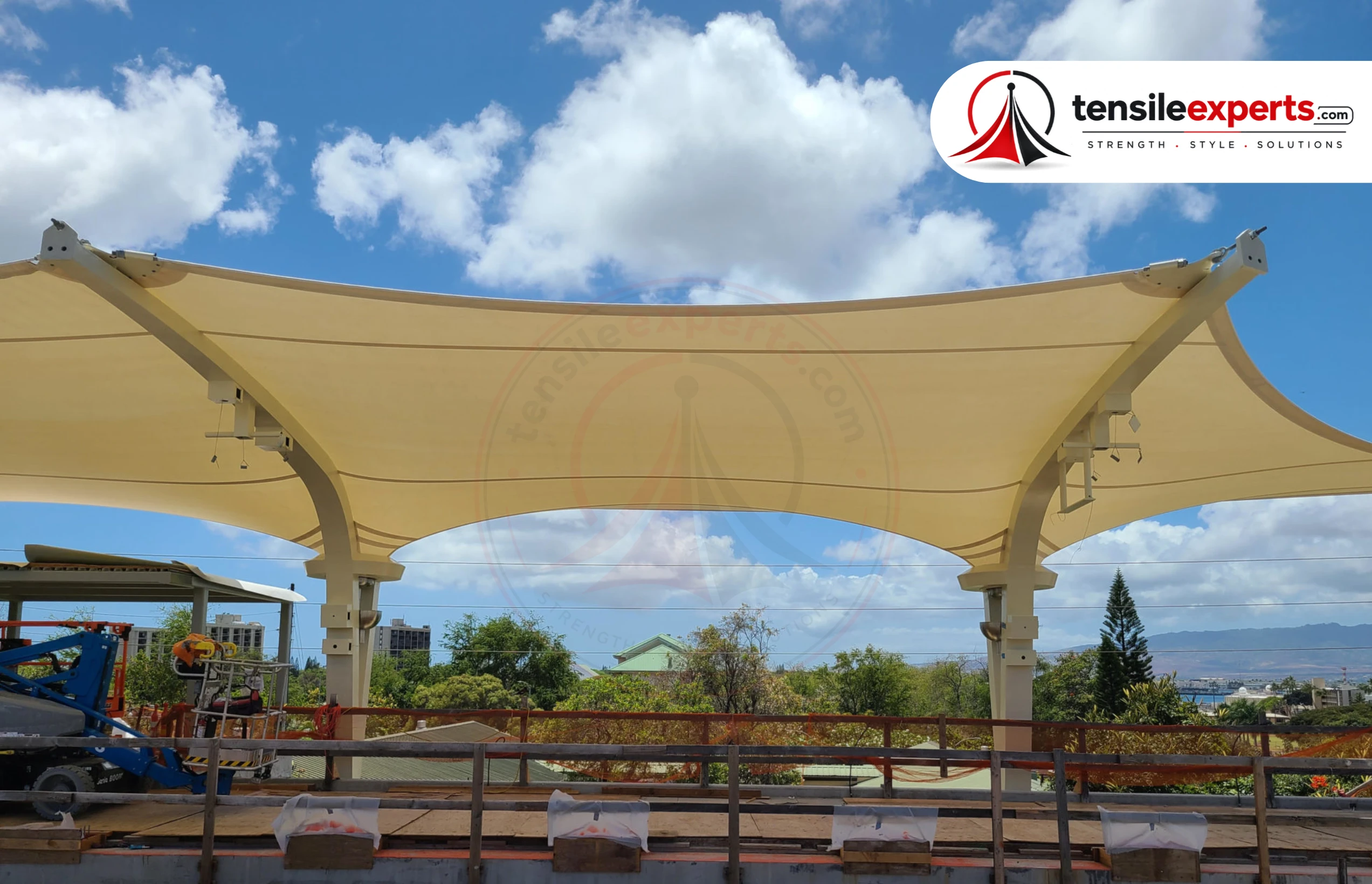
PTFE or PVDF is recommended over standard PVC at membrane scale, given the long-term durability requirements of a large, continuously-tensioned span exposed to weather year-round. See our tensile structure page for the full fabric-grade breakdown with GSM and UV-resistance figures.
Technical Specifications
| Specification | Details |
|---|---|
| Typical Span / Size | 15m–80m+ |
| Typical Height / Clearance | 6m–20m |
| Structural Form | Continuous tensioned membrane — saddle or hyperbolic paraboloid |
| Recommended Fabric Grade | PTFE or PVDF for long-term durability |
| Typical Use Cases | Large institutional roofs and facades |
| Ideal Site Conditions | Large-span sites where a continuous tensioned fabric surface suits the architecture |
| Foundation / Anchoring | Engineered cable/frame anchoring sized to the membrane's tension load |
What Actually Drives the Cost
Span size is the primary cost driver at membrane scale — cost doesn't scale linearly, since the cable/frame tensioning engineering grows more complex as spans increase. Form complexity (a multi-point hypar costs more to engineer than a simpler saddle) and fabric grade (PTFE vs. PVDF) are the next-largest factors.
Tensile Membrane Structure — From ₹345/sq.ft.
Membrane Structure vs. Dome vs. Roof Structure
All three can cover a large span, but the form and typical application differ:
| Aspect | Membrane Structure | Dome | Roof Structure |
|---|---|---|---|
| Form | Saddle or hyperbolic paraboloid — double-curved, varied geometry | Rounded, compression ring | Saddle, barrel, or flat — building-integrated |
| Typical Span | 15m–80m+ | 10m–50m diameter | 5m–100m+, application-dependent |
| Primary Purpose | Large architectural roof or facade of varied form | Rounded architectural centerpiece | Building roofing — residential to industrial |
| Best For | A large-span statement roof/facade project | A standalone rounded atrium/landmark | Replacing or supplementing a conventional roof |
See our dome structure page for a rounded centerpiece form specifically, or our tensile roof structure page if you're replacing or supplementing a building's existing roof rather than adding an architectural statement piece.
Our Process, Step by Step
| Step | What Happens |
|---|---|
| 1. Initial Discussion | A call or site visit to understand your span, application (roof or facade), and architectural intent. |
| 2. Site Assessment | Anchor-point survey, ground/structural check, and wind/rain exposure review. |
| 3. Structural Engineering Review | Membrane geometry (saddle or hypar) and cable/frame tensioning design engineered for your site. |
| 4. Fabric Recommendation | PTFE or PVDF proposed based on span and long-term exposure. |
| 5. Quote & Sign-Off | A site-specific quote confirmed after the engineering review. |
| 6. In-House Fabrication | Cutting, welding, and frame preparation carried out by our own team. |
| 7. Installation & Handover | On-site erection and tensioning, followed by a final inspection with you. |
Maintenance
Periodic cleaning, re-tensioning, and hardware inspection are recommended, same as any tensile fabric structure — a membrane's cable/frame tensioning system is worth a closer inspection interval than a smaller canopy, given the structural load it carries over a large span. See our full maintenance guide for the complete checklist.
Related Guides


Available in Your City
We design, engineer, and install tensile membrane structures pan-India. Here's the product page for several major cities to start with:
Not seeing your city? We install pan-India — get in touch to confirm coverage.
Explore by Product



See the full product directory for everything we design and fabricate.
Frequently Asked Questions
Planning a large-span tensile membrane structure? Get in touch for a free site consultation.