
















New Delhi · Projects Across India Design · Fabrication · Installation

Are Tensile Structures Sustainable? Material Lifecycle & Environmental Impact

Are Tensile Structures Sustainable? Material Lifecycle & Environmental Impact Sustainability Guide
Are Tensile Structures Sustainable? Material Lifecycle & Environmental Impact

Sep 22, 2026

A qualified look at the genuine sustainability considerations of tensile fabric structures — material efficiency, daylighting, fabric lifespan, and end-of-life factors — without overstated claims.

Are Tensile Structures Sustainable? Material Lifecycle & Environmental Impact
www.tensileexperts.com Are Tensile Structures Sustainable? Material Lifecycle & Environmental Impact A qualified look at the genuine sustainability considerations of tensile fabric structures — material efficiency, daylighting, fabric lifespan, and end-of-life factors — without overstated claims.
Share this article
Link copied! Paste it in your Instagram Story or Bio.

Sustainability is increasingly part of how commercial and institutional buyers evaluate any construction choice, tensile structures included. This guide sticks to what's genuinely, defensibly true about tensile fabric structures on this front — without inflating it into unverifiable statistics or blanket "green" claims a specific project hasn't earned.

Material Efficiency of Tension-Based Design

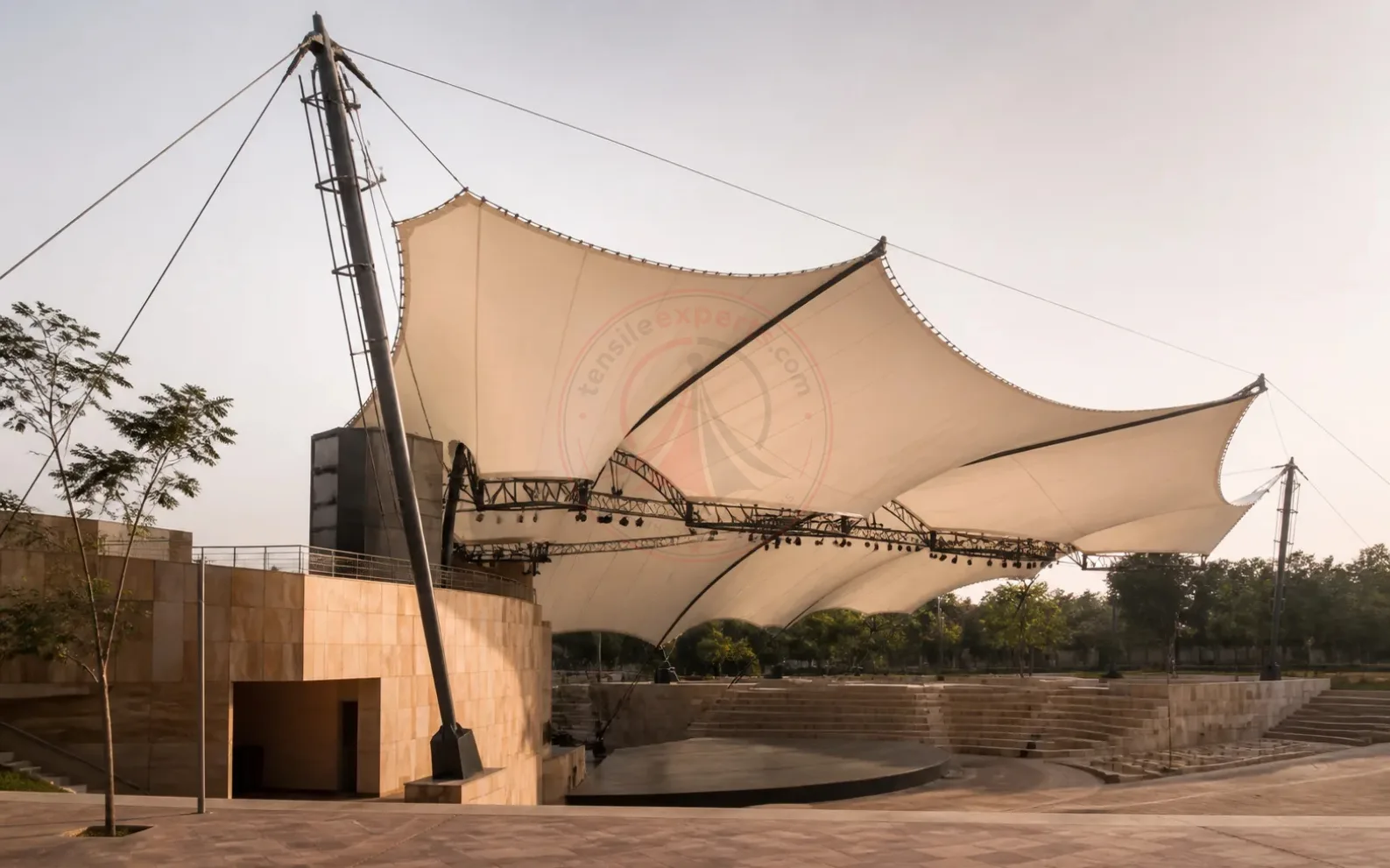
A tensioned fabric membrane carries load across a curved surface more efficiently than a flat, rigid roof carries the same load through bending — which is a genuine structural-engineering reason tensile spans generally need a lighter supporting frame and foundation than an RCC or conventional steel roof of comparable size. Less structural material for the same coverage is a real, if modest and site-dependent, material-efficiency advantage — not a marketing exaggeration. See our vs conventional roofing comparison for the fuller structural picture.
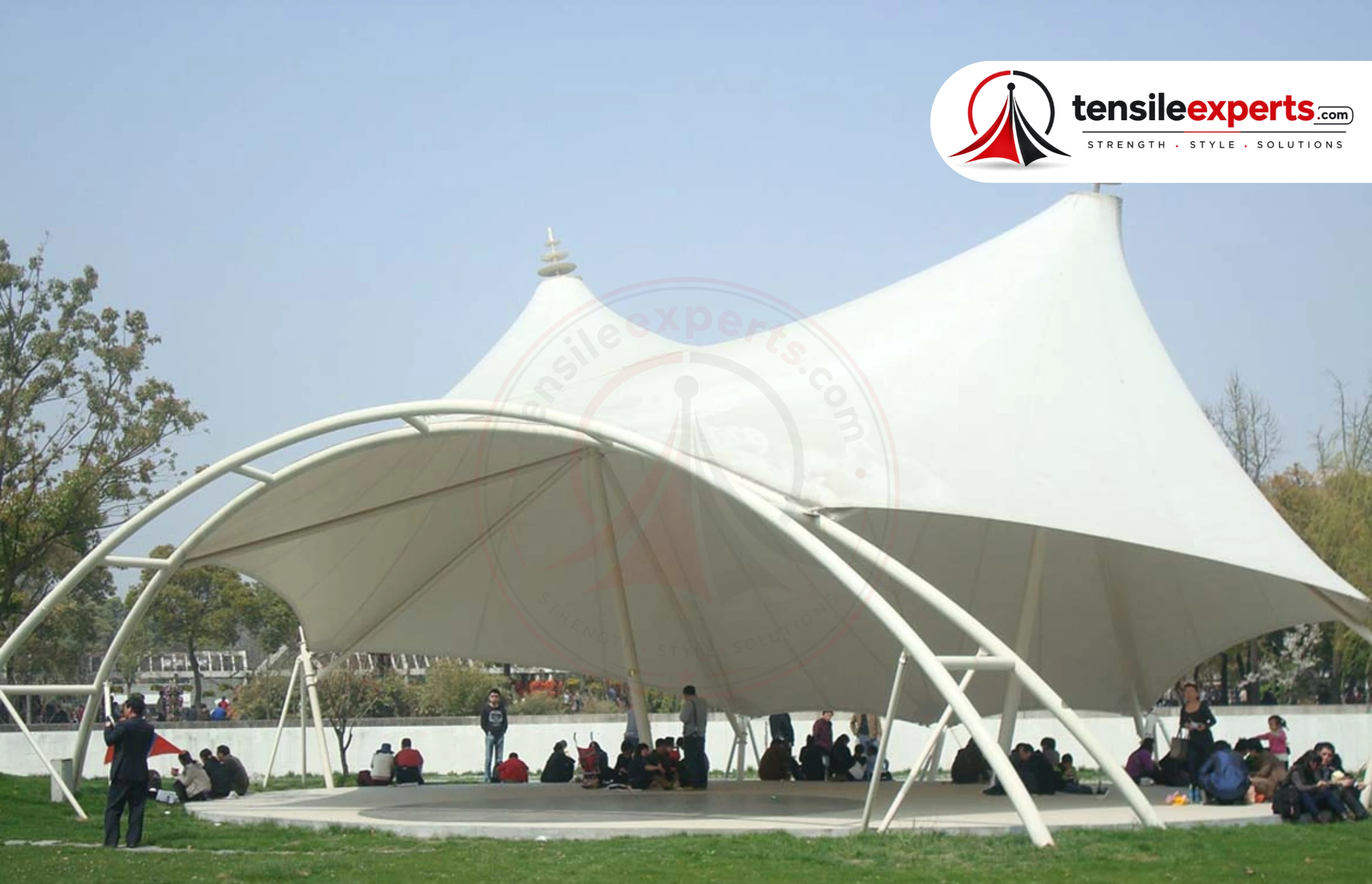
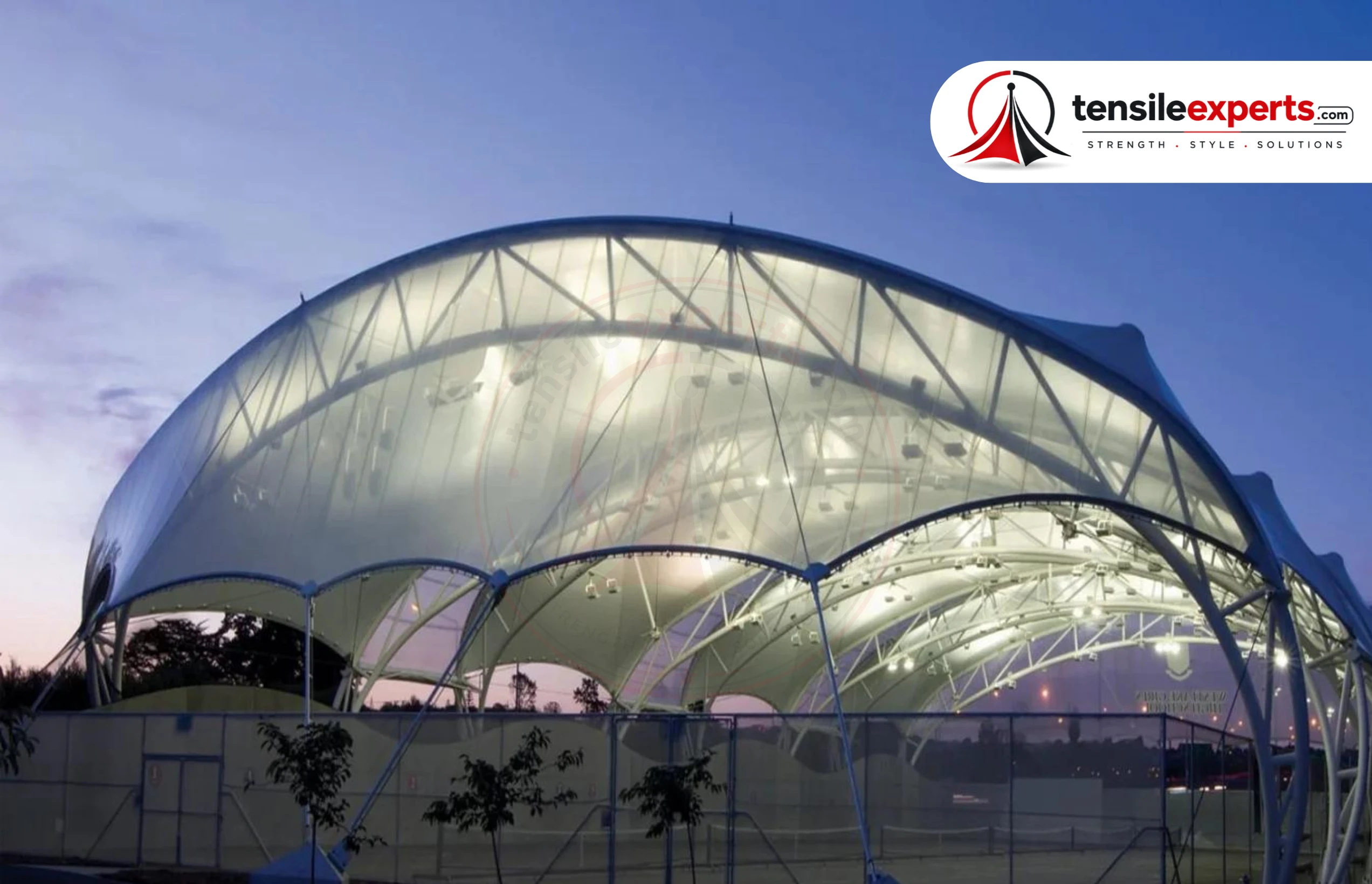
Tension-based design carries load across a curved surface more efficiently than a flat roof carries the same load through bending.

Daylighting & Solar Reflectance

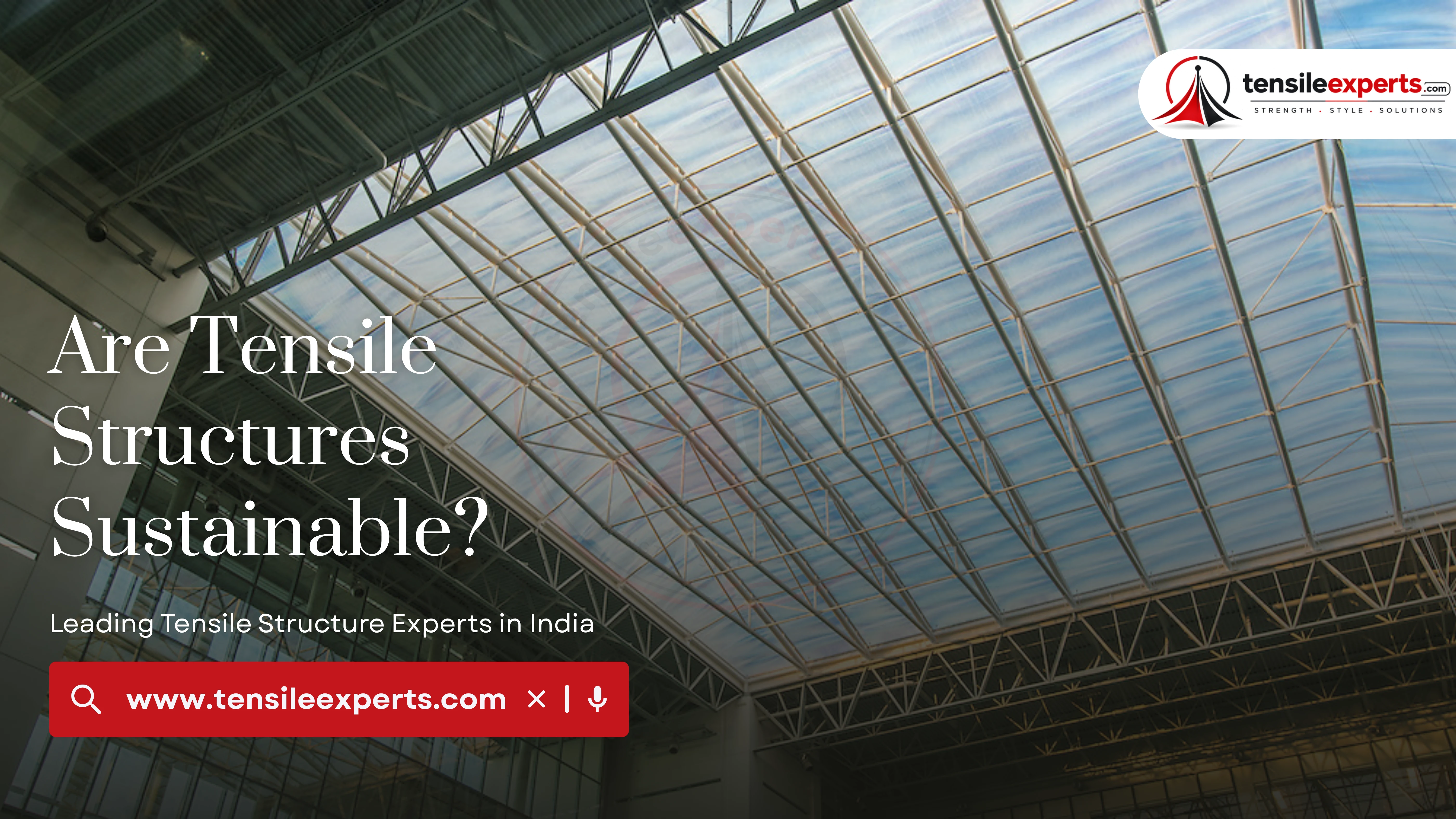
Coated architectural fabrics used in tensile structures reflect a meaningful portion of incoming solar radiation while still transmitting some filtered natural light through — this is a real, physical property of the fabric coating (PVDF-coated fabrics in particular are chosen partly for this), distinct from a clear glass skylight, which transmits heat far more directly. The practical result is a covered space that gets natural daylight without the same direct heat load a clear roof would add — though the actual reduction in lighting/cooling energy use depends on the specific building, climate, and use pattern, which is why we don't attach a specific percentage to it here.

Why Fabric Lifespan Is Also a Lifecycle Factor

How long a structure's fabric membrane lasts before it needs re-covering isn't only a cost question — a longer service life also means less material manufactured, transported, and replaced over the structure's lifetime. Fabric grade, UV exposure, and maintenance all genuinely affect this. See our service life guide and UV resistance guide for the specific factors, and our maintenance checklist for how upkeep extends it.
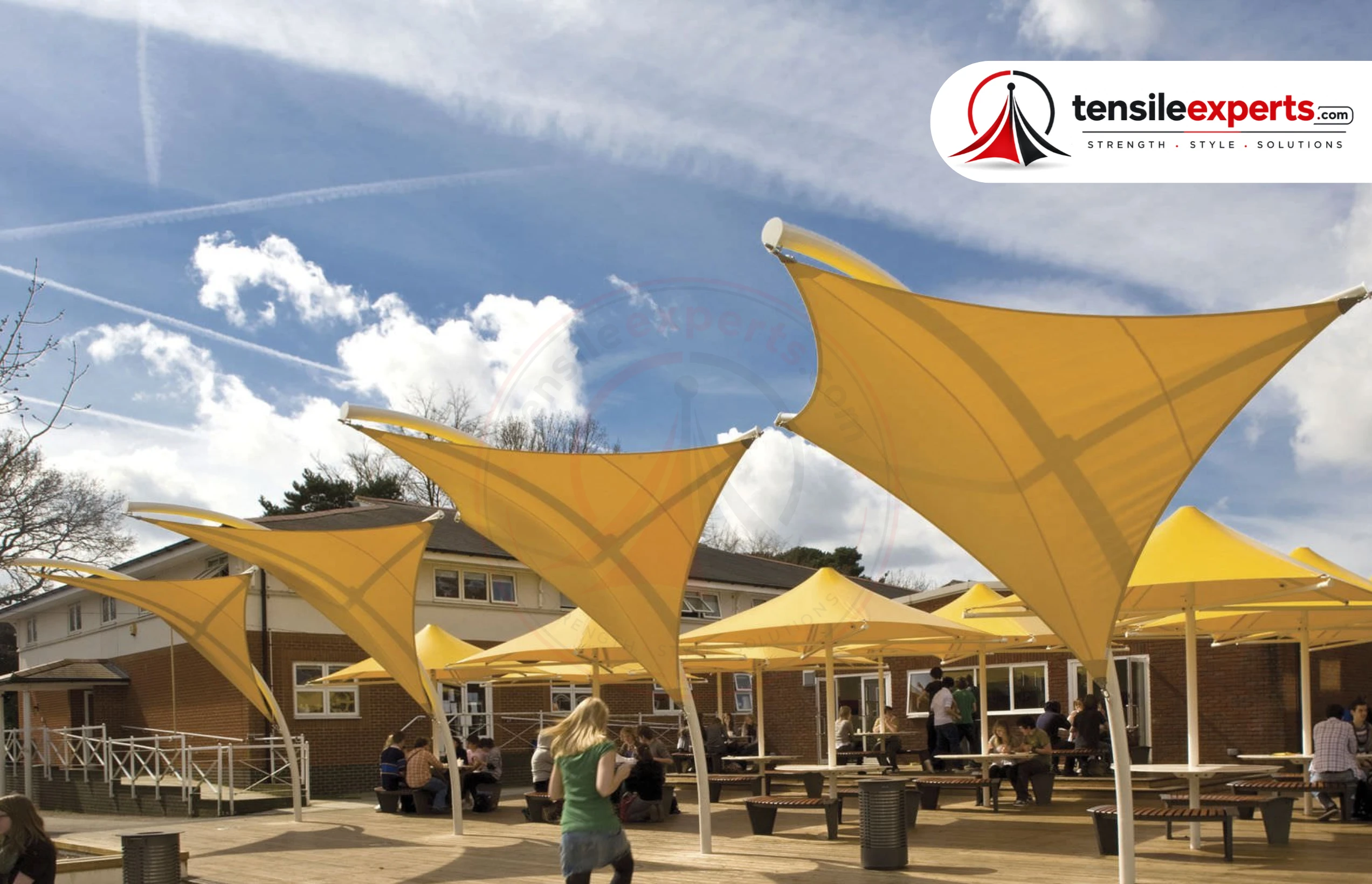
A longer fabric service life means less material replaced over a structure's lifetime, not just a lower long-run cost.

End-of-Life Considerations

What happens to the fabric membrane at the end of its service life genuinely depends on the fabric grade used (PVC, PTFE, and PVDF-coated fabrics differ in composition) and on what recycling or disposal facilities are realistically available in a given region — this isn't uniform across India, and we won't state a blanket recyclability guarantee that doesn't hold everywhere. It's a fair question to raise with any manufacturer for your specific fabric grade and location.

What We Won't Claim

In the interest of the same honesty standard we hold the rest of our content to: we won't state a specific carbon-footprint number, a percentage energy saving, or a formal green-building certification for tensile structures in general, because none of those would be true as a blanket claim independent of a specific project, site, and independent assessment. If a certification or a quantified energy study genuinely matters for your project, that's a conversation to have directly, backed by your project's own data — not a number to take from a general guide like this one.

Explore by Product

See the full product directory for everything we design and engineer.

Frequently Asked Questions

Not automatically or universally — but tension-based design is genuinely more material-efficient for a given span than a rigid roof, which is a real, structurally-grounded factor, not a marketing claim. It's one consideration among several, not a blanket "greener" label.

This varies by fabric grade and by what recycling facilities are actually available in a given region — it's not something we'd state as a blanket guarantee. See our fabric grade guide for how the grades differ in composition.

A tensile membrane can reduce heat gain compared to a clear glass skylight of the same size, since coated fabrics reflect a meaningful portion of solar radiation rather than transmitting it directly — but we wouldn't state a specific energy-saving percentage without a project-specific study.

Yes — a structure that needs re-covering less often means less material replaced over time, which is a real lifecycle consideration. See our service life guide for what actually affects how long a fabric grade lasts.

It's a reasonable factor to weigh alongside span, cost, and architectural fit — not a standalone reason on its own. See our tensile vs conventional roofing comparison for the fuller set of trade-offs.

Want to discuss the sustainability factors for your specific project? Get in touch.

Rajiv Gangwar

Rajiv Gangwar

Writing at Tensile Experts, sharing practical guidance on tensile fabric structures — design, materials, and installation — for clients across India, with a strong focus on Delhi, Gurgaon, and the NCR region.

Contact Us

Tensile Structure Guides

Latest From Our Blog

Practical guides on tensile fabric structures — design, materials, cost, and installation — for clients across India

Are Tensile Structures Sustainable? Material Lifecycle & Environmental Impact

A qualified look at the genuine sustainability considerations of tensile fabric structures — material efficiency, daylighting, fabric lifespan, and end-of-life factors — without overstated claims.

Badminton Court Tensile Structures — Complete Guide

Real badminton court dimensions, clearance-height requirements, and single vs. multi-court layouts for a tensile roof structure — real specs and how it compares to a general stadium structure.

Best Tensile Structure Company in Delhi NCR — How to Choose

A practical checklist for choosing a tensile structure company in Delhi NCR — what to check, what questions to ask, and why in-house manufacturing matters, before you sign off on a quote.


Send Email
Call Us
WhatsApp
White large-span tensile membrane structure Delhi · Pan-India execution
Project consultation

Build the right tensile structure for your space.

Send us your application, approximate size and site location. We’ll help you identify the right structural approach and membrane option.

01 Share your site 02 Review the concept 03 Plan execution
Loading...

Sending your message...

Please wait