



















The use case determines the starting brief
Tensile Cone Structure in Himachal Pradesh
Himachal Pradesh · Tensile Cone Structure
Tensile Cone Structure in Himachal Pradesh
See how we actually work before you commission a Tensile Cone Structure in Himachal Pradesh: real project photography, current starting pricing, and our design process.

From ₹320/sq.ft.
Indicative starting price. Final pricing depends on size, design, fabric, structure, foundation, installation and site conditions.
Available for Custom Projects
Starting price · Updated Aug 2026
 Real project imagery
 In-house project delivery
Start with the occupied circle, mast, rise, and edge height.
A cone structure in Himachal Pradesh should begin with use and diameter, mast position, required clearance, architectural axis, supports and foundations, exposure, drainage, lighting, delivery, erection, and maintenance.
Regional context guides what the survey checks first
Dimensions and supports checked before fabrication
A cone structure in Himachal Pradesh should begin with use and diameter, mast position, required clearance, architectural axis, supports and foundations, exposure, drainage, lighting, delivery, erection, and maintenance. Final cone proportion, membrane stress, mast and perimeter reactions, anchors, foundations, drainage, erection, and access are verified for the individual project.
Application fit
Where a Tensile Cone Structure can fit in Himachal Pradesh.
An entrance landmark, circular seating canopy, event focal point, and repeated commercial cone need different mast positions, occupied clearances, proportions, radial supports, drainage, lighting, and maintenance.
Entrance and plaza landmarks
Align the cone with arrival views and movement while keeping doors, signs and accessible routes clear and coordinating mast, radial anchors, lighting, runoff, foundations, and facade relationships.
Planning point 01Circular seating and dining
Place central or offset masts around tables and service paths, usable edge height, views and ventilation, lights and fans, low-perimeter drainage, cleaning, and maintenance.
Planning point 02Event and assembly focal points
Coordinate stage or central activity, crowd and emergency movement, rigging and lighting, clear height, temporary or permanent use, foundations, runoff, erection, inspection, and changeover.
Planning point 03Repeated commercial cone bays
Set consistent diameter, mast and edge levels, support grids and joints, shared or separate drainage, lights and services, tolerances, phased erection, panel replacement, and future expansion.
Planning point 04
Cone-form comparison
Where should the mast and low perimeter sit?
Diameter alone does not choose the cone. Occupied layout, mast position, rise and edge height, radial load path, open edges, drainage, architecture, erection, and maintenance decide the proportion.
| Structure type | Support or operating logic | Often considered for | Confirm before choosing |
|---|---|---|---|
| 01Central-mast cone | A central compression mast organizes radial membrane sectors and perimeter reactions | Circular plazas, seating, kiosks, and focal spaces where the mast can become part of the layout | Mast footprint and base, radial clearances, rise and edge height, seams and perimeter supports, runoff, lighting, erection, and maintenance. |
| 02Offset or external-mast cone | An offset, tilted, or flying mast shifts the primary support away from the most valuable occupied zone | Entrances, dining, and asymmetric sites needing a clearer central footprint or directional landmark | Eccentric mast and foundation reactions, cable and edge geometry, usable clearance, boundaries, drainage, erection stability, inspection, and architectural alignment. |
| 03Multi-cone or repeated bays | Several cone modules share or repeat supports and drainage across a larger covered area | Commercial, institutional, parking, and assembly layouts needing expandable rhythmic coverage | Module grid and overlap, shared reactions, valley and joint drainage, consistent levels, services, progressive stability, tolerances, replacement, and expansion. |
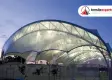
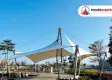
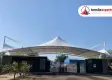
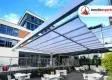
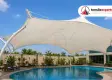
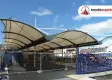
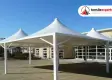
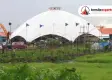
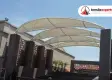
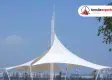
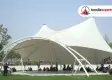
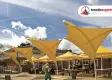
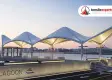
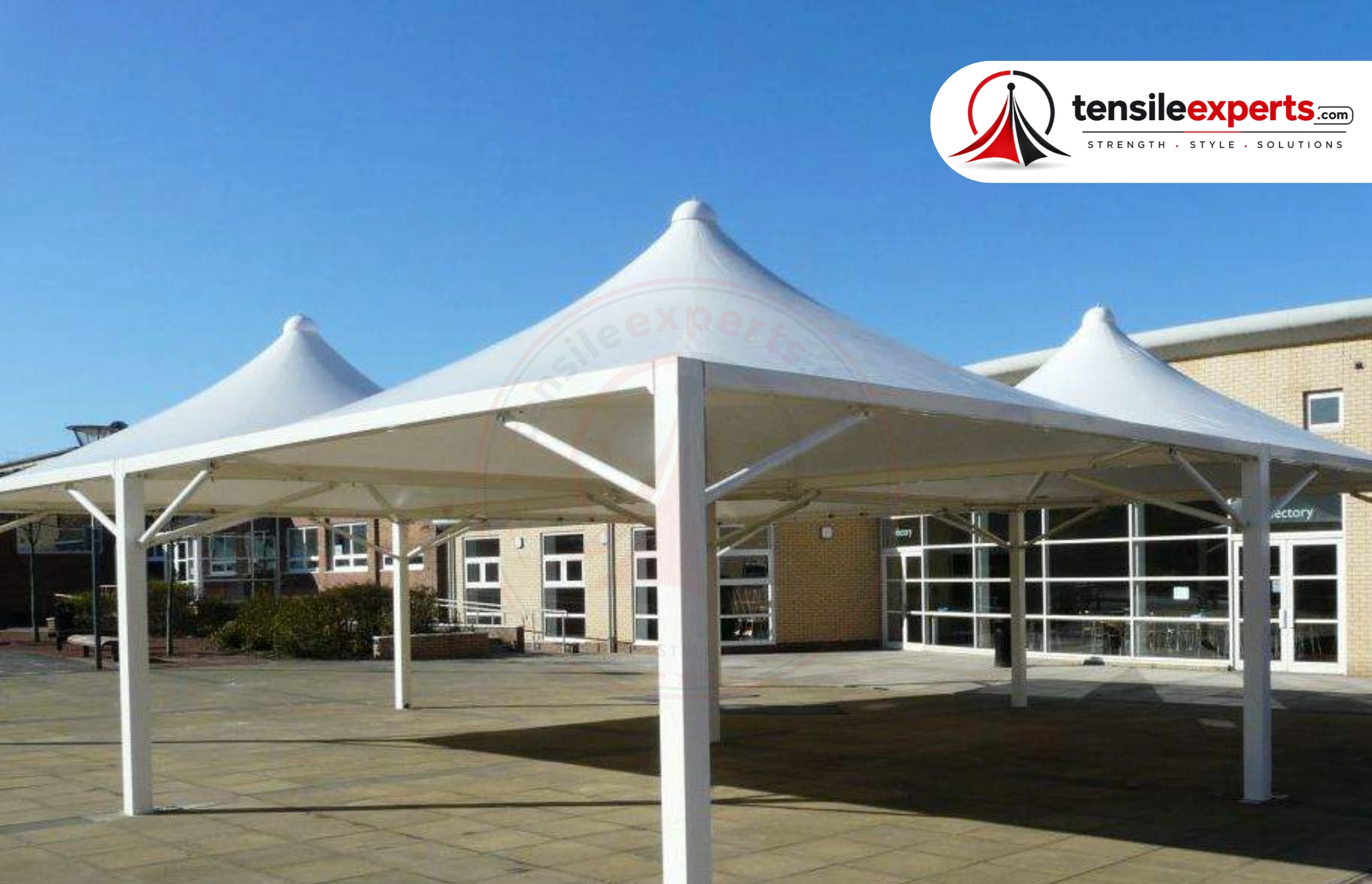
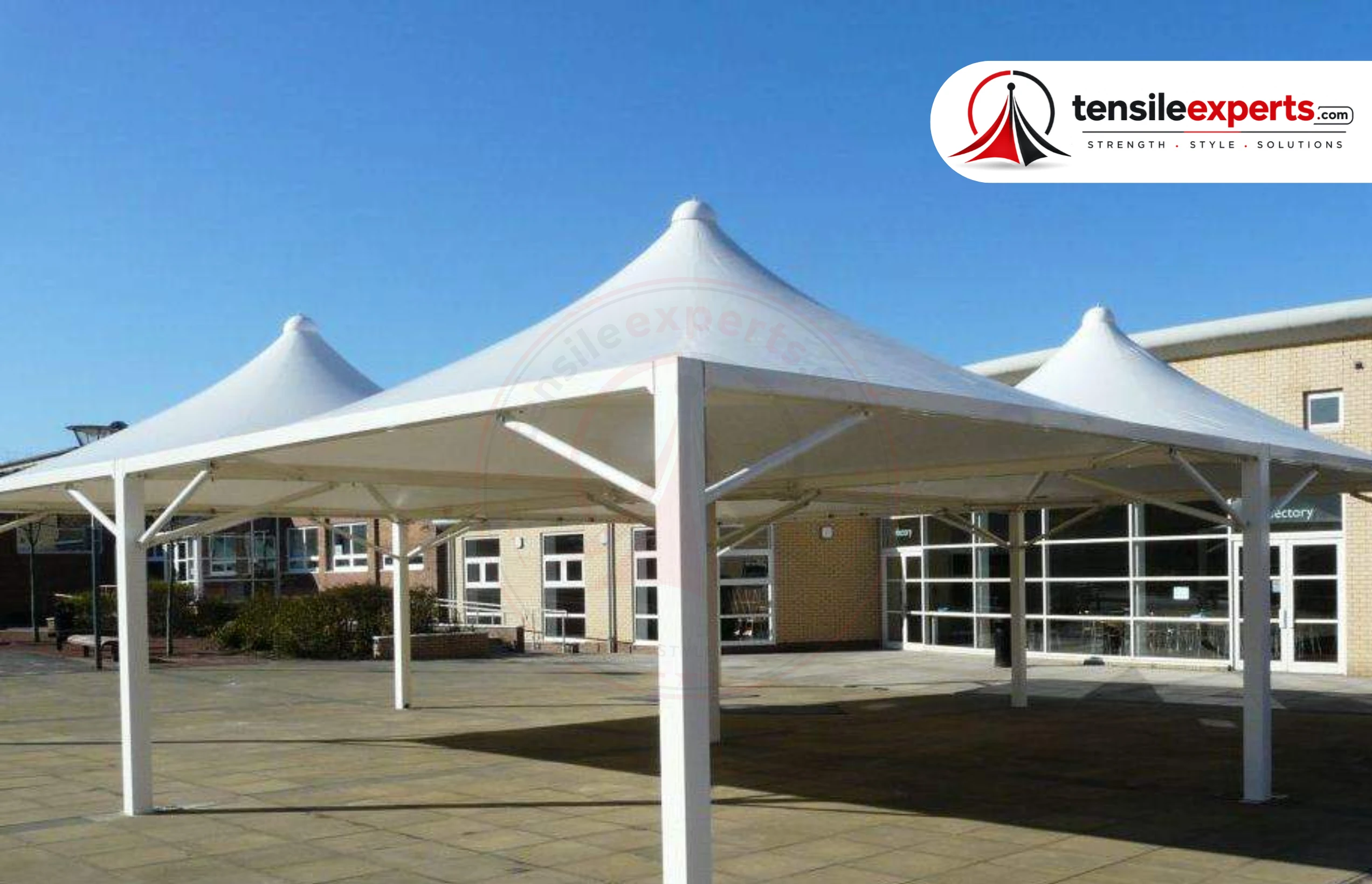
Visual reference
Compare form, frame and finished coverage.
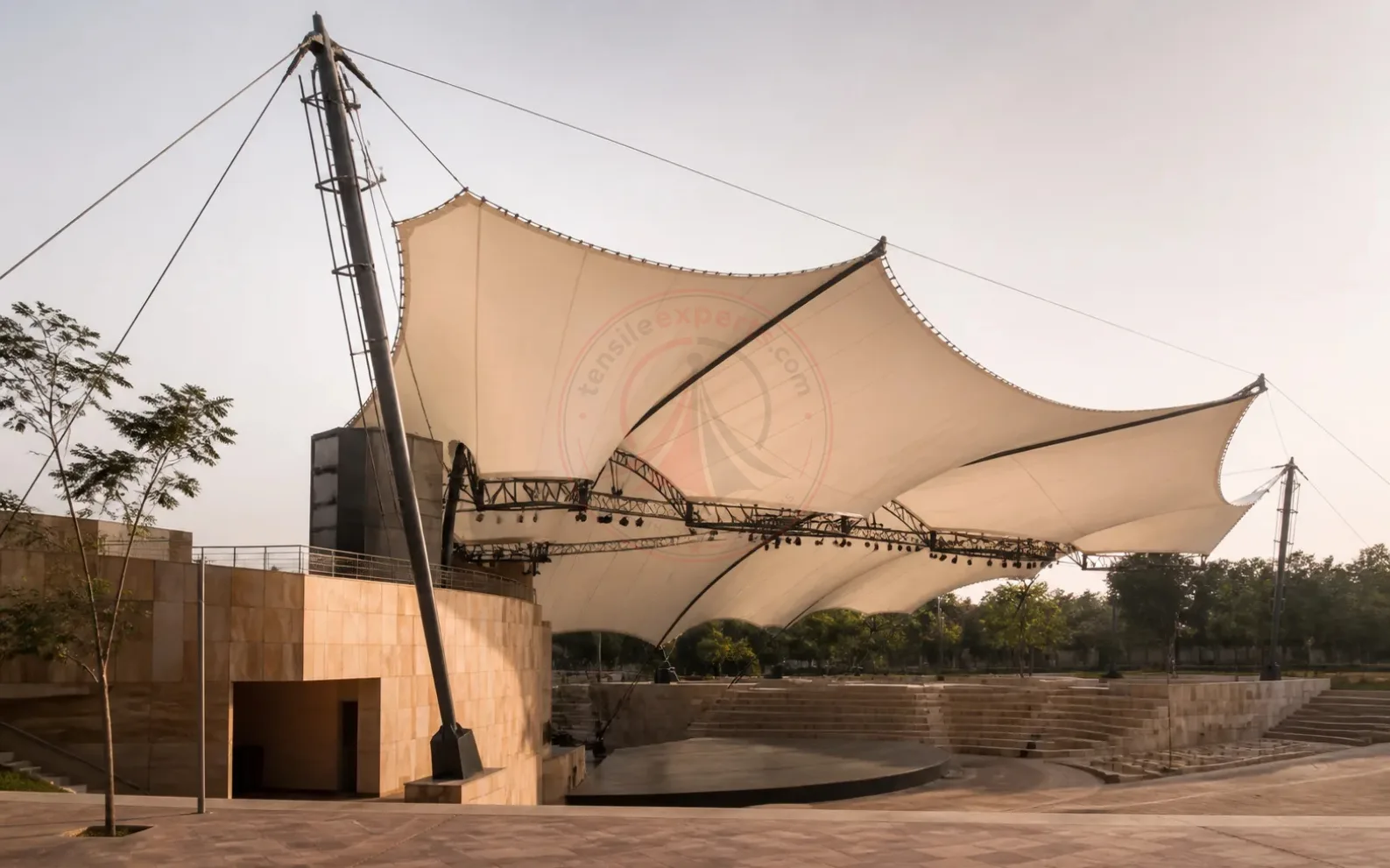
Use the photographs to discuss geometry and workmanship. They are product references, not claims that every photograph was completed in Himachal Pradesh.


Before design approval
Four checks that should shape the concept.
A cone structure in Himachal Pradesh should begin with use and diameter, mast position, required clearance, architectural axis, supports and foundations, exposure, drainage, lighting, delivery, erection, and maintenance. Final cone proportion, membrane stress, mast and perimeter reactions, anchors, foundations, drainage, erection, and access are verified for the individual project.
Use, proportion, and support survey
Record footprint and levels, occupancy, mast preference, diameter and rise, edge clearance, supports, exposure, lights, and outlets.
Should the mast be central, offset, shared, or placed outside the most valuable occupied area?
Resolve the answer against measured dimensions, the occupied area, required clearances, support conditions, and the approved structural concept.
What diameter, mast height, edge height, and slope create the intended presence without wasting space below?
Himachal Pradesh's published elevation range — from just 232 m at the Beas River to 6,816 m at Reo Purgyil, its highest peak — is one of the widest of any Indian state, and our own verified figure for Shimla (2,206 m, 1,487.3 mm of annual rainfall) sits partway up that range, so a project elsewhere in the state should still be checked on its own terms rather than assumed identical to a ridge-top hill station.
Buildability and radial upkeep
Confirm foundations, transport and lifting, temporary stability, tensioning, drainage, lighting, cleaning, mast access, and inspection.
Technical schedule
Project values to confirm before fabrication.
The design schedule should connect the Himachal Pradesh site basis to the mast position, radial geometry, usable perimeter and landmark proportion, not present one unsupported wind-resistance claim.
| Design parameter | Unit or project record | What should be confirmed |
|---|---|---|
| 01Product geometry and span | 4m–12m diameter | Verify the measured footprint, governing span, edge positions, usable area, and permitted support locations. |
| 02Clear height and interfaces | Mast height 3m–8m | Record required clearances plus doors, vehicles, lights, services, signage, equipment, and maintenance access where applicable. |
| 03Cone proportion and radial set-out | Diameter/rise/edge schedule | Set mast location and height, perimeter geometry, edge clearance, radial support points, fabric sectors, seams, and occupied footprint. |
| 04Mast and radial reaction system | Axial and anchor reactions | Confirm mast compression, base moment, radial cable or frame forces, perimeter anchors, connection eccentricity, and erection stability. |
| 05Membrane sectors, edges, and drainage | Pattern/detail/drainage schedule | Coordinate radial patterns and seams, crown and mast detail, perimeter clamps or cables, reinforcement, compensation, low-edge gutters or outlets, splash, overflow, cleaning, and replacement. |
| 06Erection, lighting, and maintenance | Method and access plan | Define mast and perimeter setting-out, temporary stability, lifting and membrane pull-in, staged radial tensioning, lights and power, safe mast and edge access, inspection, cleaning, and records. |
| 07Basic and design wind speed | m/s or km/h | Record the site wind-speed basis and the factors applied for risk, terrain, height, and topography under IS 875 (Part 3):2015. |
| 08Design wind pressure | kN/m² | State the calculated pressure and suction cases, including the external and internal pressure coefficients used for the actual membrane form. |
| 09Membrane and form-finding | PVC or PTFE | Confirm structural form, membrane grade, warp and weft pre-stress, seam pattern, edge details, light transmission, finish, and certification requirements. |
| 10Steel, anchors and foundations | Central mast footing plus radial ground anchors for the cable system | Connect member sizes, connections, base plates, anchors, footings, protection system, and existing-support checks to the governing reactions. |
| 11Drainage and ponding review | Falls and outlet capacity | Document high and low points, runoff paths, outlets, discharge locations, loaded membrane shape, blockage risk, and maintenance access. |
Indicative product ranges are planning references, not project calculations. Final values depend on geometry, height, exposure, supports, use, and verified site inputs.
BIS wind-load reference
Project delivery · North India
One accountable route from requirement to handover.
Use and landmark brief, measured radial set-out and level survey, membrane form-finding, mast and perimeter reaction design, foundations, patterning and drainage, lighting coordination, fabrication, mast erection and temporary stability, membrane pull-in and radial tensioning, inspection, and handover are managed as one scope.
-
01
Define use and proportion
Share footprint and levels, use and movement, mast preference, desired diameter and rise, edge clearance, architectural views, lights, drainage, access, and photographs.
-
02
Survey radial supports
Verify mast and perimeter zones, utilities, foundations or existing supports, levels, open edges, outlets, mast delivery and lifting, assembly, and maintenance access.
-
03
Engineer cone and load path
Finalize form and membrane, radial sectors and seams, mast and cables or frame, reactions and foundations, edge details, drainage, lighting interfaces, drawings, and erection method.
-
04
Erect, tension, and inspect
Coordinate fabrication and transport, mast erection and temporary stability, membrane pull-in, staged radial tensioning, geometry and drainage checks, lighting, cleaning, records, and handover.
Service coverage
Tensile Cone Structure planning in Himachal Pradesh and across North India.
Use, radial set-out, supports, drainage, transport, site readiness, erection, and maintenance are confirmed per Himachal Pradesh project.
Himachal Pradesh
Survey and logistics confirmed per project
Himachal Pradesh-area enquiries
Shimla
Manali
Dharamshala
Solan
Kullu
Mandi
Explore related locations
Need the complete product overview, membrane options, specifications, and pricing context?
Cone-form tensile structures for a distinctive architectural look at entrances and plazas.
Open product guide
Cone-form tensile structures for a distinctive architectural look at entrances and plazas.
Himachal Pradesh clients come to us for Tensile Cone Structure work that's engineered project-by-project, not resized from a catalogue. Himachal Pradesh covers 55,673 km², with elevation ranging from 232 m at the Beas River to 6,816 m at Reo Purgyil, its highest peak. The Great Himalayan range runs through the state's eastern and northern sections, with the Dhauladhar and Pir Panjal ranges of the lesser Himalayas and the Shiwalik range forming its southern and western boundary; the Chenab, Ravi, Beas, and Sutlej rivers all flow through the state.
Cone structures rely on a central mast and radial framework — this is fabricated to the exact height and diameter you confirm during design. Share your project details and we will confirm a realistic timeline.
Commonly used for Entrance features and plaza landmarks, Standalone architectural accent structures.
Why Tensile Experts
Why Himachal Pradesh Clients Choose Tensile Experts
Site Assessment Before Fabrication
On a Tensile Cone Structure project, most avoidable issues come from skipping a proper site assessment or choosing the wrong fabric grade for the climate — we check both before fabrication.
We Know Himachal Pradesh's Conditions
Himachal Pradesh's elevation swings from 232 m to 6,816 m across the state — one of the widest ranges of any Indian state — with climate running from subtropical in the southern tracts to alpine and glacial in the north. The verified Shimla page below carries the actual figures for that one ridge-top hill station; a project elsewhere in the state should be checked on its own terms.
Realistic Timeline Guidance
Cone structures rely on a central mast and radial framework — this is fabricated to the exact height and diameter you confirm during design. Share your project details and we will confirm a realistic timeline.
In-House Fabrication & Installation
From design to installation, your project is handled by our own team — not outsourced to a third-party crew.
See our manufacturer profile for Himachal Pradesh for our full range and service capabilities there.


Project Experiences
Built spaces. Shared experiences.
See the structure, understand the brief, and hear how the project experience felt from the client side.
Client feedback
0105
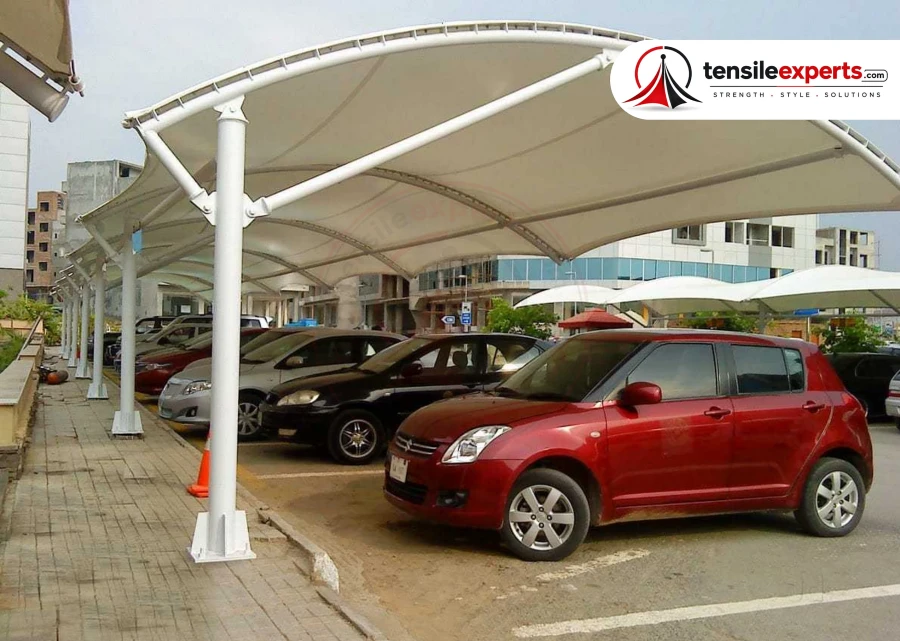
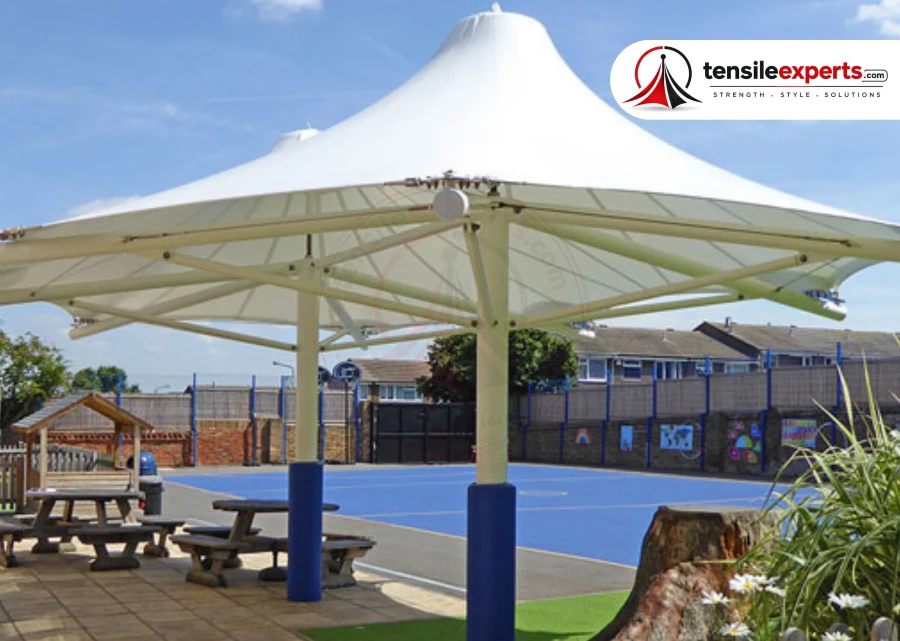
Parking shed ka work really good tha. Size aur design hamari parking space ke according suggest kiya aur final finishing bhi neat hai. Overall very satisfied.
Really liked the gazebo they made for our outdoor area. Simple design but looks very premium after installation. Team was responsive throughout the work.
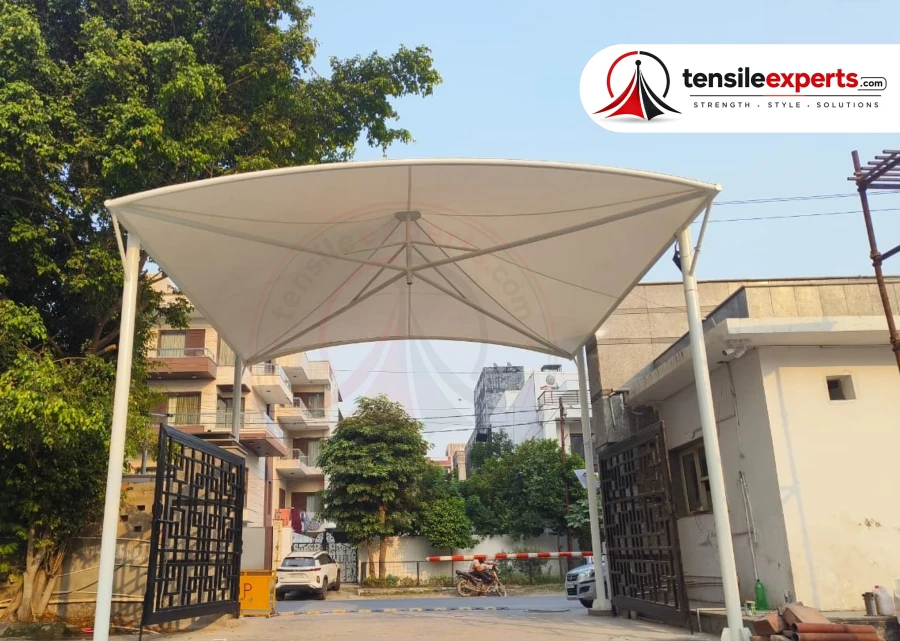
We needed a tensile canopy for our office entrance. They suggested a design that matched the building quite well. Installation was smooth and the final structure looks professional.
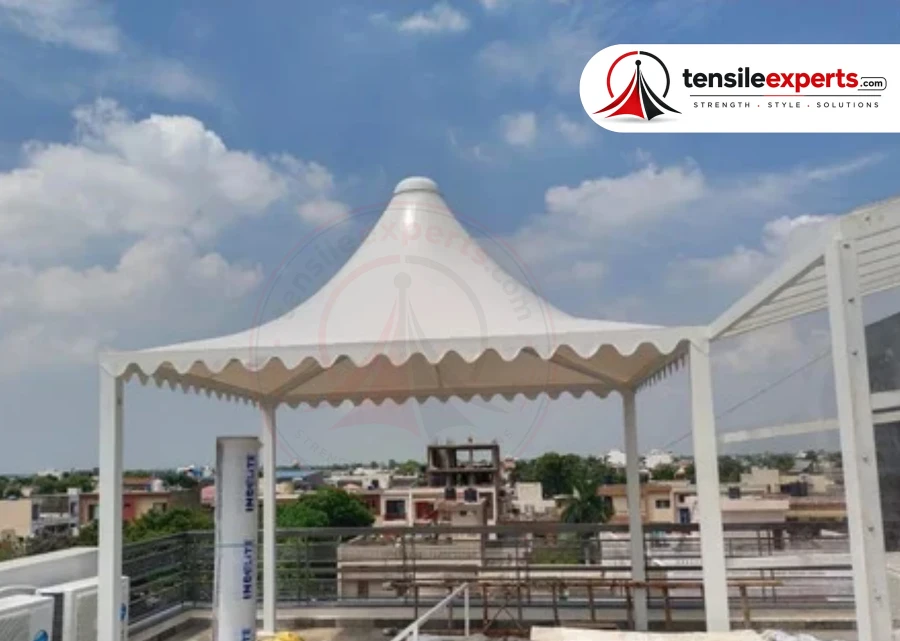
Very happy with our terrace pergola. Exactly the kind of covered sitting space we were looking for. Good workmanship.
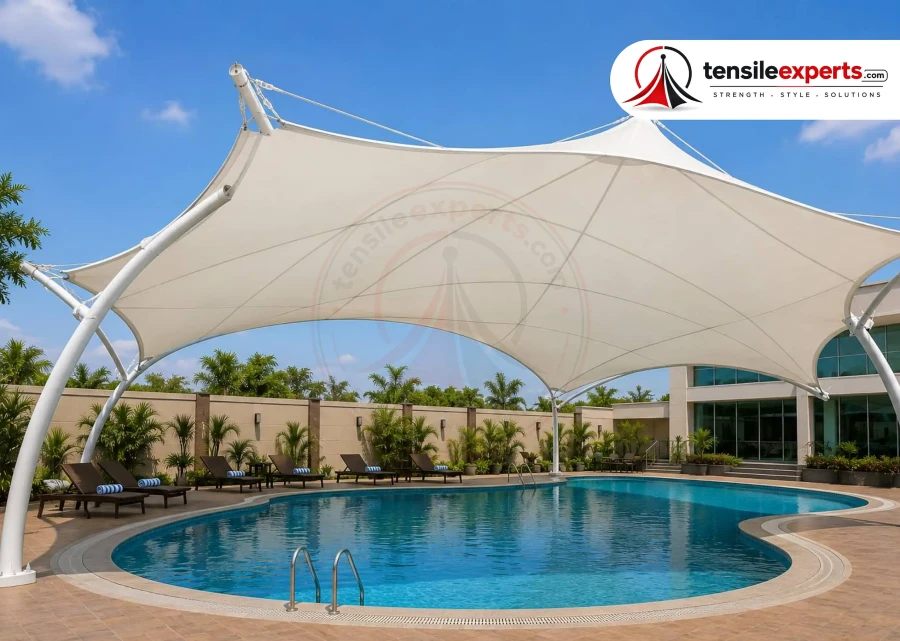
Swimming pool shade came out better than expected. Main concern was getting enough shade without covering the whole pool area, and the design worked perfectly for that. Nice work.
Frequently Asked Questions
Tensile Cone Structure FAQ — Himachal Pradesh Projects
Direct answers to the most common questions about Tensile Cone Structure fabrication, materials, and installation for projects in Himachal Pradesh.
Tensile Cone Structure — Common Questions
1 Do you design and install Tensile Cone Structure projects in Himachal Pradesh?
Yes. Tensile Experts coordinates site review, custom design, fabrication, transport planning, installation, tensioning, and handover for Tensile Cone Structure enquiries in Himachal Pradesh. Final scope depends on the measured site and approved design.
Record footprint and levels, occupancy, mast preference, diameter and rise, edge clearance, supports, exposure, lights, and outlets. The survey also verifies exposure, support conditions, levels, access, drainage, utilities, and erection space.
Share footprint and levels, intended use, desired diameter and visual direction, mast and support preferences, clearances, exposure, drainage, photographs, delivery and lifting access, and lighting needs.
PVC — standard grade for most cone-form structures PTFE — available where a longer service life is preferred The final recommendation is recorded for the actual project rather than selected from the city or product name alone.
A final value cannot be chosen from the city name or a generic product brochure. The engineer establishes the wind-speed basis and calculates pressure, suction, membrane stress, member forces, anchor reactions, and foundations for the terrain, height, topography, permeability, geometry, and actual supports.
Send the exact site address, dimensioned plan or clear measurements, photographs from several angles, intended use, required clearance, preferred design direction, existing drawings, access restrictions, utilities, surrounding levels, and the available rainwater discharge route.
Use and landmark brief, measured radial set-out and level survey, membrane form-finding, mast and perimeter reaction design, foundations, patterning and drainage, lighting coordination, fabrication, mast erection and temporary stability, membrane pull-in and radial tensioning, inspection, and handover are managed as one scope.
Key Terms — Tensile Structures
Plain-language definitions for the materials and engineering terms you will hear while planning a project.
01
Membrane Structure
A tensile structure formed from a single continuous fabric membrane stretched over a supporting frame or cables.
02
Retractable Structure
A tensile roof that can be opened or closed on demand, motorized or manual, for spaces that need sun cover one moment and open sky the next.
03
Anchoring
The foundation and hardware system that holds a tensile structure's cables/frame in place — critical to how the structure performs in wind and rain.
04
Span
The distance a tensile structure covers without intermediate support — larger spans need higher-grade fabric and stronger anchoring.
05
Structural Form
The overall shape the membrane is tensioned into — conical, dome, saddle, barrel-vault, or a custom form — chosen for the site, span, and drainage needs.
06
Tensile Structure
A structure that gets its strength from fabric held in tension between rigid supports, rather than from a solid roof — lightweight, weatherproof, and suited to large spans.
07
PVC Fabric
PVC-coated polyester fabric — the most widely used and cost-effective tensile membrane material for most structures.
08
PTFE Fabric
PTFE (Teflon-coated) fabric — higher UV and weather resistance with a longer service life, suited to larger spans.
09
PVDF Fabric
A durable, self-cleaning fabric top-coat option that holds its appearance longer in dusty or high-pollution environments.
 Delhi · Pan-India execution
Project consultation
Build the right tensile structure for Himachal Pradesh.
Send us your application, approximate size and site location. We’ll help you identify the right structural approach and membrane option.
01 Share your site
02 Review the concept
03 Plan execution